Mar 13, 2012

From a Certain Point of View

I wonder how many people would flat out argue with me if I said that a venti white chocolate mocha from Starbucks is the best drink ever in the history of the universe.

Hmm. Probably most people.

I was pondering a few things all at once - as I am wont to do - and they rather jumbled into a thick stew in my brainy parts, and this was the thing that came out. But I'm starting out with the punch line; arguably the wonkiest way to start a joke. Ah, so WABAC machine set, Mister Peabody. Allons-y!

When I was, oh, about 5 or 6, I remember sleeping in the back seat of our family car. It might have been the toyota pickup or it might have been the blazer - hard to say, because I was asleep at that moment. But I remember thinking very specifically in that moment that how a car drove around the world was a complex thing, and what if the car itself wasn't moving, but what if the car remained still while the world moved beneath it? Once I did the math on that and realized that there was no way that the world could move independently beneath every single car, I maintained that little half-illusion for a bit more and thought it was an amusing concept, nonetheless. Years later, there are dreams I have at night that I hit the snooze button a couple times for, just on the off chance I can just jump right back in and enjoy a few more moments of.

Some dreams are good that way.

That recollection mingled with a few current political conversations that I won't bore you all with, but I'll let you enjoy the recognition of that particular metaphorical interplay for a moment.

Yeah. Funny, huh? Okay, moving on.

John Carter of Mars came out this weekend, and all the internet was talking about how much of a bomb it was. Yeah, 100 million dollars in its first weekend, and it's a bomb. Huh. Weird. I gotta say, I wouldn't mind having a bomb or two like that in my media empire. I'm looking forward to seeing the movie - yes, I haven't seen it yet, but I really don't see a lot of movies in the theaters anymore (I'll be making my rare exceptions with Hunger Games and The Avengers, for those of you keeping score), so please don't take this as a vote of dismissal.

But up or down, the quality of a movie these days isn't as interesting as it is to watch everyone see how quickly they can form a strong opinion for or against it. As if they want to be remembered as the voice of reason amongst the tempest. I've got two things to say about that: "Star Wars", and "Shhh."
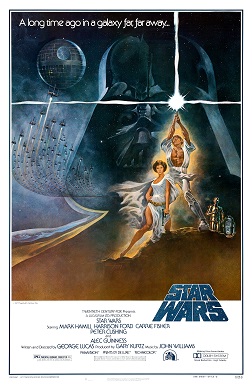
When Star Wars came out, there were several weeks - a few months, even - when the critics just tore it to pieces. Siskel and Ebert, I'm looking at you. The best they could come up with was to say it had pretty cutting-edge special effects, but that was pretty much it.

Oh, I'm not suggesting that Star Wars was the pinnacle of cinematic mastery, I can be realistic and still love that film. But what I really have found to be so interesting is that all those critics, only a year or two later - much less in some cases - recognized how wrong they had been and all began changing their tune. Many tried later to rephrase or amend their initial reviews, or simply pretend it never happened.

But let's be honest, shall we? You got it wrong. You put all your chips on the wrong number, and you took a hit for it. It happens.

I'm much more impressed by critics who recognize that they might be wrong - well, I say that from a very theorhetical perspective, because I can't really think of any of those sorts of critics off the top of my head. If you know one, please let me know. I've gone through many podcasts of various movie critics and invariably unsubscribe to them not when I disagree with them (because I actually like viewpoints that differ from my own) but when their opinions are delivered in the context of "anyone who doesn't realize I'm correct is a moron and is no longer entitled to an opinion." Movies, their success and the enjoyment a moviegoer experiences at their viewing is subjective. This enjoyment is dependent upon the experiences of the moviegoer and may also be dramatically influenced simply upon their mood that day. But this is not the case to hear a critic review them - - oh good lord, no. If it's bad, it's bad, and that's all there is to say about it.

Look, there are probably even people who liked Battlefield Earth. I'm not one of them, but I'm sure there's someone out there who liked it. Someone. Somewhere. (Pause)

My other point harkens back to elementary school. This is back before the days of videotapes, back when we actually had those wonderful movie projectors. I miss those - there was the click-hiss and the wonderfully mechanical sound of the machine as it warmed up, the flickering light on the roll-down screen, and the countdown: five....four...three... two.... click click wwhhhhzzzzzzzzz... Loved that. But the part that was always a little bit annoying was getting the class to shut up.

It became a Shhh war. Remember that? One kid would keep yammering on, someone would try and shhh them, and then someone would shhh them and so on and so forth (and there was usually one kid who'd chime in "it!" - that was, I will confess, occasionally me). But the issue was that the people who were trying to shush the one kid actually made more noise than that one kid was making. And they would often remain talking just to tick off the shushers. It was a lose-lose situation, and to tell you the truth, I have no idea how to fix that kind of thing.

The next intercepting observation was a recent YouTube video a kind and thoughtful gentleman made about how to help traffic jams. The key to it all was knowing that you cannot fix how people ahead of you are driving, and all you can do is try to help the people behind you. The solution is to simply drive steady, leave ample space ahead of you and let people merge. Seriously. That's all there is to it. I've seen crazy traffic conditions in other cities - I remember being on the 80 going out of the Bay Area in rush hour traffic - and all the cars were going 50, with less than a car length between them. It was madness. But if you signalled to change lanes, an opening would appear, just like magic. Best rush hour experience of my life.

So that brings us back to the title of this little blog today.

Been doing my best to keep up on blogs lately - not my own, clearly, but yours. Yes, you. No, not the person behind you, I'm talking to you. Been doing a lot of reading, actually, and one of the things I've noticed is that a lot of folks are pretty sure they're Right.

Now, being right is all well and good. I've been right a few times, myself - if my wife is reading this, I'm only kidding - so I don't have anything against people wanting to be right, or even being right. But the part that starts to worry me is when that rightness is perceived as unique and solitary rightness.

The best lesson I had in college was a stark reminder of one undeniable truth: that no matter how right you think you are, there is a truth that you do not yet know which will one day prove you wrong. And I believe this goes for anything. Truth is a layered perception of the exploration of our own layered perception of truth. The more we truly know, the less we see that we understand. If we think we have all the answers, it's only because we've not been asking the right questions.

Returning to my earlier comments about Star Wars, let's think back to a classic conversation from the 3rd movie - - Return of the Jedi (yes, I still think about them in terms of their chronological release, back off). If you've seen the movies, then cool. But for those who haven't, ** SPOILER ALERT **

Luke: Ben, why didn't you tell me? You told me that Darth Vader betrayed and murdered my father.

Ben: Your father... was seduced by the Dark Side of the Force. He ceased to be Anakin Skywalker and "became" Darth Vader. When that happened, the good man who was your father was destroyed. So what I told you was true... from a certain point of view.


Luke: A certain point of view?

Ben: Luke, you're going to find that many of the truths we cling to depend greatly on our own point of view. Anakin was a good friend. When I first met him, your father was already a great pilot. But I was amazed how strongly the Force was with him. I took it upon myself to train him as a Jedi. I thought that I could instruct him just as well as Yoda. I was wrong.

For me as a young teenager, this was one of the points in the movies where it just broke everything down and became real. Here was Obi Wan Kenobi, master of the force, admitting he had been wrong, once upon a time. It was surreal. Was that possible? Could you be so wise and yet have made mistakes?

And that's when it hit me.

The mistakes you make are what make you wise.

None of us are perfect. Not a one. We are going to make bad calls, poor decisions, sloppy bets - we're going to turn left when we should have gone right, we're going to forget our car keys in our other jacket, forget to put the gas cap on, hit reply when we meant to hit direct message, I mean there's a thousand ways we can screw up on a daily basis. It's part of our individual progress.

But the really cool part of this is the realization that no matter how right we think we are, there's someone else out there who gets it just a bit better than we do. They may not wear a clever hat or have really cool robes or sit atop a mountain dispensing wisdom. They might be in the car next to us on the highway, they could be on the other end of the phone, and perhaps they're the person fixing us that heavenly white chocolate mocha. We don't know. On the other hand, if Schrödinger had it right, then they are.

There's your homework for today - next person you see, imagine if they had the secrets to happiness, the key to universal wisdom. Ponder that for a moment and see if your expectations change.

Have a great day, everyone.

Mar 7, 2012

Consenting Authors

I remember hearing a story when I was younger about how to kill a frog. Now, questions of "why the hell are you wanting to kill a frog?" aside, the interesting bits of it really lie in the social commentary of the metaphor. For those unfamiliar with this little chestnut, it works out like this:

If you decide that boiling the poor amphibian alive is the best course of action (and I'm assuming consumption of said Kermit is on the horizon), then simply tossing Brer Ribbit into the pot of boiling FrogDeath is the wrong way to go about it. Apparently, he'll have the instant presence of mind to toss yon hopper-booty out of the cauldron, and you're left with an empty pot. Sad panda.

But if you gently and tenderly escort Mister Frogger into a pot of cool, fresh and tranquil water, he'll just hang out there and enjoy himself, even as the water rises steadily to a level wherein his goose - well, his frog, anyway - is good and truly cooked.

I've never actually tried this before, just for the record, so I can't actually vouch for its authenticity. And no, this should in no way be taken to be an invitation to test this theory. Leave the frogs alone.

The point of it is that we become complacent in the face of slow change. I'm just not sure, sometimes, how much we pay attention to the changes in the social landscape. I kind of think we don't.

Dennis Miller - back when he was liberal - used to shake his head at the country, verbally worried that we kept letting ourselves be distracted by the crap that was shot out into the national consciousness, so much so that we let the important stuff skate right by. I don't know what happened to him, but this one old (and I'm guessing abandoned?) opinion of his has stuck with me.

Very few big social changes ever happen at once. Only the dramatic ones. Hitler didn't just appear at the head of Germany, Rome wasn't built in a day - rarely does anything HUGE happen all at once - - - and when it does, it really sucks.

So in this vein, I'm looking at a really horrible thing developing, and not really shocked that more people aren't at arms about it. We don't notice our lack of rights until we've lost the one that matters most, you see. The ones we don't really care so much about... well, those get pruned back, cut back, diminished, downplayed, and reduced until there is nothing left.

And I'm not talking specifically about gun control, abortion rights, voter rights, taxes, or really any one single law of the land that has become one of a thousand talking points about which people want to beat their drums and act as if it is the Single Most Important Decision You Will Ever Make In Your Entire Life. Those are all important, yes.

But I'm seeing a problem that lies at the root of it all.

Respect.

Respect for each other's differences, respect for each other's value and worth, respect for each other's opinions, respect for the right to be - as unique as we all are from one another.

This is kind of a whole issue in and of itself, though, clearly. It's an emotionally charged word, full of personal experience and it generally gets caught in everyone's throat. Even now, as you read this, you're probably trying to figure out what I meant by the word "Respect" to you personally, and so on.

I really want this to launch into a big discussion about the different ways in which we as a culture have broken the basic laws of respect - there are so many to choose from - but this week I'm starting to see that people are not so immured to this as I had feared. And for this, I thank - once again - the internet.

Recently, there has been a big kerfluffle (as an aside, can I just tell you how much I wish I could get away with using that word? I swear, I'd use it hourly if I could) between internet payment service PayPal and ebook publishing website Smashwords.

The small version of it is that PayPal - citing pressure from its banking associations - was going to force Smashwords to remove any material which PayPal defined (loosely) as "obscene".

Now, listen. I'm not the sort who deliberately wants to go around offending people. I've always been a proponent of the idea "if you don't like something you see, stop looking at it" - and also a supporter of this one line I heard in a movie, which, paraphrased, is: "there are two kinds of crazy. The crazy that strips down, covers itself in flour and water and runs around in a circle, screaming and waving its arms. And the other is the one that does that in my front yard. One of those, I never have to deal with."

I don't really care what people do in the privacy of their homes. I start caring if it impacts me and my world, my life, my family, and so forth. What flavor ice cream you eat - if you eat it at all - doesn't negatively impact me. If you like to eat it while watching bukakke (I'm not going to provide a link. If you really want to know...well, don't look it up if you don't want to know. Fair warning.) ... hey, whatever floats your boat.

I myself LOVE the differences that we all have. As a writer, I've found that it's the little details which set us apart from one another that make us as interesting as the things we have in common. Sometimes, it's the differences that we have in common which really make us fascinating. I don't prefer homogeneity, I like diversity. If I draw lines, it's only a mathematical tendency towards pattern recognition and categorization that I've had since I was a wee child. I used to sort my M&Ms by colors, but only because I was curious to know which ones I had more of. Every M&M tastes the same, and if you ever close your eyes while you eat them, you know this is true.

So when I heard about PayPal trying to push Smashwords around under the pretense of "This stuff is offensive!", I was sad. When I saw that Smashwords was pushing back.... well, I was pretty excited.

An interesting twist for me personally popped up here.

And here's a little backstory:

My good friend and co-authoring partner Jen Ashton and I were chatting back on this past Sunday and our conversation turned to this whole nonsense. She joked that we ought to write a parody, showing how ridiculous this all was, and an idea began to form out of our brainstorming that made us both laugh hysterically. She told me "okay, we need to write this." I laughed again, "yeah, sure. We should."

"No," she said. "This is my serious face. Write this. Write it now."

So we did. The story "Two People Having Sex" was conceived of, written, edited, and published within twelve hours. Seriously, by the next morning, people were already downloading it on Amazon. We decided to take it a step further, and put it up on Smashwords.

Thirty minutes later, I got an email from Mark Coker, founder and CEO of Smashwords. He loved it. Called it "Brilliant". He tweeted about it. He blogged about it. He emailed a reference about it to the Smashwords customer base.

Jen and I had a bit of a spaz about this, justifiably. She and I have been writing for several years with decent financial success, but this was something wholly different.

Then, yesterday, actor Stephen Fry tweeted this:

"Two People Having Sex" brilliantly addresses the Paypal CC madness: https://t.co/MdkRW7H5 And that's my lunch break over. Back to work.


This is me, losing my monkey mind.


Yeah. Wow. Huh.

* deep breath *

So, ubermentalfreakout aside, it's really good to see that the conversation is out there. See, I understand the mindset of people whose actions mirror that of PayPal's. They fear the differences of others, they abhor that which they believe to be bad or evil or whatever. They want people to be just like them, either for validation or for comfort, or for any of a thousand reasons that really, in the end, only really matter to them. It's difficult to have your own opinion. People by nature want to associate with other like-minded people, and, when confronted with the distinct, they are faced with three choices: effect change, be changed, or live with the differences. That third one....well, it's the one we tend to forget about.

And yet, I believe it's the one we should be embracing the most. We're meant to have different voices. We're meant to be different. And rather than spend your time and energy trying to establish which one is better or worse, why not spend that trying to find ways we can both coexist?

Seriously. Why not?

Rush Limbaugh is in the news at this moment for some incendiary things he said, and everyone's up in arms about the different sides inherent to the "big debate", but what people AREN'T talking about is that his JOB - - what he is literally paid to do - is to get people talking. Seriously. He's a vuvuzela. Do you hate the vuvuzela? Or do you hate that yahoo that won't stop blowing it in your ears?

Does it matter what Rush Limbaugh says? In truth, no. He can't make you change your world, your mind, your job, your sexual orientation, your number of days in sobriety, your political affiliation; he can't make you do ANYTHING. Only you have the power to do that. Do I agree with him? Almost never. But do I respect his right to say what he says? Yes, absolutely, although I do wish he didn't. He can, though.

When I was 11, I learned about Dungeons and Dragons. I really wanted to play it. My mom had heard all about how evil it was, however, so I wasn't allowed to get a copy of the books for myself. But then my Aunt Margaret surprised me with a birthday present - the full white box kit of Dungeons and Dragons.

I still remember the look my mom gave her. But I think my mom must have seen the look on my face, and she just knew she couldn't take this away from me. Bless her, she let me play. And even in spite of a few clear and amusing conversations ("How was your game? Did you win?"), she came to see that it was precisely the creative outlet my young mind needed. I loved stories - even back then - and wanted to not just read them, but participate. Create them. I wanted to TELL stories.

So here I am, years later, with an 11 year old of my own (who only recently began playing in her very first D&D game!), and I'm still telling stories. And to think, there were people, back when D&D first came out, who tried to get those games banned. Oh sure, their reasons sounded good on the surface, though even more than a passing comprehension of what the games actually were would inevitably show you how wrong and ridiculous the accusations truly were.

And these accusations about books are ridiculous and wrong, too. They are. You can't ban a book any more than you can ban the idea that created it.

So, instead of ignorance and intolerance, we need to look to their opposites: understanding and respect. We must. We're at an interesting crossroads in our culture - a hair's breadth either way can change us all dynamically. I just want us to make that change in a way which will improve all of us. The whole country, the whole world. Not too much to ask, huh?

There's my homework for the day. Find a way to embrace someone who looks at the world differently than you do and respect them for their opinion - - even if you don't agree with it. Especially if you don't.

UPDATE:  WOW. Mark Coker is pretty damn awesome. Take note, other CEOs - - - THIS is how you should be doing things.

Mar 5, 2012

More fun with Wren Emerson! (part 2)

Continued from part one:
 
 
The Metro Coffee shop is just getting going as we walk in. Wren knows the guy at the door, so they point us towards a side booth where we can chat and still people-watch. Atlanta becomes much more interesting than I recall with every passing moment. I’ve always said, the quality of the tour is dependent upon the quality of the guide. Plus, the Metro has free Wi Fi, which always earns points in my book. Bless you, wondrous deliverers of the free Y. Makes me happy, it does.

 
We nab a pair of beverages thanks to a chipper employee, and get back into the conversation. With all the (REDACTED) material behind us, we look into Wren’s professional experience as an author.

 
Me: Aside from your talent, your cleverness and humor, what would you say has been the biggest benefit to being a relatively new author?

 
Wren: The only advantage I have the ability to make some pretty awful mistakes. I'm not kidding. I've managed to sabotage myself in a ton of different ways. That's a post in itself but the TL;DR version is that mistakes aren't career breaking as long as you learn something from them and avoid doing the same thing in the future. I've squandered some pretty amazing opportunities (it would make you cry) but I've learned so much and you can bet that 2012 is going to be an amazing year for me because I won't be making those mistakes again.

 
Me: I’m fond of saying that every mistake is a challenge to find new ways to screw up, so it sounds like we’re both looking in the same basic direction. What are your next big plans, with respect to writing? Do you have a specific goal you're working towards? A plan to getting there?

 
Wren: My primary goal is to earn a living income from writing. I've done it something like 3 months out of the last 9, just enough to keep me following the carrot on the stick. I love writing and I've learned not to take it personally if something I write isn't appealing to readers. I have enough ideas that I'm not afraid to try a different series or even an entirely different genre. Being flexible is what's going to ensure I meet my goals.

 
Me: (at this point, the music cranks up a bit, but I’m making my “do go on” face, so she gets the hint.)

 
Wren: Oh, ha, guess I touched on that a little bit already. Ok, here's the dirty dirty details… I published I Wish in May 2011. I don't think I've ever earned more than $75 on it in a month across all stores. I have theories about that is and I'm happy to share them if you'd like me to write a guest post on the subject at some point in the future, but the bottom line is that as Wren Emerson until last month I had exactly 1 title and that was I Wish.

 
I started to experiment around July with writing erotica under a pen name. The first couple of months were unbelievable. I made ~$2500 those first couple of months with zero promotional effort on my part. Cha-ching! Bills paid. We moved cross country and I got caught up in real life. I had an amazing time, but due to the nature of how we're paid, I didn't start to realize that there was a problem for months. For something like four months I didn't write a thing. I mean I was getting paid for stories I wrote months ago, right?

 
Eh, not so much. But I wouldn't know it because I stopped checking my numbers. By the time I realized that things were in a decline, I was screwed. It appears that my niche market has been saturated and it's time to change up my strategy. Which would be awesome except, I won't see my efforts rewarded now for another 60 days.

 
And as for the 3rd month I've been able to pay my bills? That's right now, baby. I posted a few short stories as Wren at the end of January and they've sold a combined total of 115-ish across 5 titles this month on Amazon (that's like $40) so there's a tank of gas. The bulk of my income has been from I Wish. I enrolled it in the KDP select program and it went free the weekend of the 4th and was downloaded 16k times over two days. It hit #5 overall and #1 on a couple of different subcategories. That translated into a metric assload of paid sales. I can't say for sure how many because Amazon really dropped the ball on accounting that stuff this month, but I earned $2k in the first week after it went paid.

 
Did it last, you wonder? Of course not. I'm selling about 5 books a day now (so about $525 a month), but that's a damn sight better than the 23 I sold on Amazon in January, right? I anticipate that by the time I have the rest of the series posted and do a real marketing push, I might be paying the bills on a regular basis and that makes me really happy.

 
Me: “If you find a way to get paid to do what you love, you’ll never work a day in your life.” Those are really pretty good numbers – a very good milestone for anyone looking to write for a living. But of course, it can’t all be grindstone, you have to relax sometime. When you do have time to read, what's your favorite genre?

 
Wren: I adore reading short horror anthologies. I especially love zombies, apocalyptic, and dystopian fiction. And of course paranormal/urban fantasy. If I feel like I need a good cry, I will pick up any romance novel. It doesn't matter what kind, I will be openly weeping by page 5 guaranteed.

 
Me: What are you reading right now?

 
Wren: Oh gosh, let me see what's on my Kindle… Scott Nicholson, Belinda Frisch, David H. Fears, J. Sterling, Charlotte Abel, and Shannon Mayer. A little eclectic, but I'm looking forward to all of them.

Me: Okay, I’ve been trying to avoid asking, but clearly I have little to no conversational restraint. So, I'll just ask - - Horror Erotica? How did that happen?

 
Wren: I met a guy on Twitter (it sort of sounds like a cautionary story, huh?) and he asked if anyone was willing to write stories for a project he was working on. He writes erotic horror and I gave it a read. It didn't seem too scary, so I decided that that's what I'd try to write, too. Perchance to Dream and Real Vampires Don't Sparkle were the result of that. It really gave me a lot of confidence in my abilities since I'd never written anything in either the erotic or horror genre before.

Me: Erotica is a tough genre to write in, if you have plans to write in any other genre. Do you agree or disagree?

 
Wren: I haven't really had any issues with it so far. It's not hard to start a pen name. I will say that I've encountered some negative opinions of what I write, but they were from other writers, not the readers. Actually, the readers have always been really excited about what I write.

 
I would just offer this advice: if you want to cross genre boundaries, make sure that what you are publishing is clearly laid out in the description. I would feel so bad if one of my WoD fans bought Real Vampires Don't Sparkle and expected it to be child friendly.

Me: It’s definitely a challenge to manage it all, but there have been so many authors who’ve done so, and quite successfully. What's another genre you'd like to cross erotica with?

 
Wren: I think there's always room for the erotic in just about anything you write except things meant for kids. As humans sex is a huge part of our identities. It's something that we should be celebrating and enjoying. I've actually been thinking about writing an erotic comedy. I've got too much on my plate to tackle it now, but someday...

Me: That would be awesome, actually. Let me know when you do get that one written! So, you’ve been epublishing a while, now - how do you think the present state of epublishing affects the overall publishing industry? Do you think it's a good thing or a bad thing?

 
Wren: I love the opportunities that indie publishing offers. I would never have written I Wish if I hadn't discovered that I could upload it directly to Amazon myself. I have never had any desire to jump through the flaming hoops that the traditional publishers hold up. It's a vetting process sure, but one that I don't think is necessary. Readers should be deciding for themselves what they want to read. And thanks to epublishing, now they can.

Me: I totally agree. I blogged recently about this concept of “literary gatekeepers”…I think I was pretty specific as to my opinion on it. *grin* Where do you think we'll be, publishing-wise, in the next 5 years? where do you hope we'll be?

 
Wren: I'm not an expert on the industry by any means so I'm not going to make any predictions, but I hope that we'll see more readers than ever using ereaders. I hope that schools start issuing them to students the way that some districts issue laptops. I hope that more authors realize that they create the content and that they don't need a traditional publisher to validate their worth with terrible contracts.

Me: Where do you think you’ll be in five years? Where do you hope you'll be?

 
Wren: I'll still be writing stories because I'll never run out of ideas that I want to explore. I just hope that I'm writing them from beside my pool while cabana boys fan me with palm fronds.
 
Me: Don’t forget the grapes! Everyone always forgets the grapes. So, here’s a classic chestnut from the Generic Questions vault: If you weren't a writer, what would you be?

 
Wren: That's tough to say. I've been a full time mom pretty much my entire adult life. I'd undoubtedly still be doing that right now since The Littlest Minion isn't in school yet, but I'd have some tough choices to make in September when he starts.

Me: What's next for Wren?

 
Wren: I had a pretty good run in 2011, but the plan for 2012 is to come at it even harder. To take all the things I've learned in the past and improve on it. My goal (possibly unattainable) is to write the 4 novels and 20-ish short stories that I have planned for this year so far. I'm also working on setting up workshops for high school kids at area schools that deal with indie publishing in general and world building in specific. It's a big heaping plate full of dreams, I'll admit, but I've got an enormous appetite for it.

 
Me: Obviously you don’t spend all your time writing, though. What do you do to relax?

 
Wren: In no particular order, I love to read, create mixed media collage and work in art journals, play video games (specifically RPGs), travel, take tons of photos with my iPhone, and go carousing with my sisters on the Soul City Sirens roller derby team.

 
Me: (I’m pretty sure my eyes bugged out here, because she nearly spit out a mouthful of coke. I apologize and we dab up the mess, and I promise her that we’re going to have to talk about Roller Derby stuff later. Another interview, I promise. Maybe a whole other one for video games, too. Dang. We could keep these up for a while!)  All right, deep breath, we're through the worst of it. Okay, now: Lightning Round time, just to make sure I’ve covered all the bases!  Ready?

Wren: Ready!

Me: What did your last tweet say?

 
Wren: Smart money is something to do with any combination of zombies, herpes, or badgers. Possibly #vaginamarketing or my boobs? I don't know. That's all I ever talk about.

 
Me: I don’t want to suggest that I’ve ever noticed that. But I’ll state for the record that your answer doesn’t entirely shock me. Um, favorite website to waste time at?

 
Wren: Reddit. I want my life back.

Me: Comfort food?

 
Wren: I love taco burgers from Taco Hut. Unfortunately I can only get those in Kansas or Oklahoma and I'm in Georgia. #1stworldproblems

Me: Guilty Pleasure:

 
Wren: 80s and 90s YA horror books. I buy them whenever I see them second hand. I just can't get enough.

 
Me: Last thing you watched on TV (Hulu or Netflix counts) that you'd recommend:

 
Wren: How I Met Your Mother- I'd give up writing novels forever if they'd let me write for that show.

 
Me: Favorite Halloween Costume:

 
Wren: I was Snooki this year. It was pretty cheap to put together, but gave me endless hours of entertainment. I should post pics on FB or something.

 
Me: iPad, Nook or Kindle?

 
Wren: I have an iPhone rather than an iPad, but I own them all. I do prefer the Kindle over the Nook though.

 
Me: Top 5 items on your bucket list:

 
Wren: I'm not sure anybody will still respect me, but for the sake of honesty here goes (in random order):

 
  1. Meet Seth Green 
  2. See something I've written made into a movie (either a book that's been adapted or a screenplay I've written) 
  3. Dry hump a transvestite. I don't care to explain this one other than to say it's important to me
  4. Visit all the Ripley's Believe it or not museums in the continental US
  5. Own a segway


 Me: Well, I still respect you. Though, to be honest, I’m pretty easy.

 
We both laughed at that, and then we chatted about all sorts of things that may or may not have been directly related to that one time I accidentally hung out with Seth Green at a show for The Church and a lot of other silly conversational threads I’m sure you wouldn’t be interested in right now anyway.

 
Eventually, we wandered back to the parking lot and our wonderful afternoon and evening of conversation had to come to an end. But fear not, loyal readers, I’m sure you’ll be treated to further adventures of the Ren and Wren show, whenever our literary worlds collide. I’ve promised her a tour of Seattle, hopefully airfare will become reasonable.

 
Also, next time, Seth’s invited. You hear me, Scott Evil?


Yeah, I know, he hates that. Sorry, man.

 
Thanks to Wren Emerson for being such a delightful conversationalist and hostess, and thanks to you for reading along - be sure to help support this wonderful (and just between us, incredibly funny) author by going here and indulging appropriately.
 
 
More WWWren:

amazon page: http://www.amazon.com/Wren-Emerson/e/B0050Z3980
twitter: @wrenem

Facebook- personal: http://www.facebook.com/wrenem
fan page: http://www.facebook.com/wrenemerson

Feb 27, 2012

QA with Wren Emerson! (Part 1)

I forgot how warm it gets in Georgia. It’s been a while since I was back, but oh, how the humidity embraced me like an old friend. You know, one of those old friends with no concept of personal space.  l missed the thunderstorms. Wow. Lightning for days. But hey, I’m not here to discuss the weather, am I? No ma’am. I’m here to have a chat with my new favorite internet sensation, author Wren Emerson.

She was kind enough to tear herself away from writing (though I’m pretty sure she tweeted several times while I wasn’t paying attention, but that doesn’t really count) to sit down with me across a pair of oh-my-god-delicious nachos at Nacho Mama’s in downtown Augusta. She tossed them back with a coke, but since I had nowhere else to be, I ordered up a margarita. I would’ve gone with the Guinness, but the Margarita won the coin toss.

Once the noms slow to a steady enough rhythm, we make small talk. Seth Green dominates the early parts of the conversation.
She admits to finding a strong connection to Janeane Garofalo’s character in The Truth About Cats and Dogs, which breaks the ice almost instantly. “I AM the under-appreciated friend with the snarky sense of humor,” she says evenly. I find it impossible to argue the point, because I am already a fan of both Wren and Janeane. This is going to be a nice chat.
The conversation also touches briefly on music, where I learn that she began her music collection by picking up “Regulators” by Warren G and “Crazy Sexy Cool” by TLC. I try to get her to show off her TLC dance moves, but she gives me a look that chills my spine and I politely withdraw the request. Damn this margarita.

Her youth found her in Kansas – the sort of Midwest environment which can be an undeniably fertile ground for the creative sorts of people. Nothing like tornadoes and being landlocked to make you seek out other worlds, I suppose. What, specifically, did it teach her? “I would say that I learned a lot about loyalty and being true to your roots. I'm still friends with a lot of the people I went to school with. If I ever made it "Twilight big", I really don't think that would change anything. I'm married to a man that I've known since I was 13. Even if I forgot my humility, he'd be there to ground me and remind me that I'm still the same gawky, awkward girl inside that I was in middle school.”

And in Wren’s case, family also played a major part in setting her on the path to writing.  “I remember my maternal grandmother reading nursery rhymes from my set of Childcraft books while I acted them out,” she recalls. “Old Mother Hubbard was a favorite. That crazy dog was always up to some shenanigans.” 
So how did you transfer from reading stories to actually telling them? Did you always want to be a writer?

She laughed at that, so I braced myself for an epic journey. I wasn’t disappointed.

“At different points in early childhood I have wanted to be president, a professional football player, and a science teacher. Around 6th grade I finally figured out that I wanted to be an author. I started writing stories (awful) and wrote articles for a family newspaper (moderately bad). Around high school I started to carry around a spiral bound notebook and constantly worked on a high fantasy story that was heavily influenced by the Dragonlance series and my involvement in table top RPGs.”

Me: Ah, yes, Dragonlance. I was always in camp Tasslehoff, personally. (I pause here and consider getting my full geek on, but I show restraint.) So, literary-wise, what happened next?

Wren: “When I was about 12 years old I got my hands on a copy of Stephen King's It. I don't think my family even realized what I was reading. I spent all summer reading and rereading it. It captured my imagination in a way that other books hadn't. I think it was the fact that for half the book the main protagonists were my age, but it wasn't written in a way that made the kids seem stupid, which most of the stuff I was reading that was geared to YA did.
“It was that connection to the characters that made me want to do that myself. I'm not saying I'm the next Stephen King, but I hope that I've been successful in writing a book with a YA protagonist that doesn't make the teens reading it feel as though I'm talking down to them.”
 Me: That’s incredibly important, I agree! I could always tell when authors weren’t taking me seriously as a reader. Ugh. Annoying. (as an aside, I still can't finish "It". I'm such a wuss with that book.) So where are you at now in your resolve? How do you feel about where you’re at as an author?
Wren: I view writing as an activity that's both personally fulfilling, but also a viable career. I've luckily never been a position where I've had to compromise my artistic urges due external pressure. I went directly into indie publishing so I've never had anyone tell me that what I'm doing is wrong and I should change it all. The things I want to write are commercially viable so it's not a choice between my art and my mortgage either. I'm very fortunate.
Me: There’s definitely a tradeoff about being the first one to land on an alien planet like self-publishing. It’s still pretty early in its development, so most people are still working out what works and what doesn’t. Hats off to you at figuring it out so soon!  So, how do you get yourself ready to write? 
Wren: I make very elaborate outlines before I start any long work of fiction. With short stories I will write several paragraphs of summary, but with a novel I have a scene by scene background of every single event that needs to happen and since I write in series, I also know what's coming up in future books too.
Once I have my outline (which I make based on notes that I create using a software for Mac called Curio), I start writing. I have a set in stone word goal for every day and I use a spreadsheet to make sure that I'm keeping on track. I've been writing lately in a program called MacJournal. It's been great for short stories so we'll see how it holds up to writing a novel.
And that's my process. Pretty simple, really. I always listen to music while I write. I don't really hear it, but I can't seem to write without it.
Me: Oh, I’m the same way - gotta have a playlist going, or my brain just doesn’t know what to do. How often do you write; how long do you usually spend at a time? 
Wren: I try to write every day, but I don't always make my goal. If I could improve only one aspect of my writing it would be my self discipline. You can pick up everything else you need to know with enough practice.
When I write I set a timer and work in blocks of 50 minutes. When the timer goes off, I take a 10 minute break and that's when I get to check Facebook or answer emails. Ideally, because I think of writing as my job, I try to spend at least 5 hours a day on writing. Eventually, I'd like to work my way up to spending a full 8 hours a day.
Me: And that’s where it does truly become a full-time job, but it’s like they say, you find a way to get paid at what you love, and you’ll never work a day in your life.  What's your favorite genre to write in - if you have a favorite one, that is?
Wren: Right now I'm really drawn to paranormal/urban fantasy concepts. I'm very much a dreamer. I want to live in a world where magic exists and the man you love might surprise you one day by turning into a wolf. Even in the horror I've been writing there is an element of the fantastic. I have a short list of projects to tackle in the upcoming months and every single one of them has a supernatural spin on them.
Me: Now, one thing I noticed about you, your books tend to span multiple genres - do you find this to be a natural part of your storytelling process, or is it by design?
Wren: I get these really compelling ideas for stories. I can't limit it to just one kind of idea so I write whatever speaks to me at the moment. That's why I love the short story format. I can explore ideas that I normally wouldn't want to work with because there's not much risk. I'm only committed for a few days as opposed to months spent working on a novel.
Me: I can totally appreciate the way you seem to approach your writing; it’s hard not to admire someone for grabbing the stories they want to tell and just making it work under their own steam. And speaking of that sort of DIY approach to publishing, your books are currently published through Lakehouse Press. Could you talk about how that came about? 
Wren: Lakehouse Press is a venture that my friend Courtney Cole and I started last year when we were both publishing our debut titles. At this point it's just a two man operation, but we've discussed the idea of setting up some sort of structure for helping other new indies who would rather have someone else tackle the business end of things so they can focus on writing.

Me: Very nice. So, there you are, creating a press and putting out your first novel. Let's talk about "I Wish" - - when did that story begin for you? Where did the inspiration come from, and how long did you spend developing and writing it? 
Wren: I feel like I could say writing I Wish took 2 years or that it took 2 weeks and both are true. The original idea was something I started playing with a couple of years ago. It's based on my paternal grandmother. She was very much the matriarch of our family. She was a hard woman. I never doubted that she loved me, but she was not a milk and cookies kind of lady.

It wasn't a stretch to imagine what would happen if you got a whole town full of ladies like grandma together. Of course, they are heavily fictionalized versions of grandma. I swear, she's actually a really sweet lady once you get to know her.
When I heard about indie publishing I decided right then I'd finally found a reason to give up my excuses. I was going to write a novel, dammit, and I knew I already have a great idea. I hadn't done anything with it beyond the world building. So I spent a week populating my town with characters, determining the "rules" of the world and the magic they use there, and writing an outline. I was so enthused that it's all I thought about from the minute I woke up until I went to sleep (usually hours after I went to bed because my brain just wouldn't shut down).

When I started writing I Wish, I had a word goal that I met every day. And I wrote every single day, even weekends. I finished it around 2 weeks. I think it was 16 days, but I'd have to check my blog to be sure. Of course, it was less than 50k words and I later went in and added 12k more words, but the core of that story was done in days. This is why I'm such a huge fan of working from an outline. Once you've determined the story, it becomes a matter of putting words on the page.
Me: Wow! That’s pretty impressive! Please tell my readers a little something about the book, beyond the description over on Amazon and the Lakehouse Press website.

Wren: I Wish is Thistle Nettlebottom's story. It's told in first person point of view with a generous helping of snark and sarcasm. She feels like the only sane girl in one strange situation after another. She grows up on the road with a dysfunctional family unit: her emotionally detached mother, her cold (and oftentimes cruel) grandmother, and Shep, who is part body guard, part personal driver.
They go to a town named Desire where she's evidently from, but she has no memories of it. The people there are weird. The women seem to hate her on sight and the men are all a little too eager to get to know her. She thinks her life is wrecked when her grandmother tells her that they are going to stick around, but that's nothing compared to how she feels when she finds out that she, like everyone else in Desire, is an actual broomstick-riding,  cat-having, drop-a-house-on-her-head, genuine witch. That's a bad day for anyone, but add in a tough choice between sweet and sexy Evan or dark and broody Ben and the fact that someone wants her dead and you can understand why Thistle is rethinking her wish to finally have a place to settle down.
Me: It's been online for close to a year, now, and seems to be doing very well - - what are your plans for a follow-up novel?
Wren: I Wish is the first book in the Witches of Desire trilogy. Book 2, Your Word is My Bond has an anticipated release date of April 2012 and Book 3, Reality Bender, is scheduled for June or July.
Me: Can’t wait! What are your other projects in the works?
Wren: I have been working on a series of short stories that delve into the backstories of some of my favorite characters from the WoD universe. Those will be coming out in the coming weeks. I have plans to write a series of short stories about a "zombie" apocalypse that is heavily inspired by the movie 28 Days Later and the comic book series Crossed, but there are no plans to expand that past short stories at this time. As for novel length works? I have plans for a new urban fantasy series based in the world I used in the Witches of Desire books. I'd like to see that ready around August of 2012, but no promises.
Me: You had me at Zombies. We’ll talk about that when the recorder’s off, yes?
Wren: *smiles conspiratorially*

The interior of Nacho Mama’s started getting a bit crazy about this time – small wonder why this place is so popular, I can’t even remember eating my nachos, and yet they’re GONE – so we decide to wander over to the Metro, which Wren assures me is a pretty cool coffee shop. I can never turn down cool coffee shops, so I’m in. This also gives me a chance to turn off the recorder so Wren and I can talk about zombies. And I know you wish you got to hear all of that, but you’re going to have to wait.

To be continued!

Feb 23, 2012

The Great Debate

Okay, I should probably post a little explanation, here.

Self Pub v. Trad Pub.

Good lord, it's a bit of a sticky wicket, eh wot? Like something out of Braveheart or Mad Max or some such. So let me, pray, clarify something here, with a delightful series of numbered bullet points. Or is that bulleted number points? Eh. Whatever.

1) I, yes, am a self-published author.
2) I have many friends who are both self-published and traditionally published authors.
3) I do not hate traditional publishing Publishers.
4) I do not hate Literary Agents.
5) I do not hate money.
6) I do not live at home with my parents. (I don't really know why I have to clarify this, but, hey, might as well)

I really tend to be somewhere around the moderate middle in this big debate - really, I tend to go with whichever side is not trying to insist that their opinion is the only one that matters. The truth is, there's a big bold brave new world in publishing, and what used to work CAN work, but it's no longer the ONLY way it can work. There are more ways to publish effectively, which means there are more authors publishing. That means more books, end of story. This means that there are more good books and more bad books. But also, because there are so many more books, I recognize that this means each individual book may just get less people buying them. I hereby acknowledge that this can be scary.

But publishing companies don't seem to be acknowledging this effectively. Raising prices on books is the second-most antiquated form of trying to boost revenue, and it's rarely effective. In fact, behind the number one most antiquated form of trying to boost revenue (layoffs), it's really pretty much the OPPOSITE of boosting your revenue.

And if you don't think this is a real thing, have you already forgotten the problem with CDs? You know, CDs, those small plastic discs that used to be how you bought music? Or maybe you forgot about DAT tapes?  cassette tapes? Records? 8-tracks? Wax tubes? Betamax? Laser disc? Oh, and you know I could go on and on, here. Don't make me whip out my mad crazy video game historical knowledge. I'll do it, I will.

My point there is that technology affects change. It creates it. Inspires it. Look at how you're READING MY WORDS. I just wrote these, moments ago, by pushing a bunch of buttons on a plastic keypad THOUSANDS OF MILES AWAY FROM YOU, and there you are, reading it. ON A COMPUTER. Or a cell phone. Or an iPad. Whatever. The point is, this sort of thing, while now commonplace for our children, was science fiction when we were children, and yet here it is. With that ability to communicate, opportunities arise for us to produce and create in ways that had been previously unavailable. With those opportunities, change happens. It simply does. Can't shove the genie back in the bottle. Stop trying.

And, look, my favorite analogy to all of this is the arrival of the automobile. Did people just stop riding horses forever? No. A lot of people did, yes. But that's because the world expanded as our reach grew. Some people moved with it, some didn't. Does this mean horse riding is bad? Of course not. I myself LOVE horses. But if I'm going to the store, I'm going to take my car, because I can't fit that many groceries into a saddlebag.

Change is good. Opportunities are good. Options are fantastic. But we need to stop using a lot of words like "right" and "wrong", because those just become too argumentative to be helpful. Also, people need to just chill out on trying to make this sweeping declaratives and stop using words like "best" and "worst" and "only" and "always" and "never." Many ways to get there, folks. What might work for one might not work for another. It's chaos theory. Look into it. Trust me.

Look, I understand that chaos is scary stuff. It's uncertain, and that casts a lot of things into doubt - in times like this, a lot of people will cling to the only things they know and close their eyes, cursing the darkness. I'm just trying to say, cool off a bit, take a breath, take a pill or watch some reruns or play some video games or whatever it is you need to do to relax and slow your roll. It's gonna be fine, you'll see.

So, say it with me: It's going to be all right.

Because it will. Totes.

Moving Right Along

Putting the finishing touches on "Lost", the first part of a series of stories I and a co-author friend of mine will be launching over the course of the year, culminating next year in a related novel. Kind of an exciting project, and very much looking forward to it.

It seems like more and more of my time is spent now on various elements of the writing business - it really is rapidly shaking off the "gosh, I'd sure like to write" aspects (the word "Aspiring" has already long since lacked application) into a full-fledged "this is what I do"-ness. One of the reasons I'd originally begun keeping this blog was to track this process, and it really has turned into one of those things where I can pause, look back over my shoulder and truly mark how far I've come. I find it especially helpful when I don't otherwise perceive forward movement.

But I've been coming to realize that it's not so much that it feels - from time to time - like I'm not moving so much as it's the industry that doesn't move. At least, not very quickly nor well.

This point may have been driven home after watching the movie "Moneyball" last night, which is as much about modern American Corporate America as it is about baseball. Maybe more. I won't spoil it if you haven't seen it, but if you haven't seen it you really SHOULD see it, and I don't want to give you an excuse not to. So please suffice it to say that that at about 5 minutes in, I saw it as a very applicable metaphor for the publishing industry.

And then, this morning, while this thought was still buzzing about my thinking matter, I stumbled across a series of comments referring to the "literary gatekeeper" role of agencies and publishing houses. For those of you who may not be terribly familiar with this concept of Literary Gatekeeping, it's really little more than the belief that the current publishing industry is designed in such a way as to protect readers from being subjected to crap.  A noble concept, to be sure, regardless of its hubris.

Although, as a proud self-publisher, I am grateful for the people who also proudly bear the mantle of Literary Gatekeeper. No, truly.

See, not too long ago, people truly believed that unless you were published by a large industrial and corporate publishing house, then clearly you were a failed, imperfect and at best mediocre author writer. "You're not published? Oh, then you must not be any good," was the general expression. "Because if you were any good, then someone would have published you."

I'm not sure how many of those people are fluent in logical reasoning, but that falls right in line with the idea that "if all apples are fruit, then all fruit is an apple." It just doesn't equate, no matter how thin you slice it. No, not even all published books are brilliant, so you can't even equate those two criteria. "All published books are published." There. That's a statement you can bank on, I'm certain.

So let's erode away that failed premise. If not all published books are good and not all good books are published, then where's the literary gatekeeping? Really, it looks a lot more like a wall than a gate; and, frankly, with as much money as gets processed in that big industrial machine, sure. Guard it. Secure it. Keep your properties safe. If you want to publish an author, do it. It's fine. I hold no ill will against that process, nor do I from nearly any corporate behemoth. 

But at the same time, if you're going to go with a large company, there does exist a trade off, and it's not a necessary evil, no matter what people might have you believe. Let's start with the first part of that statement: there is a trade off for signing with a large publisher. And you may be okay with that. You do get a lot with the deal - marketing, covers, publishing schedule, access to editors and bookstores otherwise mostly beyond your reach, so on and so on. No, you may get an advance on your royalties, but this is going to be drawn back out of whatever royalties you eventually receive. But for many people, the validation of being carried by a major publisher is enough of a reward, so I can certainly see the allure. But be honest with yourself, here: you do give up a lot as well by turning your manuscript over to a publishing company.

And let's pause right there for a moment.

I know it's really a popular sentiment to presume that publishing companies are in this game solely for the maintenance of our cultural heritage, to ensure nothing but the pure and honest works of art to make their way out into the public mindset. And don't make that face. Yes, I'm sure there are individuals in the business who do possess that state of mind. HOWEVER. Corporations - in spite of how their legal rights seem wont to define them - are not people, and have no soul (and I won't believe they are until Texas executes one), thus have no desire to develop, maintain and protect the fragile seed of America's artistic integrity. No, corporations are designed to make money for their shareholders. Precisely that, and no more. Anything else they may by accident do is accidental or peripheral or geniune serendipity.

So for a corporation to sign an author - well, it has less to do with Artistic Gatekeeping, and more to do with Financial Planning. Any gatekeeping that generates actual quality of art.... well, I'd be more inclined to suspect that it's more a happy afterthought.  Or were you going to argue that no sub-par books get published by the Industrial Publishing Complex?

No, seriously. Make that argument so I can google for 30 seconds and get you a list of crap in a slip cover tall enough to choke the New York City skyline. Or, I can just remind you about this.

Do I believe corporations are evil? No, I don't. But I also don't believe that they're good, either. Again, they're merely corporations, they're not people, and I think I already engage in sufficently inappropriate anthropomorphization, thank you very much.

What I'd really like to see is for the mass of signed authors, agents, editors and publishers stop attempting to demonize, diminish or ridicule self-publishers. This is a big enough sandbox for many people to play in, and I think it's long since time everyone stopped trying to engage in the preemptory book burning that has been going on for so long. If people don't like a book, it won't sell. If people like a book, it will.

And this is one place where I think capitalism works nicely in that if you were a writer and you publish a book and no one ever guys it, after a while you're going to stop writing books. At least, that's the general rule here.

Or is the concern that, with so many books, the real quality books won't be discovered? That they'll be outshined by the mass and clutter which exists in the book-buying world? Is the fear that all those polished gems will remain dormant - undiscovered, unseen, unread - while so much rubbish and mediocrity blinds the almighty consumer optical nerve?

I'd like to say for the record that this is not so much a problem. It's the information age, and we're no longer so rigidly beholden to the Dewey Decimal system; now we get along fine with keyword searches, and so forth. We can look up a book in a dozen different ways, most of which don't even need us to know the book's title nor the name of its author.

Furthermore, there's an increasingly large number of the population who is unplugging from brick and mortar stores and are desentizied to the present marketing cacophony - - so clearly, as authors (or musicians, or whatever it is you do for a living), you need to find new ways to reach out.

I had a few thousand people pick up my books last month. I haven't spent a dime on marketing. I did my own books, and aside from hiring out for a solid editing process, did the rest of the book myself. Writing, design, covers, formatting, uploading, site maintenance and so on. I wrote on this blog, I tweeted, I facebooked. And people read my books. People liked them. People bought more. It's not rocket science, it's not the Wizard of Oz, it's not human sacrifice or deals for my eternal soul.

Oh, I sent a few queries out in the past; had some great response from most of the people I sent queries to, and the average response was "I loved the book, I loved the characters and your writing style, but I just don't know much about your genre, nor how exactly to pitch this..." Now, sure, a rejection is a rejection, but as rejections go, that isn't so painful. It's actually quite complimentary. But in the end, I realized that, yes, my first book series is a bit cross-genriffic. Is it sci fi? Yes. Fantasy? Yes also. Steampunk? Sure, a bit. Young Adult? Mostly. Grownup? That too. Female main protagonist, but not a substantial romantic interest. Anime-inspired. Oh, the list goes on. Yes, I knew it was a long shot - it doesn't fit neatly into any one genre, but works as well across several. So, in a brick-and-mortar store, where bookshelf real estate is the coin of the realm, where would they put my books? You can't very well put them on 4 or 5 different sections, so that's a problem.

But Brick and Mortar stores are no longer the pinacle of publishing nirvana. Not when there are stores like Amazon and Barnes and Noble who will have space for every single book ever written, with room to spare.

So it's a different landscape, and because it's a different landscape, a new approach has to be considered when looking to scale that mountain. In fact, there are about as many new approaches - all with relative degrees of success (all of which are, of course, dependent upon the writer and their own particular aspirations) - many of which can be found in a variety of levels of maturity.

It's a new world, folks. And I'm almost sorry for the people who are on those large and powerful ships, chugging across the ocean blue at full throttle with a rudder the size of a postage stamp, thinking that the past will always determine the future... Because they honestly believe that. And, yes, maybe the Titanic reference was a bit below the belt, but I do think it's functionally accurate.

Seriously, "literary gatekeepers"? Just stop. Honestly, you're embarassing yourselves.

* sigh *

Okay, as the title say, moving right along. I've got more to work on, and I've ranted enough for one day. Thanks for bearing along with the tirade.

Thoughts?

Feb 13, 2012

Oh, and while you're here...

Papa needs to pay the bills, here. If you get a chance (and you haven't already picked up a copy of it), please take a moment to hop over to Amazon and download a free copy of my first novel, "Reaper's Return".

Yes, it's a full novel. 60k words.

Steampunk. Science Fiction. Fantasy. "What if Death wore an adorable black dress?"

Everyone in Oldtown had heard talk of the Reapers. Even though nobody had seen one in years, everyone whispered the tales: flying from rooftop to rooftop, stealing the souls of the unwary, letting their undead beasts hunt through the streets for any member of the community too reckless or fearless to heed the nightly curfew ... mysterious and terrifying, most feared to even mention them by name, lest they appear and gather your spirit away.


For 11-year-old Romany, her greatest fears were less about the mythological Reapers and more about surviving a miserable life inside of Oldtown's solitary orphanage. Her stark white hair made her an obvious target for the bullies, and the cruel nickname of "Ratgirl" had followed her for years. But if Rom thought her troubles were behind her, being struck dead by a bolt of lightning would only open the door to an entire life of new ones.

First on the list? Finding out that she herself...is a Reaper.

------------------------
 
February 13th and 14th, I'm running a free promotion through Amazon - - the first ebook is absolutely free. Yes, the rest are for actual sale, but there are 5 of them, all part of a great epic adventure through a neo-victorian, anime-inspired landscape. My little valentine's gift to you, my lovelies.
 
Hope you enjoy - - feel free to leave a comment here or leave a review on Amazon. Thank you!

Two Kinds of People

Okay, I confess. I really have a soft spot in my heart for puns and simple jokes. There's just something elegant and quaint about them, like dressing a frog up in a tux and having him sing "Hello my baby, hello my darling..."

God, I love that cartoon.

Anyway.

The ones that I've been recently trying to explain to my 11 year old daughter are the "how many (insert social context here) does it take to screw in a lightbulb?" Which also has led into the "there are X kinds of people..." jokes.

Such as, "there are three kinds of people; those who understand math, and those who don't." Or, "there are 10 kinds of people; those who understand binary and those who don't", or (my favorite) "there are two kinds of people, those who procrastinate and..."

One of the conversations I see going on a lot lately is about people who self-publish. I know, I talk about this a lot, and I really do try to talk about other things - I promise - but this is kind of a red-letter topic, so here we are.

The biggest challenge with self-publishing, I think, is that first word: Self. In the trad-pub world (term used to describe the current corporate industry of publishing, not intended to imply that this is the way things have always been done), authors get paid a nifty chunk of money ("nifty chunk" being used here loosely, of course) to do little more than write, make suggested corrections, lather rinse repeat. It's a nice chance to focus on one's work, I suppose.

On the other side of things, we have this renewed breed of authors who are once again doing it all themselves, just like it was back in the day. Write, oversee edits, design covers, manage the marketing aspects, start to finish, top to bottom managing of their authorial franchise.

I think this is the part that really kind of terrifies most authors. There's something kind of comforting and reassuring about having a lot of the day to day details cared for, with a small sacrifice of control, to have a publishing house run the show, shake the hands, make the deals, put your books on the shelves, and so forth. And perhaps some day I might look into that as an option as well, I can't really rule anything out.

But even if you're an author who's been picked up by a publisher, one still needs to be aware of how the whole process works. I see a lot of writers who lose the one-to-one contact with their reader base (obviously not easy to do when one sells thousands of copies of their books every month), but many of these are picking up that slack by attending conventions, using "the twitter" and "the facebook", and drawing that gap closer to closed.

If you're a writer and you haven't gone to conventions; haven't sat down at a table and talked with complete strangers about your books; haven't submitted the occasional manuscript for review or query... well, please do this. Don't delay. Put your work out there and get a couple critical responses, get a bad review, get rejected. Don't fear that.

You need to learn how to accept that not everyone is going to love your work. It's subjective. It's the nature of art, sometimes there are people who aren't going to like it as much as you do. And the process of coming to terms with that very thing is....well, I'm gonna go out on a limb and say it's absolutely ESSENTIAL to being able to do what you do for very long at all.

Otherwise - and I'm probably going to get hate email for saying this - if you don't want to get rejected, the only way to really avoid it is to never put your work - or yourself - out there at all. Just stay home, do your thing and don't let anyone know you do it. Because the moment you try and take one step on the lowest rung of the ladder that leads towards your success, there are going to be a thousand people trying to pull you back. Maybe they don't like or get it; maybe your stuff needs more work. Sometimes, they'll try and knock you down for no other reason than that you're trying to get up.

In the end, it doesn't matter. Taking the first step is the first step. Taking 101 attempts to discover the light bulb still results in a light bulb, not just 100 ways to not invent a light bulb.

Really, there's just one kind of successful person: the one who isn't so afraid to fail that they never try in the first place.