Nov 3, 2011

He Blinded Me With Science: An Interview with Peter A. Smalley

I sat down with Peter over a couple pints of Mac and Jack in the historic and eye candilicious Charlie’s Bar and Grill in lovely downtown Seattle. I couldn’t have picked a more perfect setting for conversations about Steampunk fiction if I’d tried – and if you’re ever in the Puget Sound, you really have to swing by. (I’d also like to point out that even though this blog has not been sponsored by the lovely people at Charlie’s, I would totally not be opposed to singing praises on your behalf. Just saying.)
We’re both dressed casually, quite taken with the idea of discussing the wheres and whyfores of the contemporary publishing industry, right here in plain sight. Oh, if only the other patrons knew!
The drinks are about halfway gone when we decide to make the interview a formality. 

Ren: So tell me, Peter – how’d this all get started for you, this whole writing aspect? Did you always want to be a writer?

Peter: Does anyone really decide to be a writer?  I think, more often, it's merely the choice of whether or not to actually write down the stories and characters that are already cluttering up one's head.  The tales are already there; developing the craft and letting others into your mental sandbox is a step of tremendous vulnerability requiring an equal amount of self-confidence.  I've always been a writer.  It's only been in the last few years that I began taking the steps that would lead to sharing my writing with others.

Ren: Well spoken, sir. So that was the first big dream, then? (Peter shakes his head, a mischievous smile peeking through his graying beard) No? Well, what was the first big wish?

Peter: A chemist, circa third grade.

Ren: (blinks) Wow, really? Like mad scientist chemist?

Peter: (I can tell he’s humoring me, here, because we both know my joke isn’t that funny. This is what friendship is all about.) I make sure the food you buy in the store won’t make you sick.

Ren: Okay, I officially promise to never tease you about being a chemist ever again. So, chemistry aside, what opened up the realms of writerdom to you? Was there a moment you decided, “yes, this is what I’m going to also do.”

Peter: The first time I read The Hobbit to myself (age 6).

Ren: Very good pull! That one always made a better impact on me than Tolkien’s other books. I read them later, sure, but the Hobbit? I do love me some clever riddles. Were there other books that dropped you in the deep end of the pool?

Peter:  I was a voracious reader for most of my youth, but I really cut my teeth on epic fantasy: Tolkien, Stephen Donaldson, Robert Jordan, Tad Williams, Katherine Kurtz, Ursula LeGuin, Steven Brust, Glen Cook, and Neal Stephenson. [The most recent one I’ve read is] Memory, by Lois McMaster Bujold.  Bujold's "Miles Vorkosigan" series of books is a fantastic character study in a rich scifi setting.  Highly recommended.  Also, go read anything you can get your hands on by Dan Abnett.  

Ren: *sighs deeply* I’ll add them to my kindle. (also, Amazon, just saying, if you’re looking for some casual product placement, I’m totally your man) Assuming you get more time to read, what’s next on your list?

Peter: I’m currently reading Antigone's Fall by R.K. MacPherson.  He writes with grit and an eye for detail that brings his setting a sharp-edged realism, but it is the mile-wide flaws in his characters that make the story truly gripping.

Ren: Excellent! I’m sure my readers will love the extra plugs there, but now let’s talk about your own books. Tell me about "The Burning Times" and "Grimme." What inspired the concept, and what made you want to write it? Give my readers your personal background on the story, and what it is about these books that made you so passionate about them?

Peter: After a crossroads of a conversation with Holly Black at a convention in 2008, I determined that I needed to write a Young Adult Fantasy novel incorporating both traditional myths and fairy tales with an element of "punk" - be that Steampunk or, to coin a term, Fairypunk.  The punk part of that neologism challenged me to re-imagine some of Western literature's roots in the fairy tales of the Brothers Grimm, building in a streak of social tension - and even revolution - often implied in the tradition of Western literature.  That led in turn to a speculative fiction take on how history might have been different if Rome had fallen not to internal strife and aggressive Germanic tribes, but to a plague of dragons, and it all spiraled out after that imaginative lightning-strike.  The part that really fascinates me is the application of real-world conflicts - say, the genocides in Croatia, Rwanda and the Sudan - to a mythic setting like the Corolarian Kingdoms.  In that setting I can explore them in a way that not only allows young adult readers to understand their tragedy, but also the impact they can have on later generations.  It is important to me to communicate the idea that our world is interconnected, and everything has the potential to affect everything else.  Grimme takes that idea and personalizes it.  I'm very happy with the results.

The Burning Times was actually written after the manuscript for Grimme was complete and in revision.  I wanted a shorter piece to introduce some of the historical aspects of both the main characters and the age of conflict whose repercussions would come home to roost later in Grimme.  Interestingly, I have had a number of readers ask for more stories from the time period of The Burning Times, and I plan at least one more full-length work to satisfy those demands.

Ren: Who's your favorite character? What inspires you to write him or her? 

Peter: I love all my characters, especially the villains (villains need love too!) and, surprisingly, the bit-part characters who exist for only a few paragraphs before fading back into the tapestry of the novel.  When it comes to the main characters it really is a very close call, but Maximilien is probably my favorite (as opposed to my favorite to write - that would be Marja).  Maximilien is the bridge character for the piece, combining elements of opposing camps to become a conduit between them.  He is a wonderful blend of ingenuity, determination, sensitivity, and possibility.  I also think of him as the quieter of the two brothers, which makes him the natural one to feel sympathetic towards.

Ren: True, the over-the-top ones almost write themselves, but I completely agree that it’s the quiet ones that always get to you. So, going forward, any more books planned in the Europas Cycle? If so, can we have a teaser?

Peter: Of course!  I foresee at least two sequels to Grimme and one more full-length work set in the time period of The Burning Times.  As a teaser, imagine what might happen when Maximilien and Sora attempt to navigate the political jungle of the fractured city-states Adriatica and Tyrrhenia in search of clues to the whereabouts of Baron von Grimme, while Victor, Marja and Jonas investigate the unexplained disappearance of an entire village of good Gothic folk.  What could these two threads, separated by half a continent, have to do with each other?  Find out in the next volume of The Europas Cycle!

Ren: Oh, that’s just mean. But I did ask for a teaser, so I guess it serves me right - - I’m really looking forward to the next book! And speaking of the next book, those of us who got to see you at the recent Steamcon 3 got to see your latest project, 20,001. What led to the 20,001 Steampunk Odyssey anthology? Any more anthologies planned?

Peter: It actually began quite simply.  Kindling Press wanted to begin highlighting great new writing talent and to publish a volume of short works.  I was, and am, utterly in love with Steampunk - which, as you know, has had a co-evolution with self-publishing that is far from coincidental.  We looked at the literature and the state of the genre and decided the stars were right for a volume springing from the Jules Verne work Twenty Thousand Leagues Under the Sea.  It was the theme of this year's Steamcon, which would also be a good release date.  What could be better?  As it turned out, an extra month or two would have made for a less crazy editing pace, but the eight short stories and two novellas that make up 20,001 turned out extremely well, and we're very proud of its success - as well as our own success in finding and highlighting some great new writers in the genre.  And yes, we are already planning our next anthology!  This time, we're leaving ourselves a bit more time, both for submissions and for editing, but our goal remains finding and highlighting great new authors while providing cutting-edge fiction to readers at a very modest price.

 Ren: Which leads me right to my next question. What with all the buzz these days about people shifting to self-publishing, epublishing and indie presses, what's the history behind Kindling Press? Who is working with you on that? What are your next plans?

Peter: Jason Vanhee and I founded Kindling Press in the late Spring of 2011 as a way to create an ebook imprint that readers could come to identify not just with us, but with quality writing.  It's amazing to think it's already done so much in such a short time!  Jason is a wonderful writer and a really stellar editor - by which I mean he pulls absolutely no punches when he sees something that could be better in plot, character or style.  He also has great awareness of the fiction market, and ties to bookstores and printing facilities that have been critical for us.  With my contacts and strengths in marketing and SEO - not to mention some rudimentary website expertise - we complement each others strengths and have managed to get this sometimes ungainly epublishing / writer's collective off the ground and into the air!  We're still growing fast, but we are both writers first and foremost so the growth of Kindling Press is slower than it might otherwise be while we pursue our individual writing as well.  We plan to add several more writers to the collective going forward, however, and this should help us maintain our growth while allowing more time for personal writing pursuits.  Future directions include our next anthology - look for a call for submissions soon! - and appearances at Northwest science fiction / writing conventions such as Orycon, Rustycon, Norwescon, and more yet to be announced.

Ren: Okay, unfortunately, my time's coming to an end, just like my pint. I’ve got time for just one last question, then: Who’d win in a fight – the Six Million Dollar Man or the Fall Guy?

Peter: Ummm… MacGuyver.

Ren: Oooooh. Good one. Thanks for the beer and the time, sir - - and best of luck going forward!

Peter A. Smalley can be hunted down and tracked for his pelt, but would kindly appreciate it if you all would stop doing that, as he’s only got the one. More specifically, you should track down his books through the Kindling Press website, and support your indie authors. Seriously. Go now.

Sep 11, 2011

the 411 on 911

I don't really want to empower the negative energies that seem associated with this day, but I'm having trouble with the rest of my writing, so I suppose I should just get it out and get back to work.

Ten years ago. It's really been that long, yes. Crazy times.

I remember that we were at that time banning cable tv in our house. So in the middle of the afternoon, when my mother called, shocked, we didn't know what she was going on about.

"They blew up the trade center!" she was saying.

I thought she was kidding. Bad prank, I thought.

I was finally able to pull up a few random pages on CNN - the site was almost completely shut down by traffic - and realized that it was true. The buildings were gone. Gone.

Our daughter was at that point less than a year old. Not walking, not talking, not really doing much of anything, as young infants are known to do. Drooling, sleeping, eating, pooping, crying - that was the bulk of her activities back then. But all I kept thinking, as the reality was sinking in, was "why did we bring a child into THIS world?" It was a dark, sad moment.

Then we went to war.

Nation regimes were changed, a lot more people were killed, and it still goes on. "911" is now some sort of strange rallying cry, a touchstone of philosophy and political debate, used like a shield behind which people may seek defense for their opinions or decisions, or use like a hammer against those who might disagree with them.

There is no debating that it was a tragic day in the history of the United States, regardless of your feelings on whether it was a cause or an effect or both. It was what it was.

My heart goes out to all the people who either died in the attack, as a result of it, or those who war in its name.

I don't know what more, really, to say about it. There are so many feelings I have about this, but so many remain unfiltered and unresolved in the vast wasteland of my subconscious. It's something that will, in large part, require additional waiting. But today seemed a good day to pull it up and dust it off, even if only for a short while.

Aug 19, 2011

Behind the Quill: Q and A with HL Reasby

Halloo there, ladies and gents; changing up the context by bringing in a special treat for all of you. I had a chance to sit down with the fantastic H.L. Reasby, author and self-confessed fangirl, to discuss her current Sekhmet's Light trilogy, her foundations in literature and her own past, present and future. So let's warm up the WABAC machine, Mister Peabody, and sit back for a fun conversation with a wonderful woman.


RC: First, let me get you something to drink; coffee, or tea or something brewed?


HL: Ironically, I never really drank coffee before I came to Seattle, but now I drink it on a semi-regular basis. Generally speaking, however, iced tea or water are my drinks of choice.

RC: Yes, the northwest seems to have that effect on people. I never really understood that before. Okay, so let's jump right in. Pretend we're in line to see "Columbiana" or something, and we have a couple minutes. Also pretend that we've never met - - tell me about your books before we get to the cashier.

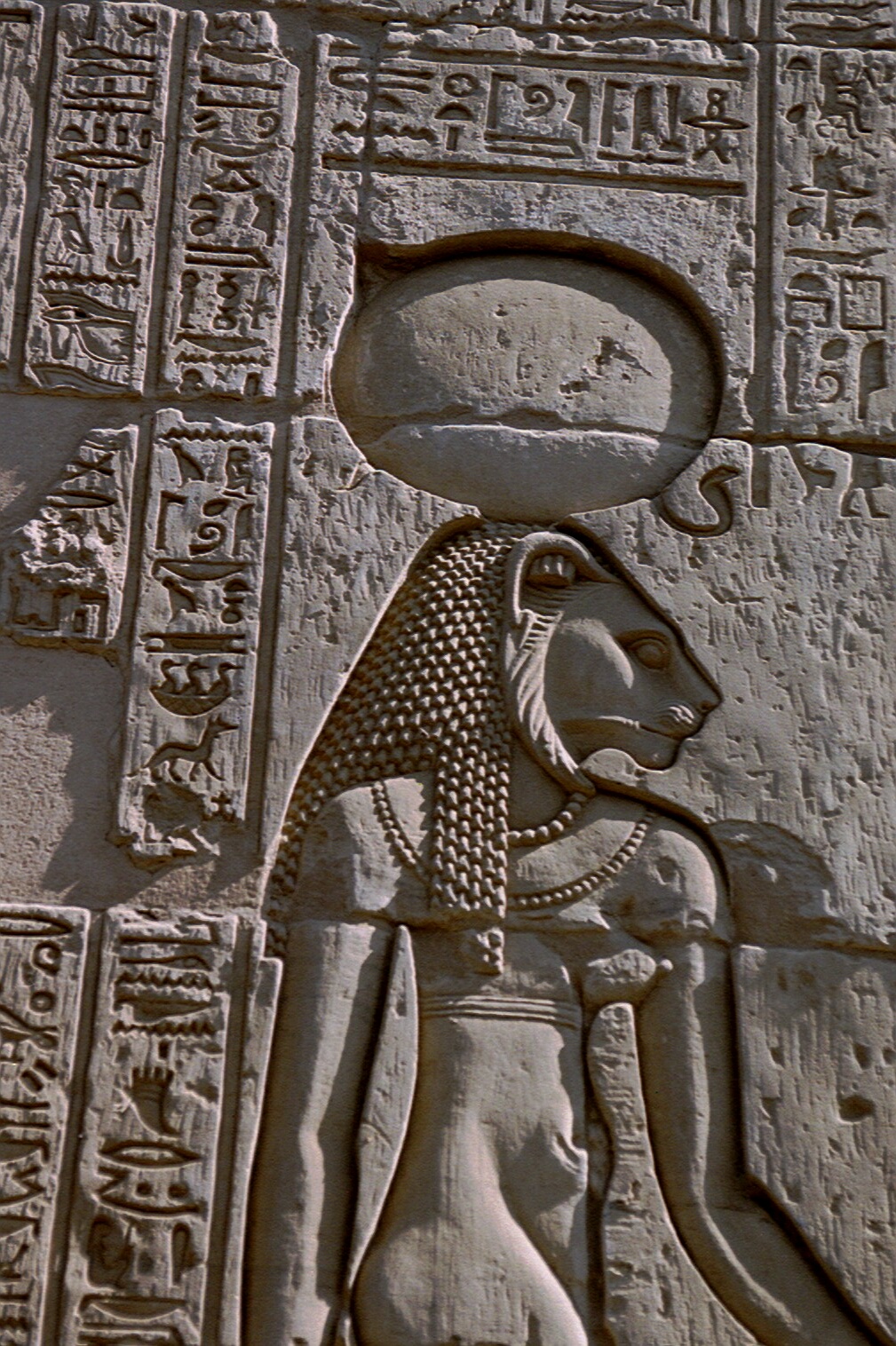
HL: The Sekhmet’s Light series combines Ancient Egyptian mythology with a modern setting. It’s a superhero-like universe where the gods grant power to avatars to combat the followers of their enemies. Another writer I know refers to it as “Isis meets Wonder Woman”.

RC: Isis meets Wonder Woman. Sold me! Where'd you come up with an idea for characters like the ones in your books? What was the inspiration? And why Egyptian mythos, as opposed to Celtic, Roman or Grecian?

HL: The idea for NuruSekhmet actually came from a dream that I had a long time ago now, shortly after a visit to the Field Museum in Chicago. I was interested in Egypt before that, but I became absolutely fascinated by their Egyptian exhibit which has lots of hands-on type displays. The night after we visited the museum, I dreamed about a woman who was given a portion of Sekhmet’s power and, through that, gained a spiritual connection with the goddess. Through further research, I decided to name her NuruSekhmet (which translates into Sekhmet’s Light) because Sekhmet is strongly associated with the sun and fire.


RC: Bonus points for not only giving us great stories but teaching us a bit in the process. An extra +5 for having this idea come to you in a dream. That's excellent! Now, you're in the middle of writing book 3 right now - how's that going? Any spoilers you want to share?

HL: Work is continuing apace on book 3. I’m at about the halfway point of the first draft. I’m very happy with the way some of the characters are evolving and with some of the turns it’s taken. Although it wasn’t my intention initially, the third book is, in many ways, turning into a little bit of a love letter to the Special Forces community. In book 2, I introduce the readers to Maximus “Church” Churchill who is the leader of one of the Horus temples, and a SEAL.

In book 3, Church and other SpecOps guys get more spotlight which really allows me to highlight the quiet professionalism of these men that many writers don’t seem to understand very well. Although I’d always intended to take Church from tertiary to secondary or primary character, I do think that recent events in the real world have prompted me to focus on that a little more than I’d originally thought I would.

RC: Makes sense - - sounds fantastic, I can't wait to read it! (I may have to send a copy to my brother, who's over in Afghanistan at the moment.) To be honest, my "make or break" element of any book is, above all, the characters themselves - and the Sekhmet's Light trilogy is filled with some pretty diverse and very interesting characters - of them all, who was the most fun to write? Who was the biggest challenge for you?

HL: Oh, wow. Well, here’s the thing… all of them have times when they’re a lot of fun, and sometimes each of them can be just a pill to deal with. The one who’s most consistently easy to write is Aramair. She’s very sweet and nurturing so it’s pretty easy to see what she’s going to do in most situations.

Honestly, the one who’s the hardest is Nicole for the most part. She throws me curveballs on a fairly consistent basis and, especially in book 3, she can be very unpredictable.

The most consistently fun to write have been Bailey and Weber. They have a great chemistry between them and it’s been fun to explore their relationship.

RC: I can imagine! I definitely can appreciate the kind of theatricality you embrace in your books, as well - both in the interpersonal dramas as well as the pacing and action; I could totally see them on the big screen. If your books were already made into movies, what soundtracks would they have?

HL: The first book would definitely be geared more toward traditional-type Egyptian music. It really explores the more traditional aspects of the sects and although it takes place in the modern world, it’s very anachronistic in many ways.

The second book would be more rock based, or maybe a score similar to Steve Jablonsky’s work on the Transformers films (say what you will about the movies themselves, the music is just AMAZING). It really drives home the fact that although the Ancient world intersects with the modern, it’s definitely not the old days and that the sects can’t afford to pretend otherwise any more.

The third book should be similar in tone to book two, but with the ‘epic’ feel cranked up a few notches and with instances of a Latin flair thrown in as well.

RC: You had me at "anachronistic" - hah! So, going forward, now: once you're done with this trilogy, what's next?

HL: I have a tie-in collection of short stories/novellas that I’ll be compiling to fill in some of the back story that is only hinted at in the novels. You’ll get to see the raid that Meshrew and Imanekhet conducted that resulted in the rescue of baby Aramair and her mother, the origins of the very first NuruSekhmet in detail, more about Bailey and Weber’s partnership and more.


From there, I’m planning a couple stand-alones: I was asked to do a pirate story, so I’m pondering that. I also have a story about the lost continent of Atlantis which could turn into another series as well down the road.

RC: Pirates! Yes! I'm already in line for that one. Are you putting in any public appearances we should know about?

HL: My first official public appearance as a writer is going to be at Emerald City ComiCon the last weekend of March 2012. I’m particularly excited about that because ECCC is run by a wonderful bunch of guys and the crowd that attends tends to be incredibly friendly and warm.

RC: So, here's a pretty hot topic I'd like to touch on. I notice that you're self-published - why did you decide to go that route, as opposed to going through a "traditional publisher"?

HL: There were a lot of reasons for the decision, but the primary was that by self-publishing I actually retain control of my creation which is important to me. Also, by going the self-pub route, I’m keeping the lion’s share of the money from each sale for myself instead of it going to the publishing company. The unfortunate truth is that many first-time writers get lost in the shuffle of big publishing. The major pubs don’t want to spend money to promote an author that doesn’t have a track record, so there’s little effort made to bring awareness to those books, generally speaking.

RC: Those are some great points! How do you think being self-published has helped you connect to your audience?

HL: By self-publishing, there’s no expectation that anyone’s going to promote my work but me so I’m walking in with eyes wide open. It means that I have to find a way to get in touch with my audience so I’ve taken it upon myself to join as many social media outlets as possible (Facebook, Twitter, LinkedIn, etc) as well as book-oriented sites like Goodreads so I can make myself accessible to readers who want to know more about my books.

RC: That's definitely refreshing - I'm surprised more authors don't turn to social networking to get to know their readers, but I'm really glad to see that you do! So, changing gears again, let's set the WABAC machine for your childhood - - awwww, you're such a cute kid! So tell us - what is the little you thinking? What does she want to be when she grows up? If a writer is the top of your list now, what's number two?

HL: I was a big animal lover and for a long time growing up, I wanted to be a veterinarian. That lasted until I realized that being a vet would mean seeing animals in pain and having to do things like put them down which was just too much to contemplate. Once Veterinary school was out, I then latched on to paleontology/archeology, but unfortunately, I didn’t have the grades to pursue those avenues. I was one of those kids that drove teachers up the wall because I was obviously smart and knew the material because I always did well in class discussions and on tests, but I despised homework and rarely applied myself in that arena.

RC: On that same note, when did you realize you wanted to be a writer? What was it that really made that decision come alive for you?

HL: I’ve always enjoyed making up stories, but I didn’t really start writing them until I hit college. I needed another elective after reading some of my stories, my mom convinced me to take a creative writing workshop.

Boy, let me tell you that was terrifying. The way the workshop worked was that each week we were required to bring in enough copies of a 1-3 page story which we would then take home and read and critique. We would then come in and read the piece aloud and listen to feedback before collecting the copies of our stories so we’d have the hardcopies to improve our work.

As a kid who was notorious for being painfully shy all my life (I didn’t even speak until I was three, according to family lore), it was nerve wracking, to say the least. However, as that first semester went along, I found myself looking forward to the opportunity to read my piece and hear what everyone thought of it. It helped me overcome my shyness and also showed me that I had genuine talent for writing.

Unfortunately, I didn’t do much with it until after my mother passed away in 2001. She was always my biggest fan and expressed confidence that I could be a writer if I wanted to be. By early 2003, I’d decided that I would try to make something out of that faith and came to Seattle for the first time to attend the Fairwood Writer’s Conference at NorWesCon. I got a universally great reaction to the concept for Sekhmet’s Light from the pros that critiqued it, but I struggled with it for several more years. Once I figured out why it wasn’t working and corrected the issues (turns out I was trying to cram a trilogy into one book, which was the major problem), it worked well.

Once I got the first book done and held the proof in my hands for the first time, I knew I’d love to do this for a living.

RC: Isn't that the best feeling EVER? So what's the best piece of advice you've ever had in regards to being a writer?

HL: I’m not entirely certain who first told me this, but it was something to the effect that “writers write”.

RC: I've heard that before as well. I always liked the directness of it. So, home stretch time: Who was the better archeologist - Allan Quartermain or Indiana Jones?

HL: Okay, I think this is a great question because both of those guys tend to make actual archeologists cringe. I think in terms of sheer panache, I have to give it to Indy (the fact that he was a massive childhood crush of mine might also come into play).

RC: Good call. We named the DOG Indiana, by the way. True fact!

Okay, let's tell people what they've been dying to know: Where are your books sold? What formats are they available in? If my readers want to know more about you, where can they go?

HL:All the major outlets are carrying my books and they’re available in paperback and the major ereader formats: Amazon’s Kindle, and ebook which is the standard for NOOK, Sony, and others. I’m also more than happy to do direct sales if anyone has problems purchasing from the various outlets which can be coordinated if they contact me via my website.

Akhet for Kindle
Akhet for NOOK
Akhet Paperback
Peret for Kindle
Peret for NOOK
Peret Paperback

Thanks so much to HL Reasby for taking the time to chat with me - - best of fortunes going foward, and do check out her Sekhmet's Light series, at an e-bookstore (or brick and mortar, as well) near you!

Aug 11, 2011

Interview by Daniel L Carter (Aug 2011)

Had a fun weberview with fellow author Daniel L Carter that just got posted up on his site. Fun times!

Here's a bit of it - - go check out his site for the full enchilada!

DLC: I want to thank you Ren for stopping by and doing this interview with me. Before we get into your cool looking series please share a little bit about yourself.

Ren: My name is Ren Cummins, up here in the delightfully and mostly cloudy greenery of the Pacific Northwest. A stone's throw (okay, a very hefty throw, like, with the wind at your back or something) from Seattle; I live up here with my wife and daughter, a pair of cerebrally-interchanged dogs and a cat who is very in touch with his Egyptian mythology. I gave up the rock-and-roll ambitions I'd carried over from my youth once my daughter was born, and fell back in love with telling stories as she started to be interested in hearing them. Been writing professionally now for several years, and am using all the wonders of this interweb contraption (I kid. I'm a kidder) to get my books out on the market.

DLC: I think just about every author is still trying to figure out this interweb thingy. =) So, speaking of books, tell us about your series.

Ren: The series I'm working on right now is a Young Adult Steampunk Fantasy series called the Chronicles of Aesirium. It revolves around a "sort-of-Earth" planet called Aerthos where technology has evolved from a focus on steam-engine-driven tech, but this has been made feasible by the addition of magical skills called simply "Art." By using Science and Art, the civilization - in spite of a few growing pain setbacks - has made great advances, but, as so many societies do, fell into a civil unrest dwelling on the differences between those who prefer science and those who prefer magic. This civil war left them irrevocably divided, with the artists losing and being exiled beyond an enormous wall originally built for the defense of the city. The story begins about 200 years after this exile, with the citizens of the city, Aesirium, becoming more like mythological figures to the people of Oldtown-Against-the-Wall, the descendants of their exiled forefathers.

If generations of exile weren't bad enough, there are monsters in the wild lands to the west; great, corrupted and undead beasts that find their way into the nighttime streets of Oldtown. And this, on top of the bedtime stories of the Reapers, powerful and mysterious beings believed to cart off the rebellious souls of the unsuspecting.

The story itself focuses on a trio of children growing up in this challenging but still fantastical environment, each with a specific role to play in the history and future of Oldtown and Aesirium - a future which will change the greatest city on the face of Aerthos.

Okay, that probably sounds a lot more epic than I intended. But you'll have to read for yourself and see if I'm lying.

DLC: Epic is exactly what I'd call it. Which character would you most identify with?

Ren: Oooh, that's a tough one. There's something of myself in all the characters, of course, but the one I just get the most is Ian, an old wizard with an odd sense of humor and an even more odd sense of fashion. His role isn't large in terms of the story's entire narrative, but he does give the children a sense of direction and focus that they need at crucial times. I most enjoyed writing his odd sense of comic timing, how he'd dance between sober wisdom and quirky silliness.

(continued at site)

Thanks for the interview, Daniel! The rest of you - go check out his blog and his books - - -go! Go now!

Jul 13, 2011

the Right to Write

July already? Crikey.

The past month or so has been both wonderfully and painfully busy - been networking like it was free (it mostly is) and writing/editing as if it generated oxygen. Somewhere in the middle of all of that, I managed to hold down a full time job, help take care of the house, take road trips to Portland and Montana, and, I'm pretty sure I might have slept once or twice. Tired but still creatively motivated.

More and more, the reality of this new adventure is rearing its delicious head up into my horizon - in fact, it feels as if I've already passed into the golden fields, having crossed its border sometime during the dark night now fading behind me. Somehow, I became a writer and didn't even notice.

Seems like every week or so, I get another idea for a story or a book or more, and I'm still less than a book away from finishing the current 6-book series. I'm not complaining, though - clearly, it's better to have more stories than you have time to write than to have no stories and all the time. A lot of them are staying on the back burner for now: the harder science fiction - especially the ones who would do with a fully-developed schedule of tech research, for example - will have to wait until I can dedicate more time to it. On the front burners, there are already plenty of projects I'm pushing through. Still don't understand why I don't feel more stressed out about it.  Too busy enjoying doing it, I guess.

One of the parts I'm actually enjoying the most is the mingling with peers. It's so strange to think that as recently as two years ago, all these great people working in publishing - comic books, fiction, sci fi, films, what-have-you - are now people I interact with on an almost daily basis. It's kind of dreamy. I swoon.

Seriously, though, the downside to that is that I still presently have a day job - one that is decidedly NOT being an author. And every day, I'm unfortunately reminded of the distinctions between these two worlds. Some days, it feels like I'm Bruce Willis in Twelve Monkeys, uncertain of which reality is "now". It can be both frustrating and disorienting.

For example, one of the most positive elements in self-publishing is the idea of recognizing the motivations and logic behind every decision I make. Each element of work or marketing or design, each step of the way has a reason behind it, and if I don't like something, well, then I just go ahead and change it. But in the corporate world, I'm comparatively unpowered in such aspects. "Don't ask why, we just ask 'how high?'" It's strangely dehumanizing. And the strangest bit of all is how I managed to not notice that sooner. Sure, I knew I didn't like it, but I didn't exactly realize why.

And speaking of the big Y, I've been reading a lot of wonderful blog posts recently by other authors that talk about why they write, or why they self-publish, or why they write and self-publish, etc. It has been really satisfying to see so many who've come into this process for so many of the same reasons I have. It's a wonderful community of writers, and thank god for the internet to bring all our tiny islands together.

One other update - I attended my daughter's school last month at the invitation of her teacher, to sit and talk to the class about being an author, writing, and all of that. It was one of those pivotal and mind-altering moments, to be perfectly honest. The children really got excited about the idea that all these movies and video games and comic books; these myths, even the history we learn about - all of these things come from the craft of storytelling. It's all just one person telling a story to someone else, or writing it down so that it may be later read and shared. The kids were really engaged, and I hope I helped them get a little more enthused about reading. The teacher was very happy with it; and on a side note, I still have trouble calling my daughter's teachers by their first names, even when they're younger than I am. That's just weird.

Well, speaking as I was in regards to the day job - and the writing, for that matter - I have more things to do today than spend my time blogging. Thanks for reading along today, it was nice having you here.

And, as always, if you enjoyed this, feel free to jump over to amazon and check my books out. I remain a pretty big fan of the stories there, and I hope you will, too. Sorry for sounding like I'm pimping myself out, but I am grateful for every single one of you that picked or will pick up one of my books and enjoy the stories written therein.  If you do, I'd love to hear what you think of them.

Until then, be well, my friends. Enjoy the day.

Jun 9, 2011

Setting the WABAC Machine

Been enjoying a spirited conversation regarding the past, present and future of publishing over on Twitter today. It reminded me of the line from "Ferris Bueller's Day Off" - life moves pretty fast; if you don't stop and look around, you could miss it. Because, seriously, the publishing world IS moving pretty quickly. Or is it?

I frequently examine the world of literary publishing and perform a compare/contrast to the world of music publishing - it seems like the rush and crush of the music industry's marketing blitz has driven the industry and technology a bit faster than book publishing, game publishing and the film industry (in no particular order). Or perhaps it's just that we've noticed them in a particular order and the technology just took a while longer for various industries to become readily apparent.

Back in the 90s, yes - I was focused primarily on the music industry, myself. Recording, live shows, publishing, etc. The digital age at that time was battling between DAT and CD, and the internet was a pale fetus of what it has developed into now. The only way to really get your music out and about was by doing shows or getting on the radio. And the latter was so much more of a challenge. AOR format kept most unpublished artists off the air - if you knew a DJ or were fortunate enough to live in a city that had any sort of "Local's Only" show, then you had the chance to get your song played at, like 11:35pm on a Thursday night or whatever. I was fortunate enough to know Nyk Fry when I was working on my album, who at the time was working at one of my local radio stations. He and I had worked together on a couple other things, and he had a free slot open on his show and invited me to come on and pimp my CD. It was a pretty great opportunity; I don't know how much of a dick I might have been on air, but to this day I remain very grateful for the chance.

Also, at the time, I was working days managing a downtown hotel - we hosted a lot of the bands who came through to play the Zephyr club or the Dead Goat Saloon, such as The Church, Big Head Todd and the Monsters, and even Dee Snider. Christopher Titus stayed with us for a week, and a chunk of the crew working on the filming of The Stand even hung out with us while filming in Utah. It's so odd now to consider how much around the periphery I was to all these media outlets, and yet never really figured out a way to convert that into a more professionally creative endeavor. Different times, a different brain in my skull.

It's been over ten years, and though I no longer pursue the music as a professional path, the entire time period of "back then" taught me a great deal about how those things work.

And that makes it doubly strange in that a lot of the people running those organizations and corporations involved in music, books, film and video games seem to be struggling with how to adapt to these new technologies.

For example, look at music.

For the past few years, the RIAA has been complaining that their poor starving artists have been victimized by the horrors and atrocities of the heartless digital pirates, who have been stealing away millions of potential profits from the musicians they represent. They point to line and bar charts as evidence of their financial ruin, and draw a direct correlation to the increasing use of the internet. Oh, yes, obviously there is a connection there.

However, companies who have embraced the digital age have thrived and prospered. iTunes, Amazon MP3, Rhapsody, etc - - they're doing pretty well, in spite of the apocalypse that the RIAA has described.  But the truth is that these other companies have done well because they have evolved into the new business model as defined by the good ol dollar bill. The people have voted with their wallets and chosen the format they're most interested in. And people have frequently turned to the availability of music on the internet to sample and validate music to see if they want to actually purchase it. I have a friend (who wishes to remain anonymous) who says he frequently downloads music to see if he likes it. And if he does, he deletes it and buys it through one of the online stores. And if not, he just deletes it. Sounds perfectly reasonable to me, but, then, I'm not a highly-paid RIAA lawyer.

Neil Gaiman did a test with his release of "American Gods", where he allowed a free copy of the book to be downloaded for, like, a month. And he noticed that sales actually spiked upwards as a direct result. That seems to go completely against the expectations we are led to believe from conventional wisdom. Some people point to his results as an anomaly, but either way, it's an interesting experiment.

But that's just one aspect of this topic. Book publishing is becoming an increasingly facilitated process: POD (Print on Demand), Vanity Press and e-publishing sites are making it easier and easier to snap the final pieces into place when publishing a book. For example, I can upload my book to CreateSpace and Kindle, and within two or three days (usually much less), I've got books for sale. It's actually Very Simple.

Now, no, I don't get the amazing distribution channels that the Big Publishers get. I can't manipulate the shelf real estate of a book store like they can; I'm just one author out in a sea of other authors. And in that way, "traditional publishers" still retain a perceived lion's share of the business. I'm not bitter or anything, I accept that this is how things go. They have the bigger quantities of authors to look out for, so clearly they're going to wrestle things in accordance with their best interests. And though I'm outside of their monkeysphere, I don't take it personally. We're both doing somewhat nicely in sharing our ecosystem.

But I keep hearing these strange rumblings coming out of them which sound disconcertingly similar to the panicked cries of music publisher stockholders from 5 or 6 years ago. I see strange declaratives being made about "book piracy" and "basement press market pollution" that seem to emanate from that same place of fear and confusion. Old School publishers are indicating that they're not making their same money, and, in their blind and unweildy fear, they're striking out at the people they have decided are responsible: self-publishers.

I can't help but worry that it's not just a coincidence that I've noticed so many one star reviews on Amazon which seem to attack specifically Self Published novels on the merits of...well, sometimes for no merit at all other than being self published. Terms of "Vanity Press" and "Self Published" get used as insults, as if those terms alone were valid arguments against them. I've read enough "Traditionally Published" books that contain typographical errors and poor narrative, 2-dimensional characters and flimsy story arcs to warrant the regret of 20 dollars poorly spent. But at the same time, I have a different view on purchasing music, books, films, and so forth. I'm not just supporting the label or the publisher or, sometimes, even, the artist. I support the industry itself. If I see something of quality, I'm as likely to buy it to help the industry itself take a small step forward. I also confess lately to be adjusting this, however. There are just so many new independent authors out there, whose books are every bit as good (or better) than the books I've read in the past from the Big Publishers. Did you really believe that a book is only good if it came from a company that's already published 10,000 books? Size really isn't everything, after all. Ask Goliath.

But here's where the title of today's blog comes in. Go back about a hundred or more years - go on, Mr Peabody, set the WABAC machine and let's go! And let's see how publishing worked - back before the day of the Conglomerate. Publishers were just a guy with a printing press and binder. You'd pay them to set it up and print it and bind it, and there you were, proud owner of a stack of books. Sounds awfully similar to vanity presses, come to think of it.

And now I read someone arguing on behalf of the publishing houses, claiming that they're not so much in this for the money as much as they're here for the readers. That's right, they're here on behalf of the readers, saving them from losing their money on rubbish. They're doing this for you, people. They're the watchers at the gate, keeping out the millions of craptastic novels written by people you really don't want to waste your hard earned dollars on. Very altruistic, huh?  Okay, okay, I don't want to pick on them too much. I know it's been hard for them lately, and I don't mean to kick them when they're down. Besides, one day, they might throw a bucket of money at me, and then won't I feel like a sham?

Seriously, though, my concern for them is really only that they - like so many other similar industries - have forgotten one of the primary concepts of success: Innovate or Die. Keep up, or fall behind. Evolve or become extinct.

It doesn't need to be a scary world. The asteroid hasn't hit the planet - well, okay, maybe it has - but they don't need to stumble around with their silly T-Rex arms. The publishing worlds are changing, and if only they were willing to evolve with it instead of trying to stop it, they'd probably be in much better shape.

Jun 2, 2011

Q and A day

Geez, I talk a lot. Well, in the interest of fostering a bit more of the good ol' Give and Take-iness of the internet, I'd like to just open up the floor a bit.

Any questions? About Steampunk, the Chronicles of Aesirium? Other projects? Music? Movies? Video Games? Philosophy? Comic books? Math?

Ask away, I'll answer.

The Tragic Downside of Writing What You Know

It's been a difficult couple of months lately for anyone who watches the news and is empathetic to the struggles that befall our earthly cohabitators. Japan's continuing difficulties were still powerfully fresh in my mind when one of the most powerful tornados on record carved a path through Joplin, Missouri. My day job required me to be involved in that one from a professional standpoint, as my company has employees there, and without going too deeply into it, I will just say that it remains a powerful event, even many days later.

I've been on a variety of conference calls for the past two weeks now, working with directly and indirectly impacted people, and observed as my emotional state careened dramatically between despair and horror and the occasional moments of elation. There were moments of optimism, truly. But these seemed - to my mind - to be the infrequencies rather than the norm.

I even took a full day off last week from work just to untether my mind from the reality of that devastation. "Untether"? Unhitch? Unhinge? *shrug* I don't know that any of those words works better than the others. To be frank, I just needed to disconnect from it.

So I spent a day as something else - not a crisis manager, but as an author. Went with a good friend to a coffee bar (frequented by - gasp - other authors!) and enjoyed a good cup of mocha, a tasty raspberry doughnut and a fantastic conversation. From there, went to a local comic book shop and hung with three other good friends of mine, and, following a brief nap (please keep all your "Old Man" jokes to yourselves, I've heard them all, thanks) went to a meeting with a few other authors to discuss ongoing and future projects.

Sadly, I didn't actually get any writing done, but I did the next best thing in that I gave all the cacophony a moment to settle.

Later in the week I was able to sit back down with my next novel and eke out a few trembling paragraphs, which is better than I'd been able to do all week - so I took it as an achievement.  But through all the craziness of the past few weeks, a conversation with another author jumped out at me, regarding some of the challenges at writing fiction versus non - namely, the concept of writing what you know.

It's a common enough statement, uttered as the Primal Commandment of Literature for all struggling authors, to keep your emotional associations and personal experiences as grist for the mill, as the base matter for your Eternal Writing Engine. That idea used to make me smile - my first books have been about sci fi and fantasy, all tales strewn from a world wholly unlike my own life-experiences, with concepts such as dimensional travel, death and the soul, magic and that sort of nonsense. Heh. Nonsense. Oh, sure I can talk casual, but I do love the material. And I make no excuses for it - - - fiction though it may be, I know exactly where every twisted non-reality comes from in my own life.

Just like any author will draw some corrolary item out of the congealed memories or experiences of their past or present, a writhing, living creature from the subconscious colonies of their own spirit, I just paste together a mosaic of this or that when building out the worlds, the characters, the elements that combine to form the narrative. How much of it is conscious or not... well, I suppose that's a question only my therapist would be equipped to answer. (Or, well, they would if I had one. For now, a blog is cheaper. *snrk*)

So, back to Japan and Joplin.

I'm on chapter 3 of the conclusion to my 6-book Chronicles of Aesirium series. It's all been quickly rising in intensity the past few books, as all the opposing forces are arrayed across the fictional chessboard. And this is the big one, the throwdown between good and evil. I won't lie - and I'm not spoiling, I hope - but it's not gonna be a clean war, here. There will be casualities. There will be destruction. Book five was emotionally intense enough for me to write, but book 6.... yikes.

I've sat on the threshold of this story for a few months, now, ever since book 5 wrapped back in the first part of 2011. It's not just that it's a big epic confrontation, filled to the brim with infinite moving parts - well, okay, it kind of is, but that's not the reason I've been pausing.

And I don't think I even fully appreciated why I was hesitant to start until Japan started to really affect me. With the added impact of my co-workers in Missouri, the point was truly driven home. Basically, I'm not just writing a story of a teenager who becomes an angel of death, or the story of her friends - the streetwise prophet or the budding mad scientist. It's a story about history - about how we allow ourselves to be misled when we don't understand the very world we've been born into, and about how the future is driven by the comprehension of that past. But it's also about how we communicate NOW, and how we as a large community experience the present. And that realization is when the light went on.

Why were Japan and Joplin so potent in my emotional core? Because I need to write them into this. Their story is noteworthy - their experience is not just applicable, but it's something that is potent. It resonates - not just with me, either, obviously. I'm just some guy writing books. But hopefully I can manage to shape this tale as a way to expand the resonance of these real-world events, even if it's just in my own small way.

I recall hearing a story about Anne Rice's initial inspiration to write the "Interview with the Vampire" book - about how it came from a question of how to deal with the loss of her daughter - - "can a child live forever?" Certainly, such a powerful experience can lead an author in powerful directions. Additionally, I see the stamp of Hiroshima in many of the anime shows I've watched - Robotech, Akira, Grave of the Fireflies, for just some of the more blatant examples. They deal with the wound to their culture through...well, their culture. And so the cycle continues, I suppose.

It's a literary catharsis, in a manner of speaking. And it's not simply relegated to writing - musicians, painters, sculptors, actors, whatever - - we create from our own experiences and observations, from our own emotional response to the world we live in. So what if the price is a little bit of heightened emotion? So what if we're, as a simple result, just a little more emotional about things? Is the price worth it?

Actually, that's kind of a silly question, isn't it? If I didn't think it was worth it, why would I still be doing it?

Some days, I don't really expect tremendous and earth-shattering nuggets of wisdom here - - sometimes, it's just nice to check in and remind myself why I do this. And with that, back to work.

May 18, 2011

The Age of Man

When do you know when you're halfway there? This odd rhetorical-esque question popped into my head on the way to my day job this morning, and embedded itself like a splinter.

Do you ever know? Because, technically, you really wouldn't. Think about driving somewhere. Oh, you might be able to guess that you're about halfway to your destination, based on time or mileage, but you can't KNOW you're in the exact middle of something until you've gotten to the end, and, even then you're no longer in the middle. Right? It feels oddly existentialist, but that could just the lack of coffee in my bloodstream.

I remember hearing the stories about Cristobal Colon (Christopher Columbus in the anglicized format) being nearly at the point of a mutiny (nearly at the sword point, not to put too fine a point on it - - okay, I'll stop that now) because the crew simply didn't think they were past that point of no return and would rather risk a long trip home than continue on towards the unknown or the likely expectation of a trip over the edge of the world. And the historically accepted facts indicate that Chris - once they did actually arrive at land - didn't even realize the truth of what he'd accomplished, that he'd "discovered the americas."

Although, actual history reveals that he didn't actually discover it. And not just because people were already living there (an old Lakota Sioux friend of mine used to joke about wanting to celebrate Columbus day by discovering someone else's home and claiming it for his own), but because Vikings had been here - apparently several centuries earlier than the Nina, the Pinta and the Santa Maria. But I guess it's really okay, since Chris didn't realize he had found the new continent anyway. Plus, there's that whole thing about how Amerigo Vespucci did the cartography and got to name the place, so that's an entirely other complication. But I digress. The point I was going for is that all too often we really don't know exactly where we are. Not while we're on the journey and, many times, even after we've arrived.

There have been a lot of significant moments that we can look back on as world-changing events. some of them leave monuments, like the Pyramids; others have monuments erected in their honor. Some are chronicled in stories, songs, paintings or statues - and some simply have the memories of their enduring impact, engraved into our hearts. July 4th, 1776. May 10th, 1869. December 7th, 1941. November 22nd, 1963. July 21st, 1969.

I started thinking about all those historical moments - the good and the bad - and realized that many of those big events don't necessarily have a date stamped on them. And while many of them do, some of those dates aren't even entirely accurate - like in the case of July 4th not being the actual date on which the Declaration of Independence was signed. But we like to commemorate dates. Most Christians celebrate December 24th as the birthday of Jesus, even though it is widely understood that this date was simply chosen as a means to absorb Christians into the Roman practice of Saturnalia.

Additionally, fundamentally global-altering discoveries don't generally have that sort of a birthday, either. The telephone, the computer, the television, the internet. When did any of those begin? Can anyone pinpoint the moment at which they emerged, blinking, into the light? You might as well attempt to get people to agree on the moment life begins, or when the first man (or woman) walked on the earth. Perhaps it's more like an accomplishment than an invention that gets our attention? For example, the concept of flight has been around for centuries, but it was the Wright Brothers who achieved it in 1903. And although trains had been around for years, it was a spike being driven into the ground at Promontory Summit in 1869 that made history.

Computers seem to be the big event of this generation - the internet has brought the world together in new and amazing (read: sometimes frightening) ways. Processing speed is unbelievably fast - and transmission rates are already into the realm of well beyond the fantastic. You don't think we've come a long ways? Go back and watch "WarGames" or the original "Tron". You'll cry.

There's that whole "Technological Singularity" that seems to be causing a bit of concern - simply because things are rapidly moving along so exponentially fast that people can't even imagine what's going to happen after a certain point of development; that things will occur so quickly that the human capacity for thought will get left behind in the virtual snap of fingers. That transitional apex of understanding and development is assumed to be so evolutionary that it looks like a pinhole in comprehension, one that no one seems to be capable of peering through. Others seem to view this as the concept of approximating zero or approaching infinity. From any point approaching the horizon, it looks like a line across your vision, but isn't it just another perpetually migrating destination?

Kind of makes me feel like my own life. Have I already passed the halfway point? Am I already more than halfway between birth and death? Did I already miss my chance to have a midlife crisis? I never really wanted a toupee or a really fancy car, so maybe I'm just not wired that way. Or would I even know?

Feeling awfully rhetorical today. I don't have the answers, here. I'm in the same boat with all of you, looking out over the water and hoping for land. Although, to be perfectly honest, I'm happy enough with the sound of waves and the feel of the wind against my skin that I don't mind the open horizon. Are we there yet? Eh. We'll get there when we get there.

May 12, 2011

You Must Unlearn What You Have Learned

Was challenged - in a kind and encouraging way - to open up a thought on the topic of "diversity". The original blog was delivered from a perspective that comes to us straight from across the pond, and, as this topic never fails to do, it got me wondering about my own sense of bias, my feelings on differences between people and the stereotypes which often ensue.

This is a challenging topic to address, one might say, because I fit into the traditional model of "what the $%&@!! do you know about diversity?" - I'm a straight white male in my middle age, so that kind of makes me more in line with "the man" than "the oppressed", right?

Well, I guess I'd have to say to that, yeah. Not that it would be something I'm proud of, because I honestly didn't do anything to be white, straight, or male, and the fact that I'm still alive in my early 40s has more to do with dumb luck than any particular methodology of heath care upon which I've set myself. Do I get any kind of benefits - real or implied - by being thus? Or, at the very least, do I avoid many of the pitfalls and challenges that face other people who are otherwise? People who are different - whether by the color of their skin, their sexual orientation or gender - or different in any of the readily obvious manners that some people use to instantly categorize or assume prejudice against? I guess I'd have to say yes, since that's just an issue of public record: people in this world commit - still today - all manner of atrocities against others simply because of whatever excuse they may find. Merely, as it inevitably becomes apparent, due to some sort of differentiation that the aggressor finds intolerable.

Now, on the one hand, I do understand the notion of categorization. It's a natural tendency of people to expect a pattern in the world around them. People will generally buy the albums from an artist or genre they love, simply because of past experiences - or watch movies with a particular expectation simply because of the actors or writers or directors. Or, consider your favorite flavor of ice cream - and then ask yourself if the company who makes that flavor really matters, or are you predisposed to like that flavor, generally regardless of who manufactures it? What's your favorite color, and when choosing a new shirt are you more likely to pick that color of shirt over another color you don't like?

Let me be clear, here: I am not in any way attempting to justify prejudice. I think the automatic fear or hatred of a person simply because they possess a specific characteristic is horrific and profane. What I'm saying here is that prejudice does partially result from what is an automatic human characteristic. We tend to gather similar experiences and build a common expectation from them. You burn your hand on the stove, you become nervous around stoves. But you also shouldn't go around destroying stoves because you burned your hand that one time.

Prejudice is a learned response - and this means it can be UN-learned. In fact, it may be one of the lessons most worth un-learning of all the possible things we can deliberately evolve during the course of our lives. See, the fact is, everyone's different. And though certain life experiences may sometimes establish some commonalities, it's not just unfair to the person who's being generalized, it's also unfair (albeit to a lesser degree) to the person doing the generalization. I'll explain.

A guy's driving home, late one night. The highway he's on has some construction up ahead, so he hops off the freeway before he gets stuck in a nasty traffic jam, but ends up in a part of town he's not used to. He can't find the onramp back to the freeway, and after several minutes of panicked wrong turns, he finds himself in "the bad part of town" and promptly gets a flat tire. It's late, he's lost, and his cell phone can't get a proper signal, so he decides to get out and walk to find a 7-11 or a pay phone. After a block, a couple kids who live in the neighborhood - approach. They've both got dark colored skin.

"Hey man," they say.

He turns and runs, fearful that they mean to do him harm or rob him.

They look at each other, shrug, and keep walking along their way. Unbeknownst to the man, both kids have cell phones (their parents wouldn't imagine letting them out at night without a way to call home), and one of their parents is a mechanic, to boot. The other kid's dad is a police officer.

Now, considering that story, who was most hurt by prejudice? Clearly, the two kids didn't need a reminder that some people are afraid of other people (note, I didn't mention the man's skin color, did I?), and could very easily have grounds to be offended by the man's behavior. But in this case, his stupidity really harmed himself - his fear kept him from learning that the two kids might have helped him.

On a less extreme level, as a writer I have to embrace the fact that every person has a story. Every single person. And though the stories may in some case be similar, it's usually only superficially so. Being prejudiced isn't just a horrible character flaw; for me, it would also be crippling from a spiritual and creative perspective. I love that people have uniqueness, that, really, if you put four people on the tv screen and sang "one of these is not like the others", I'd like to think you could pick any one of the four as the odd man out. I know I'm not the same as all other straight white males. I don't think there's a single characteristic you could pick out about me that's the same as any other person, actually. And I prefer it that way - just like I expect most people to be.

If every characteristic were an ingredient you might find in your kitchen, imagine combining twenty of those ingredients in any manner you wished; order of mixing, arrangement, cooking time, etc. Now, adjust the process, order, temperature, preparation techniques and so forth, even in the slightest way - and you're liable to get something totally different. I found this out when I was a child, making chocolate chip cookies for the first time. I thought that the important thing was just to put all the ingredients into the bowl at once and then mix. Turns out that you won't make cookies that way. Well, okay, you CAN, but they'll taste like crap.

And people are made up of millions of ingredients - each moment is a new experience, each person a different procedural step, and even beyond all of that, there's a certain element of personality and soul which comes from somewhere altogether ELSEways.

The fact is, assuming two people are the same because they kind of look the same is like saying Vanilla ice cream and lard are the same, because they're both kind of white.

So really all I'm saying here is that you can KIND of reach some generalities, but that everyone's different in at least some ways, and that everyone sort of makes assumptions about other people as a general rule of thumb. But that doing so is lazy, ignorant and should be avoided whenever possible. Like, if the dude you see coming towards you is wearing a hockey mask and holding a bloody machete in one hand and someone's head in the other, maybe it's not a good time to ask them about their philosophical uniqueness. Just saying. That's a rare example, though, obviously.

Oh, and sharks. I still don't like sharks, and if I see one of them walking towards me, I don't care if they have a cell phone in their pocket, I'm going to be running the other direction.  And you should, too. You don't believe me? Ask Roy Scheider about that - or, I suppose you could, but you can't, and I'm pretty sure sharks had something to do with that, too. But I don't HATE sharks. I'm just terrified of them. Completely. Absolutely. And I don't consider that a phobia, because a phobia is an unreasonable fear, and I think a fear of sharks is completely reasonable.

But that's a totally different thing than being afraid of people or hating them because of the color of their skin, their gender, nationality, religion, sexual orientation or any of a thousand characteristics you decide to be so horrifying. Except, perhaps, characteristics of bigotry or misogyny or homophobia, those kinds of things.

Fear and hatred stemming from prejudice; we should probably agree for that to be intolerable. Just a little confused why we can't seem to do that.

May 10, 2011

Gravity and Grass Stains

I remember this one hill near my home when I was a kid; it was near the high school and we'd often ride our bikes out and play around the grass and playground equipment. Tag and kites, whatever the day required, that field had it. It's almost difficult now to remember being so easily entertained by...well, a park. But, anyway, in the middle of it all was a really big hill that bottomed out into an inverted dome of grass - and one of the things we did was roll the hill. You know that one, right? Just lay down, cross your arms and let gravity spin you into a near-vomitous pillar of laughter. And eventually, one of us would get the idea of taking the hill at a run. Just nose towards the base and run run run. It was great until about half way down, when you just couldn't keep your feet under you any longer, and BAM. Wipeout.

Sometimes I really don't know how any of us survived childhood.

At any rate, that adrenaline was just awesome. It was a drug, honestly, wasn't it? You just don't see people laughing like that when chemicals aren't involved.

But all that aside, the sense of being almost ready to wipe out, where you're churning your legs as little flesh-and-blood pistons of fury, recognizing that, at any moment, you're about this far from face planting. It's pretty exhilarating. Very exciting, and yet empowering. It's also a very close approximation to the sense of omnipotence that is generally only experienced when we're too young to know better. Joy versus risk. When do we discard one for the other? At what point do we allow the possibility of failure to unseat our celebration of life?

Or are the two mutually exclusive? I'm leaning towards not. I think it's the possibility of risk which makes the celebration more satisfying, to be honest. Running down the hill for the first time and laughing right up to the moment where you wipe out is fun, yes. Crazy mad insane fun. But picking yourself up, going back to the top and doing it again? Oh, that's just super-crazy. And even more fun.

Granted, "all things in moderation" (including moderation?), meaning that, yes, we can't hope to live in that realm wherein all the world's cares go screaming past, too blurred to distinguish or bother; but we certainly can opt to visit there from time to time. I think I took a while off from that place, but yet.... starting to feel that again. Only, without so tremendous a risk of grass stains.

Getting ready to launch three more books - book 5, "Into the Blink", as well as two of my autobiographical journals, "The Middle Age (1 and 2): A Geek's Journey from Boy to Man (and back again)". That'll bring my library to a not-so-whopping-and-yet-still-nothing-to-shake-a-stick-at total of Seven. And this will be an even crazier year than last. In addition to working on "The Crook and the Blade" (book 6) - with a target launch date of mid-September 2011, I'm also developing a few more ebook anthologies, as well as some other projects that are still kind of hush-hush (for now).

Me and my daughter are working on some short stories for a children's anthology, which I would like to have completed by this fall, too. I would love to find a good artist to work with for some interior art, but have been toying with the idea of just doing the sketches myself, in a kind of A. A. Milne sort of reductive style.  It'd be fun to break out the pencils and pens and see what I could do after so long. I should think my old college art professors might be a little relieved that I haven't just completely thrown away their lessons.

Working with some other fantastic authors now, too - Jen Ashton, HL and Garth Reasby, just to name drop a few - and the projects I already have lining up for 2012 are just so exciting that it's all I can do not to throw everything else aside and work on them right now.

So here I am, laughing, arms flailing, feet going just as fast as they can, wind rushing past my face and the ever-present threat of a park full of rich sod stretching out its innumerable tendrils to cushion my fall. And yet, I've stopped worrying about the possibility of falling; today, I'm more enchanted by the possibility of flying.

It feels like a good day to enjoy words.

What's your hill? What's that one place for you that gives you that "I AM SPARTACUS" moment?

Apr 27, 2011

Who Do You Think You Are?

I caught myself mentioning in a work meeting the other day that I "made my living writing fiction", and I mentally hit the pause button and told myself, no you don't, you fool. You only wish you made your living that way.

But that brief internal dialogue stuck with me. I'll make no secret about the fact that although my books do actually sell, I do have a "day job" that pays the larger part of my bills. And that doesn't make me unique - most authors - even bestselling ones - do have other jobs that allow them the option of spending their free time with their literary pursuits. But is that my living?

I still consider the first time I held a printed copy of one of my books in my hands as one of the great and individually triumphant moments of my life - up there (but not above) my wedding day, the birth of our daughter, my first real kiss, et cetera. Just above listening to my CD for the first time, or that time I was on stage with Douglas Spotted Eagle. Or being with my belly dance troupe "Parthenon" at the 1999 Kismet Bellydance festival. It's just a certain kind of creative triumph that sets itself apart from other moments in my life, and one that has only been replicated with each successive release of my other books.

It's become, for me, a strangely altered sense of success and joy. Like the proverbial game of "Poohsticks" (a reference that will only make sense if you're a fan of Milne or Hoff), it's not about who wins so much as the playing which makes it a joyful game. It's an unusual manner of self-consideration, reminiscent of a piece I recall from Robert Fulghum, speaking of what he did for a living. He summed it up by saying he breathed, slept, ate and wrote, among the many sundry activities which comprised his existence. I first read that some time back, and it kind of stuck with me like the summit of the mountain calls to the climber. "Here I am," the philosophy waved to me, "come on up and claim me for your own!"

It takes me back even further, to my days of reinvention back in high school. Did anyone else think of that as a specifically elective period of time, wherein we deliberately craft ourselves into the people we want to be. Granted, we're teenagers, so our perspective is often quite limited, but it can - if we really think about it - help us learn the valuable skills of self-guidance and self-determination. Or, in the words of that great classic Oingo Boingo song, who do you want to be today?

But I have to be honest. I have days where I'm more successful at that than others. I have a few tracks off my CD on my iPod and they pop up from time to time, and it often takes me several moments before I realize it's me. I glance at my books on their section of the bookshelf and smile at the thoughts of the many little miracles that happened to bring them to print. But at the same time, it doesn't always FEEL like a big deal. If I check the map, sure; the 'You Are Here" button has changed places, and when I really consider the last few years then I have no choice but to accept that things are in fact in a different sphere than they were back then. I'm a different person, too, with a whole assortment of new recognitions of experience waiting to be sorted out and offered up as material offerings to the gods of fiction (and when I say "gods of fiction", I'm talking about the metaphorical ones and not people like Neil Gaiman, Tom Clancy or the rest of you lot who really aren't actually reading this blog, even though I wrote this sentence as if you did).

I keep reading so many articles on line about "what it takes to be an author" or so forth - - lots of fantastic advice and suggestions for what it takes to be successful. But along with all of that, I can't help but think that the best advice I ever heard on how to be a writer was.... "Write."

I know, I know. That sounds oversimplified and trite. But doesn't every journey start with the first step? Doesn't being begin with believing?

So, I'll ask you: who do you think you are?

Apr 19, 2011

Author, Edit Thyself!

An old roommate of mine once engaged me in a conversation wherein he was very serious about wanting to go back to high school and live it again. Like, not in just a subjective "what if" scenario, but he actually literally, seriously, wanted a do-over. I initially entertained the notion; in a purely philosophical examination, how we review our own history is a fascinating conceptual revelation as to how we see ourselves and look at the world in the present.

It's like that old adage, that history is written by the victors. Well, I believe that can be applied to ourselves and our "remembered" pasts. Kind of a curiosity, isn't it? What does how we remember our own past say about who we are?

In the case of my roommate, he, as a then-twenty-something, looked back on his high school life as a bit of a failure, riddled with missed opportunities and "almost was" moments. Granted, I thought he took the concept a bit far in that he wanted to not so much turn back time as just go back to high school as a twenty-something and go a couple of years under the guise of being a high school-age student. The legal ramifications of potentially dating classmates far below the age of consent aside, I eventually saw a few layers of flawed logic to his arguments, dismissing the entire concept under the reality of living in the now and not allowing the past to govern the future, etc.

Because, the truth is that you can't go back and change the choices you made, once upon a time, right?

Well, that's where I love editing.

Writing books - especially under the present technological opportunities afforded authors now - is so much more instantaneous and liberating than it once was; or, I suppose, for some, still is.

When I was recording "Obsidian Bridges", I was hampered by the constraints of affordable studio time and just the premise of analog recording. When you're laying down tracks and don't have your own studio or unlimited time to spend there, it seems like there inevitably comes a point at which you must make a sort of Sophie's Choice of takes where, combined within a surgically inalterable sequence of notes, both statistically impossible good and bad notes exist. And you have to ask yourself, "do I erase that and try to nail it all again, or do I live with the one bad note?"

I got to that point on one song - "All Along", a track which appears on the original CD print, but not on the newer MP3 download album offered on Amazon (woo hoo! Blatant plug!) and decided I could live with that. Well, turns out, ten years later, I can't. I don't even like LISTENING to that track anymore, because I can hear the bad notes. *sigh*

With publishing, that has ceased to be a concern.

I got book 5 - "Into the Blink" - back from Quiana, my editor, last week, and, giving myself one day to take a deep breath, jumped in and reviewed/corrected over the next three days. Finished up the edit on Sunday, and sent it back for another (final?) review. Made a few additional changes, such as chapter sequences, and I'm going to have to revisit the opening paragraph, which still isn't quite where I want it.

And I'm also working on the cover, which is "close but no cigar" level, and I may just dump it up and run a proof to help with the review process (I seem to catch my typos and work choice issues better on paper, don't know why that is), but, pending changes....I mean, the book could be available for purchase in a couple weeks, outside guess. And, thanks to the online submission process, if I find any errors after that, I can simply make the corrections and upload the new document, and voila - done!

The traditional publishing model sees books being announced - cover art, etc - months in advance of actual sales. I understand that much of that has to do with the release schedules of other books, the constraints of distribution, etc.... but honestly, I like the fact that I can get my books out there as soon as I can get them written and edited. I like being able to go back and make corrections - - - like, for example, the choice to redesign my trilogy into a six-book series. The whole process took me less than a month to break out 2 books into 4, covers and all.

But to be honest, I love the stressless mindset that comes from the peaceful knowledge that I can make the books look however I feel they need to look. I don't have to feel like some arbitrary requirement is being placed upon them or upon me, or that I, due to some larger body's marketing expectations, am forced to put up a sub-standard product just in time to make the Christmas present shopping season.

The fact is, I'm writing books. I'm telling stories. The process, though somewhat structured, is still relatively organic, and I can't help but wonder if the loss of that organic quality is where a lot of authors find themselves struggling. Dunno.

The honest truth is that I'm probably not as meshed into that scene to really make a judgment on it. And, strangely enough, I'm kind of okay with that.

I'm out. More to do. Chat later.

Tuesday Open Mike Blog! "Lost and Found"

Today's question option:


What's the strangest and most random item you've ever found? As in, "Found", as in stumbled upon, tripped over, seen by the side of the roadside, Found?

or


What's the one physical object from your childhood which has gone missing from your life and you would most wish to find again? (and as I said, physical objects - your youthful optimism doesn't count.)

Apr 12, 2011

Tuesday Open Mike Blog!

Screening a new feature here on the Steampunk and Synthesizers page: the open mike blog day.

Although this blog is mostly dedicated to my journey as a writer and my hobby of being human (when I have time), I wanted to open it up to the five or six people who show up here from time to time to chime in. I do tend to go on and on, as you know.

But rather than just drop the mike in your lap, I'll even give you a choice of topics:

1) if you were already a superhero, what would you want your secret identity to do for a living?

or

2) if you could take a train to ANYWHERE, where would you go? (and let's not allow silly things like time or space be a problem. Let's assume that your train is magic and could go ANYWHERE.)

Okay, then. Hit me. Gimme what you got, baby!

The calm before the ... calm?

The Pacific Northwest gave us a rare gift this past weekend - and by gift, I mean that it was sunny for about 24 hours and forced us to put everything else we'd planned to do on hold long enough to shuffle around outside like cockroaches under the cover of shadow and get all those "have tos" out of the way. In our case, it was the idea of mowing our lawns so that we weren't "those people".

It was the first mow of the year, so naturally the lawn mower tried to roll back over and tell us to leave off, but after a couple near misses, the poor beast finally started up. But I was struck by a strange sensation of excited anticipation as I pulled the cord - "oooh, is it starting? Maybe this time? What about this one?" It was a silly sort of holding of one's breath for something that really shouldn't be all that exciting, but maybe due to being in writer mode, I was just open to analogies.

Nevertheless, the engine engaged, sputtered to life, spat out the most incredibly funky puff of smoke, and then ran like a champion. The grass didn't stand a chance.

How this is seeping into my consciousness now is the idea of feeling like I'm doing that exact same thing with publishing. I've got the four Chronicles of Aesirium books on line now, I've got #5 with my editors, and I'm chomping at the bit to begin working on book 6. I'm doing a few side projects with Jen, also, and have been doing as much research as I can manage into my next series so that I can as much as possible hit the ground running as the Aesirium books wrap up. I've got that whole series, plus a few other standalone books knocking on my cerebellum, so it's really now turning into a situation of trying to focus on whichever of the voices in my head scream at me the loudest. So this is what crazy feels like, hmm?

My good friends Heather, Garth and Quiana and I are laying out the groundwork for our tiny coalition of writers, including an anthology (or two), and it turns out that we'll be having a booth at next year's Emerald City ComiCon, so that's one more big thing to start prepping for.

Jen has been an amazing help to me the past few months. I can't say the process of fully efforting a shift into a writing career has been overwhelming, but it's definitely been whelming. It's exciting, like putting in a day at a theme park - you just know in your soul that you're unlikely to hit every ride before they close the park, but, by God, you're going to give it the best shot. But in addition to her advice and reassurance, it's just been wonderful to become friends with someone who's actually successful in this line of work. She doesn't feed me false expectations of the challenges, but she lays out the whole process of it, and has been fantastic and helping me learn a lot of the lessons she's found out the hard way. Simply an awesome person, and I'm very proud to have come to know her. Everyone should have a friend like that, seriously. But you'll have to go find your own "Jen", so don't get any ideas.

Seriously, though, it finally sunk in yesterday that things are proceeding well. I think I needed a moment to look back and see how far things have gone in only a couple of years. And if things have gone so well so far, what will happen next? Yes, I know - - the future is vast and filled with alternatives - I accept that things will only succeed insomuch as I am diligent and remain positive. But I am Zen with a Purpose, baby. I am Tao with a Motor. Life is good, the towels are oh-so fluffy, and the sky smells like Root Beer. Not an altogether bad place to be, and the further things go into publishing, the more and more wonderful people I've been meeting.

For example, those of you who come here from my comments on Twitter? Please say hey, would you? I'm curious to see how much actual traffic I get to this blog from Twitter.  Or, if you came here from Facebook, please let me know. Feel free to pimp your own site on your comment as you like, I'm all about cross-marketing.

And... let's see, what media bits have crept beneath my eyelids? Duran Duran has a new album (quite wonderful), trying to finish a season of any show at all (not even halfway through with season 1 of Fringe, but keeping current on Castle), haven't seen anything in the theater since... god, I can't even remember. Maybe Tron? But very excited for Doctor Who this month, and the Green Lantern movie this summer. (and speaking of GL, why hasn't "Ring Capacity" been put onto that movie's soundtrack? Seriously, people, that's just gotta happen.) Beyond that, the most consistent schedule of media I've maintained has been listening to Kevin Smith podcasts - er, sorry, Smodcasts.

But really, Doctor Who. I can't wait to see the Neil Gaiman episode or hear the new Murray Gold soundtrack. Ah, such wondrous delights! Thank the universe for putting such talented souls upon this world, in whose works I so shamelessly soak my creative noggin.

And thank you, too, for dropping by. You're quite awesome. Have a day, man!

Mar 21, 2011

Changing the Flat Aspire

I had a recent conversation with a friend regarding fiction and non-fiction, and we discussed the concept of how each category of book defines and treats the concept of honesty. Their assertion was that fiction treated honesty with a lie - wrapping all truth in metaphor and analogy, like saying "the sky is blue" by actually describing it as if it were brown. My point was that because non-fiction books only talk about the truth, they can be biased by only painting a partial picture of the truth; focusing it through the director's lens, so to speak, and only using those scenes or details which support the writer's objective. I'll grant that the debate was mostly facetious, but in the midst of it all, we stumbled upon a clever observation: that one of the most consistently honest of all books ends up being our high school yearbooks.

At the time, we laughed about it, but it stuck with me. Because, in its own way, the high school yearbook is really just a big wish, a terrible lie. There we are, forever locked in what in many cases would now be regarded as the worst of all fashion decisions, immortalized in the frozen carbonite of one of the most social awkward stages of our lives, our smiles beaming of optimism and aspiration, but our eyes often betraying our deepest fears.

High school may have been many things, but honesty might not have been one of them; although, looking closely at the lies we told ourselves, or the ones in which we chose to believe, we were at least the most sincere about our self-deceptions. We believed it would be the most significant time of our lives, it would be filled with cherished memories, we believed it would determine the paths of our respective tales of success or failure. And yet, I suspect we knew on some level that it wouldn't be any of those things. We knew that with pimples and bad hair, the cards were stacked against us from the outset. Oh, certainly we did the best we could. In some cases, we owned our awkward attempts at social redemption, struggling for the Breakfast Club moments that could propel our sense of self up and over the challenges of our teen years, and some did a fine job of coming to terms with the reality of it all.

Many did not.

The reality didn't really start setting in until later. Now, though, many years later, I look back on it and don't wonder why I didn't know better, but rather how I'll feel when looking back on myself now. You know, in the now when I feel like I understand the me of twenty+ years ago and think I understand myself from then better than I did then.

But if nothing else, our old yearbooks serve as an intriguing time capsule for not just the people we thought we were (and hoped we really might become), but exposed our sense of the definitions of the future. How many of the kids who were most popular in school were selected as Most Likely To Succeed? I think I got "Most Unique" - - which I concede is not really what most kids in my high school would have wanted, but I wore it as something of a badge of honor in that I never really did feel comfortable on the path most traveled. But that's a whole other story, and not even the point of what I was feeling today.

I was looking through my twitter feed today, and just looking at some of the people I follow and who follow me back, and, it's no big surprise that I follow a lot of authors - I'd follow more if Twitter would let me! - and, if you don't already know this, there are some amazing, fantastic and supremely talented authors out there, not getting the recognition they deserve. And strangely enough, a lot of them keep using the term "aspiring author" or "aspiring writer".

Aspiring.

I see that word a lot, and yet, I don't think I ever truly analyzed its meaning or historical evolution. So, let's examine it.

If you're not deeply familiar with the definition, it's like Inspiring (which means to breathe in) and Expire (to breathe out) but means the act of breathing. Literally, that's what it means, To Breathe. Now, along the way, it got equated to more of a panting, exerted breathing, and became synonymous with desire - - the kind of exertions... well, you get the idea.

So it eventually took on an applied definition of more that sort of an empassioned, generally focused sort of desire with which we equate it today. But I fear it's being used, perhaps, too much. Yes, I might just be thinking that because I've seen it a lot, but... well, okay, it's not really a big deal.

I guess the deal is that I don't want to just aspire anymore. My friend Jen wrote the other day how thrilled she was to realize that she was no longer looking forward to living her dream, but that she was living it. That's the goal, isn't it?

It got me thinking. See, as much as I've tried (lol - I almost wrote "aspired" there. Oh sweet irony!) to pursue a more taoist mental path, I've begun to see how I have still projected much of my joy onto a conditional set of parameters. You know the deal, where you tell yourself "I'll be happy when..." And though I've been mostly happy with life, I keep leaving this little bit of "extra" happiness for when I'm able to dedicate myself completely to writing and publishing, etc.

It's weird, but looking at that last sentence, I can't decide which thing I find more incorrect. How much of that is accurate, versus how much is only accurate based on how inaccurate it is? It's like, back when the world believed that the earth was flat, they were essentially, completely wrong - - - but that misconception tells us so much about the truth of the world at that time.

Keeping all that in mind, it does point out a very real truth: that I can never place too much faith on my present perceptions. The lens is always biased, as they say. But, in the end, that will have to be enough. Rather than turn the lens, I focus on letting the world happen; letting me happen, whatever that will mean. And while I'm still the Captain of my vessel, I will work with the wind, the great and breathing tides of the universe. But even while I respect and accept the wind and tides, I remain at the helm, keeping my eyes fixed on the constellations and the seas ahead.

Aspiration isn't a bad thing - - we must have a passion for the life we lead - - but the danger comes when we are passion without focus - a sail with no rudder, or a rudder with no sail.

And, trust me, the only person I'm preaching at today.... is me.

Good morning, my friends. Let's get something wonderful done today.