Okay, it probably says something about me that I don't want to admit by the fact that it's more than a week into the new year (2012 - I need to get used to writing that, don't I?) before I actually blog about the new year. That's like getting a birthmark when you're 17.
But in my defense, it's been a grand and utterly, nonsensically, spectacularly crazy year already. Wee daughter's (okay, no longer quite so wee) birthday aside, it's been a packing up and moving on kind of year so far. Like 2011 was a 12 month frat party, but now the parents are pulling up into the driveway and if we don't get the empty bong pulled out of the fireplace and pick up the 3,491 red plastic party cups, my brother and I are gonna be grounded for a month.
And Mom, Dad? If you're reading this, I swear to god that never happened.
So, as I was saying before I literally interrupted myself, 2012 is going to be a lot of fun, if the past 9 days are any indication. Let's take an assessment:
The entire Chronicles of Aesirium are published and available online in first edition copies. Check.
Paperback and ebook: Check check. Oh, and before I go on, if you're an Amazon Prime member, you really ought to hop on over there and pick up a copy of book one: Reaper's Return. It's Free. Yes, seriously. Freebies. You go on over, click it and start the download while we finish up here. It's cool, I'll wait.
In fact, between them, the pair of "Middle Age" books and some other anthologies penned under a different author name, I'm now sitting at over a dozen books. That was more than my really generous goal for 2011.
My day job is my day job, and I've signed a code of conduct agreement indicating that I cannot say anything bad regarding my employer. It is a point of some interest that I don't consider the fact that I SIGNED A CODE OF CONDUCT AGREEMENT INDICATING THAT I CANNOT SAY ANYTHING BAD REGARDING MY EMPLOYER a bad thing. I'm weird, whatcha gonna do.But then again, I don't have anything really bad to say about them. They're a big company, they do big company things, it's hardly newsworthy. Besides, they put up with my shenanigans, and that alone should warrant a second look at that whole Nobel Peace Prize thing.
I did a few public appearances last year, did some interviews (in and out), and really fell in love with so many of my fellow steampunkers. It's just a great bunch of industrial and loveable freaks of nature. My kind of peeps. I have a few more things set up this year, such as having a table at the Emerald City ComiCon in the end of March. I'd love it if you could show up. It's right here in downtown Seattle, and I'll be there with the best Editor in this section of the known universe, as well as my two fellow authors from Talaria Press. Oh, the fun that will be had! Can you dig it, poppet?
But that's not all! I'm working on some Really Fun Things, many of which are going to have to remain somewhat secretish until they're coming up on my publishing deadline. But the hints I can give you about the two main projects are that one involves happy thoughts, and the other has truck with demons in the pacific northwest.
Oh, and I've been doing a lot of hobnobbing with Amazon - cos, you know, I'm, like, awesome or something - but seriously, I'm taking this whole process of being an entrepreneur much more seriously. Because, really, one must.
So on that stream, I'm going to start posting observations I've had about the self-pub world - ebooks and the printed medium. There will likely be examples of the music industry thrown in as well (because oh have I got some tales for you!), and, if we're both lucky, there might even be some teeny kernels of wisdom to take away from it. In fact, I'll guarantee it.
Okay, no, I can't guarantee anything. But it'll be fun. Feel free to toss me questions if you have them; I see no reason why I need to yammer off into your vision holes without taking the occasional question from the audience.
Audience?
Yes, I just called you an audience. Applause is totally optional. Just saying.
Okay, that's quite enough out of my fingertips for one evening. Thanks for checking in with me, and I'll see ya 'round the campfire, boys and girls.
Jan 9, 2012

Dec 12, 2011
Storytelling
Years of routine have built into my subconsciousness a tendency towards reflection this season. I'm not really alone in this, I understand. But having a child definitely raises the stakes, and each year is a bit more...interesting.
I try to steer clear of too much elaboration on religion (author's note: if you think this is a strange statement to make, you should hear how much I talk about it when I'm not typing about it!), but rather than addressing December as a loosely-affiliated series of secular celebrations, I'd rather use my actual words.
Religion is a complex beast. It and all its accoutrements are so easily misinterpreted, depending on where you come from, what you believe in, and how you believe in it. Not only is it impossible to swing a dead cat without smacking someone in their religious indignation, but then you've got PETA on your case for swinging the dead cat around in the first place. I suppose one day I might chance putting my own views down on paper - there's always that next series of books, for example - but for now, please understand that I might be deliberately vague on that sort of thing.
But in the raising of my child, my wife and I have decided to give our daughter as broad and global an understanding of faith as possible. There will come points in life where she will more specifically decide upon her belief system, and we'll be as supportive of those choices - if not moreso - than we have been thus far. It's been a process of teaching and encouraging self-examination, followed by support for her ability to understand for herself exactly what she believes in, coupled with sharing our own beliefs.
So it was a bit disconcerting a few weeks back when I made a reference to Noah and the Ark, and she looked at me with confusion. "Is that from a comic book or from Star Wars?" she asked.
Yikes.
We realized that in my efforts to keep her religious exposure open, we'd actually not taught her any bible stories. But I should have noticed that - there were signs. Like that one time she read off the television the words "Jayses Krest" (Jesus Christ) and asked me what that meant. Okay, yes, she's ten. And I probably should have talked to her about that sooner, but yes.
December 2011 has thus become "the month we explore the bible." Starting with Genesis and going chronologically, we're going through the stories therein. Later this week, we'll be arriving in the new testament, and we'll wrap the month out with talking about other December traditions, from a variety of cultures. If this goes well, we've talked about exploring other cultures and philosophies in a month-by-month basis throughout 2012.
See, she has talked to me about wanting to write stories, too. Comic books, manga, short stories, etc. And regardless of what you may individually feel about the bible, what they all boil down to - all matters of faith aside - is that they're all stories. And not just any stories, but tales which hold a significant place within our cultural collective awareness. It's one thing to acknowledge that she doesn't see Star Wars the same way as I do. I saw it when I was seven years old, and it rewired my brain. It didn't have nearly the same impact on her as it did on me, and that's okay, too. But in order to tell stories, you also have to KNOW stories. A firm understanding of the cultural origins of your audience is essential; the same words, legends and imagery is crucial for an open structure of communication. Even if she doesn't grow up to be a writer, she should be familiar with all these stories, no matter how she feels about them.
Not for the first time, I'm really excited to see what kind of adult she grows into. And not for the first time, I'm terrified of not doing enough.
I'm pretty sure it won't be the last time for either one, either.
Dec 8, 2011
Reaper's Return: The Pitch
As a followup to my previous post, a few folks have already asked me what I came up with a new, revised, shiny, happy new pitch.
Well, the short answer is that there are still several in the can. The shortest pitch? The 'elevator pitch'? The full monty? Well, don't make that face. I'm talking metaphor, here. This remains an essentially family show, after all.
My pitches have heretofore been a bit broad; I tended to pitch the entire series, which in hindsight is really a silly thought.
Try, for example, to pitch "Lost". The simplest thing - "a plane crashes on a tropical island. Weirdness ensues" - doesn't quite cover it. But neither does "Oceanic flight 814 crashes on an island that moves through time and space, giving all the survivors an opportunity to move on from the mistakes and laspes in judgment of their lives before, during, after and sideways from crashing on the island. There is a powerful electromagnet which powers the island and must be maintained by a guy with a cool accent who has to press 8 14 15 23 42 and I think I'm missing a number there but you see the numbers all throughout the series so it shouldn't be too hard to fix that in post, but there's this one great episode where a temporal physicist who is kind of crazy and played by the fantastic Jeremy Davies.... oh, but I digress..."
Or, another example I was thinking of.... how do you suppose M Night Shyamalan pitched "The Sixth Sense"? Because just saying "it's about a kid who can see dead people" isn't quite enough. And "it's about a kid who can see dead people, and the psychatrist who is trying to help him" is closer, but still kind of lacks a bit of the punch. But "it's about a kid who can see dead people, and the psychiatrist who is trying to help him... who is ALSO DEAD." is much better.
Oh, and if you haven't seen the Sixth Sense, sorry for the spoiler. And, also, welcome to the 21st century.
So anyway. Here's the latest presentation.
What if Death wore a pretty black dress?
Everyone in Oldtown had heard talk of the Reapers. Even though nobody had seen one in years, everyone whispered the tales: flying from rooftop to rooftop, stealing the souls of the unwary, letting their undead beasts hunt through the streets for any member of the community too reckless or fearless to heed the nightly curfew ... mysterious and terrifying, most feared to even mention them by name, lest they appear and gather your spirit away.
For 11-year-old Romany, her greatest fears were less about the mythological Reapers and more about surviving a miserable life inside of Oldtown's solitary orphanage. Her stark white hair made her an obvious target for the bullies, and the cruel nickname of "Ratgirl" had followed her for years. But if Rom thought her troubles were behind her, being struck dead by a bolt of lightning would only open the door to an entire life of new ones.
First on the list? Finding out that she herself...is a Reaper.
....aaannnnndddd.... Scene!
Thoughts? Comments? Feedback? Love to hear your ideas.
Reaper's Return, the first book in the 6-volume Young Adult Steampunk series "Chronicles of Aesirium", is available through Smashwords, Amazon (eBook and Paperback), Barnes & Noble (eBook and Paperback) and now on iTunes, too!
Pitch Imperfect
Ah, my lovelies, I am a bad blogger. I mean, certainly, I've been busy with good reason, but more about that in a moment.
Was invited to a special thing last night that I couldn't really talk much about until afterwards - CreateSpace and Kindle Direct Publishing held a really fun event which they called "Pitch 2.0". A fair subtitle might have been "Talking Yourself Up in the New Age of Publishing." About 100+ people were in attendance (I'm terrible at judging official counts of crowds, by the way. As far as I can tell, once there's more than 25 people, I need someone else to give me numbers. Just saying, don't ask me to be the advance scout for your invading armies, I'll never provide accurate intel on the enemy troop count.), most of which were indie authors working with CS and KDP for the self-publishing (present or future) of their books.
It was held up in the SAAM (the Seattle Asian Art Museum), which I will be returning to soon as one of the locations for my next series. I had some time to kill prior to the event, so I got the chance to peruse. Very peaceful. I hung out and did some reading on my new Kindle Fire (This is not abject product placement, I bought it myself and LOVE IT. Do not judge me.) while I waited and watched the crowd gather.
After they let us all in, we got some tasty noms and milled about. I took a few minutes to people watch. I love the strange way a room filled with relative strangers will eventually begin to coagulate. Little snippets of conversation weave their way through the audible haze and I had to stop myself from smiling like a loon. I really do love people. I don't even know why I own a TV, I should just go hang around groups of strangers and that would be all I'd need. And I don't mean that in a bad way. I'm literally just fascinated by people I do not know. Almost as much as I'm fascinated by those I DO know. I'm a weird person. Good thing you like me, or you'd probably try to have me committed.
After our free range time, we found ourselves - quite by magic - in one of the SAAM's lower auditoriums and got to meet our hosts for the evening's event. We had a rousing little intro (and thank you, Thom, for NOT doing the "I can't hear you!" follow up to asking if we're all having a good night. That can be easily overdone. Just saying. Maybe next time?) which led into a panel led by Jeff Ayers. Joel Friedlander, Jason Black and the brilliant Alan Rinzler headed up the panel. I have serious hair and scarf envy for Alan. I feel perfectly comfortable in that confession.
So now we began the meat of the night: Pitch 2.0.
This whole event began quickly feeling like an echo of my subconscious. It was like a dream I had where I'd left a really brutal and torturous party by fleeing into an alternate dimension in which everyone had cool goatees and ... er. Wait, that's the wrong dream. What I MEANT to say was that it was that they were saying all the things I've been enjoying about the self-publishing paradyme shift over the past couple of years in which I've been exploring it.
One of them mentioned the sense self-published authors had not too far back where they felt as if they needed to somehow gloss over the fact of their self-publishedness for fear of being treated like self-indulgent and delusionally frolicking lepers. I'm going to pause a moment to reflect upon the image I just conjured up there.
Hmmm.
Okay, moving on.
They also talked about the key logic behind making a pitch - then and now. Before, a pitch was all about talking to an agent, a publisher. "Please buy my manuscript. Please? Pretty please?" Always, with a sense of begging them from a position of inferiority. As if they alone governed our destiny. You know, laying it out there like that... it just makes me want to stir up a revolution. The RIAA made me annoyed enough, but... okay, putting the pitchfork (heh. See what I did there?) down and going back on topic.
Nowadays, though, the pitch is a far broader tool for authors. Thanks to social media (The Rule: Be Present), a more observable level of access between readers and writers, and the more expidited turnaround time for publication, it just makes sense to have a better feel for one's books. As authors, it's essential now to have that skill to discuss your work with the people who may - unbelievable, I know! - just happen to decide to pick up a copy of your book and give it a read. I remember a musician I worked with many years back who confided in me that he loved playing live, but hated the crowds. "Sometimes, they applaud loud enough, but when they don't, I just hate them." I asked him if they'd ever found a proper diagnosis for his condition.
Because, honestly, what the what?
If you don't like talking to people, then tell you what. Accept the process of Pitching 1.0. Keep writing, and keep submitting your books up to publishers, and that's fine. Perhaps you'll be picked up by an agent or a publisher, and that's all well and good. But, me? Well, I love the whole talking to people part. So much fun. And maybe since I haven't set out to write the Great American Novel. I mean, don't get me wrong, that's a great goal, but I know myself well enough to remain delightfully unclouded by the tendrils of self-delusion. I like to write enjoyable (and occasionally thought-provoking) fiction, and I'm fine with that. Presently, the part I enjoy most is introducing people to my books (oh, and speaking of which.... Ta Da!) and talking with other authors about their books. It's really a pretty amazing time to be an artist in general, isn't it? No, it's okay, you can dance that jig now that you were thinking about.
Oh, so after their panel, we had about an hour with Jon Fine from Amazon. Solid chap, that man. Made some great observations and challenging declarations about the democratization of publishing. Sometimes, I feel like perhaps I'm too jaded from so many years dwelling deep in the bowels of corporate America, but I keep forgetting how many forward-thinking corporations there really ARE out there. And, no, I don't believe they're purely altruistic. I suspect they realize that right now is a very good time to get on the side of the middle class majority, or, in this case, get all the THOUSANDS of independent authors already working with Amazon squarely on their side. Smart business sense. Something the RIAA really should have learned. (okay, I'll stop peeing on that corpse now.)
After Jon's message, we broke up and practiced pitching with a fwe editors who volunteered their time to come hang out and offer feedback.
I'm typically pretty comfortable in my delivery, but to be perfectly honest the idea of pitching one's book to a person who will instantly offer positive andnega - - er, I mean constructive - - criticism in front of a small group of peers.... well, it kind of felt like having your mother in law show up in the bedroom and provide a running commentary.
"Oh, dear, your father isn't like that with me at all, he's far more tender and... okay, I don't understand what you're doing with that there. I think it will work better if you move your hips like this..."
* shiver *
Okay, maybe not like that, but it was certainly one of more jarring experiences I've had since college. And I think perhaps that's why I appreciated the evening so much. Ideas for improving my pitches rushed the stage. It was intoxicating.
And on that note, I need to get back to work. What with six books - - did I mention that "The Crook and the Blade" is now available? Too much self-promotion? Hmm? Heh. - - being out, I'm only taking a few moments for my Snoopy Dance before I get back to managing the marketing and continue to prep for the next few books on my plate.
Oh, and have you jumped over to Smashwords lately? Book one, Reaper's Return, is still there and remains a free ebook download.
What if Death wore a pretty black dress?
Was invited to a special thing last night that I couldn't really talk much about until afterwards - CreateSpace and Kindle Direct Publishing held a really fun event which they called "Pitch 2.0". A fair subtitle might have been "Talking Yourself Up in the New Age of Publishing." About 100+ people were in attendance (I'm terrible at judging official counts of crowds, by the way. As far as I can tell, once there's more than 25 people, I need someone else to give me numbers. Just saying, don't ask me to be the advance scout for your invading armies, I'll never provide accurate intel on the enemy troop count.), most of which were indie authors working with CS and KDP for the self-publishing (present or future) of their books.
It was held up in the SAAM (the Seattle Asian Art Museum), which I will be returning to soon as one of the locations for my next series. I had some time to kill prior to the event, so I got the chance to peruse. Very peaceful. I hung out and did some reading on my new Kindle Fire (This is not abject product placement, I bought it myself and LOVE IT. Do not judge me.) while I waited and watched the crowd gather.
After they let us all in, we got some tasty noms and milled about. I took a few minutes to people watch. I love the strange way a room filled with relative strangers will eventually begin to coagulate. Little snippets of conversation weave their way through the audible haze and I had to stop myself from smiling like a loon. I really do love people. I don't even know why I own a TV, I should just go hang around groups of strangers and that would be all I'd need. And I don't mean that in a bad way. I'm literally just fascinated by people I do not know. Almost as much as I'm fascinated by those I DO know. I'm a weird person. Good thing you like me, or you'd probably try to have me committed.
After our free range time, we found ourselves - quite by magic - in one of the SAAM's lower auditoriums and got to meet our hosts for the evening's event. We had a rousing little intro (and thank you, Thom, for NOT doing the "I can't hear you!" follow up to asking if we're all having a good night. That can be easily overdone. Just saying. Maybe next time?) which led into a panel led by Jeff Ayers. Joel Friedlander, Jason Black and the brilliant Alan Rinzler headed up the panel. I have serious hair and scarf envy for Alan. I feel perfectly comfortable in that confession.
So now we began the meat of the night: Pitch 2.0.
This whole event began quickly feeling like an echo of my subconscious. It was like a dream I had where I'd left a really brutal and torturous party by fleeing into an alternate dimension in which everyone had cool goatees and ... er. Wait, that's the wrong dream. What I MEANT to say was that it was that they were saying all the things I've been enjoying about the self-publishing paradyme shift over the past couple of years in which I've been exploring it.
One of them mentioned the sense self-published authors had not too far back where they felt as if they needed to somehow gloss over the fact of their self-publishedness for fear of being treated like self-indulgent and delusionally frolicking lepers. I'm going to pause a moment to reflect upon the image I just conjured up there.
Hmmm.
Okay, moving on.
They also talked about the key logic behind making a pitch - then and now. Before, a pitch was all about talking to an agent, a publisher. "Please buy my manuscript. Please? Pretty please?" Always, with a sense of begging them from a position of inferiority. As if they alone governed our destiny. You know, laying it out there like that... it just makes me want to stir up a revolution. The RIAA made me annoyed enough, but... okay, putting the pitchfork (heh. See what I did there?) down and going back on topic.
Nowadays, though, the pitch is a far broader tool for authors. Thanks to social media (The Rule: Be Present), a more observable level of access between readers and writers, and the more expidited turnaround time for publication, it just makes sense to have a better feel for one's books. As authors, it's essential now to have that skill to discuss your work with the people who may - unbelievable, I know! - just happen to decide to pick up a copy of your book and give it a read. I remember a musician I worked with many years back who confided in me that he loved playing live, but hated the crowds. "Sometimes, they applaud loud enough, but when they don't, I just hate them." I asked him if they'd ever found a proper diagnosis for his condition.
Because, honestly, what the what?
If you don't like talking to people, then tell you what. Accept the process of Pitching 1.0. Keep writing, and keep submitting your books up to publishers, and that's fine. Perhaps you'll be picked up by an agent or a publisher, and that's all well and good. But, me? Well, I love the whole talking to people part. So much fun. And maybe since I haven't set out to write the Great American Novel. I mean, don't get me wrong, that's a great goal, but I know myself well enough to remain delightfully unclouded by the tendrils of self-delusion. I like to write enjoyable (and occasionally thought-provoking) fiction, and I'm fine with that. Presently, the part I enjoy most is introducing people to my books (oh, and speaking of which.... Ta Da!) and talking with other authors about their books. It's really a pretty amazing time to be an artist in general, isn't it? No, it's okay, you can dance that jig now that you were thinking about.
Oh, so after their panel, we had about an hour with Jon Fine from Amazon. Solid chap, that man. Made some great observations and challenging declarations about the democratization of publishing. Sometimes, I feel like perhaps I'm too jaded from so many years dwelling deep in the bowels of corporate America, but I keep forgetting how many forward-thinking corporations there really ARE out there. And, no, I don't believe they're purely altruistic. I suspect they realize that right now is a very good time to get on the side of the middle class majority, or, in this case, get all the THOUSANDS of independent authors already working with Amazon squarely on their side. Smart business sense. Something the RIAA really should have learned. (okay, I'll stop peeing on that corpse now.)
After Jon's message, we broke up and practiced pitching with a fwe editors who volunteered their time to come hang out and offer feedback.
I'm typically pretty comfortable in my delivery, but to be perfectly honest the idea of pitching one's book to a person who will instantly offer positive and
"Oh, dear, your father isn't like that with me at all, he's far more tender and... okay, I don't understand what you're doing with that there. I think it will work better if you move your hips like this..."
* shiver *
Okay, maybe not like that, but it was certainly one of more jarring experiences I've had since college. And I think perhaps that's why I appreciated the evening so much. Ideas for improving my pitches rushed the stage. It was intoxicating.
And on that note, I need to get back to work. What with six books - - did I mention that "The Crook and the Blade" is now available? Too much self-promotion? Hmm? Heh. - - being out, I'm only taking a few moments for my Snoopy Dance before I get back to managing the marketing and continue to prep for the next few books on my plate.
Oh, and have you jumped over to Smashwords lately? Book one, Reaper's Return, is still there and remains a free ebook download.
What if Death wore a pretty black dress?
Nov 3, 2011
He Blinded Me With Science: An Interview with Peter A. Smalley
I sat down with Peter over a couple pints of Mac and Jack in the historic and eye candilicious Charlie’s Bar and Grill in lovely downtown Seattle. I couldn’t have picked a more perfect setting for conversations about Steampunk fiction if I’d tried – and if you’re ever in the Puget Sound, you really have to swing by. (I’d also like to point out that even though this blog has not been sponsored by the lovely people at Charlie’s, I would totally not be opposed to singing praises on your behalf. Just saying.)
We’re both dressed casually, quite taken with the idea of discussing the wheres and whyfores of the contemporary publishing industry, right here in plain sight. Oh, if only the other patrons knew!
The drinks are about halfway gone when we decide to make the interview a formality.
Ren: So tell me, Peter – how’d this all get started for you, this whole writing aspect? Did you always want to be a writer?
Peter: Does anyone really decide to be a writer? I think, more often, it's merely the choice of whether or not to actually write down the stories and characters that are already cluttering up one's head. The tales are already there; developing the craft and letting others into your mental sandbox is a step of tremendous vulnerability requiring an equal amount of self-confidence. I've always been a writer. It's only been in the last few years that I began taking the steps that would lead to sharing my writing with others.
Ren: Well spoken, sir. So that was the first big dream, then? (Peter shakes his head, a mischievous smile peeking through his graying beard) No? Well, what was the first big wish?
Peter: A chemist, circa third grade.
Ren: (blinks) Wow, really? Like mad scientist chemist?
Peter: (I can tell he’s humoring me, here, because we both know my joke isn’t that funny. This is what friendship is all about.) I make sure the food you buy in the store won’t make you sick.
Ren: Okay, I officially promise to never tease you about being a chemist ever again. So, chemistry aside, what opened up the realms of writerdom to you? Was there a moment you decided, “yes, this is what I’m going to also do.”
Peter: The first time I read The Hobbit to myself (age 6).
Ren: Very good pull! That one always made a better impact on me than Tolkien’s other books. I read them later, sure, but the Hobbit? I do love me some clever riddles. Were there other books that dropped you in the deep end of the pool?
Peter: I was a voracious reader for most of my youth, but I really cut my teeth on epic fantasy: Tolkien, Stephen Donaldson, Robert Jordan, Tad Williams, Katherine Kurtz, Ursula LeGuin, Steven Brust, Glen Cook, and Neal Stephenson. [The most recent one I’ve read is] Memory, by Lois McMaster Bujold. Bujold's "Miles Vorkosigan" series of books is a fantastic character study in a rich scifi setting. Highly recommended. Also, go read anything you can get your hands on by Dan Abnett.
Ren: *sighs deeply* I’ll add them to my kindle. (also, Amazon, just saying, if you’re looking for some casual product placement, I’m totally your man) Assuming you get more time to read, what’s next on your list?
Peter: I’m currently reading Antigone's Fall by R.K. MacPherson. He writes with grit and an eye for detail that brings his setting a sharp-edged realism, but it is the mile-wide flaws in his characters that make the story truly gripping.
Ren: Excellent! I’m sure my readers will love the extra plugs there, but now let’s talk about your own books. Tell me about "The Burning Times" and "Grimme." What inspired the concept, and what made you want to write it? Give my readers your personal background on the story, and what it is about these books that made you so passionate about them?
Peter: After a crossroads of a conversation with Holly Black at a convention in 2008, I determined that I needed to write a Young Adult Fantasy novel incorporating both traditional myths and fairy tales with an element of "punk" - be that Steampunk or, to coin a term, Fairypunk. The punk part of that neologism challenged me to re-imagine some of Western literature's roots in the fairy tales of the Brothers Grimm, building in a streak of social tension - and even revolution - often implied in the tradition of Western literature. That led in turn to a speculative fiction take on how history might have been different if Rome had fallen not to internal strife and aggressive Germanic tribes, but to a plague of dragons, and it all spiraled out after that imaginative lightning-strike. The part that really fascinates me is the application of real-world conflicts - say, the genocides in Croatia, Rwanda and the Sudan - to a mythic setting like the Corolarian Kingdoms. In that setting I can explore them in a way that not only allows young adult readers to understand their tragedy, but also the impact they can have on later generations. It is important to me to communicate the idea that our world is interconnected, and everything has the potential to affect everything else. Grimme takes that idea and personalizes it. I'm very happy with the results.
The Burning Times was actually written after the manuscript for Grimme was complete and in revision. I wanted a shorter piece to introduce some of the historical aspects of both the main characters and the age of conflict whose repercussions would come home to roost later in Grimme. Interestingly, I have had a number of readers ask for more stories from the time period of The Burning Times, and I plan at least one more full-length work to satisfy those demands.
Ren: Who's your favorite character? What inspires you to write him or her?
Peter: I love all my characters, especially the villains (villains need love too!) and, surprisingly, the bit-part characters who exist for only a few paragraphs before fading back into the tapestry of the novel. When it comes to the main characters it really is a very close call, but Maximilien is probably my favorite (as opposed to my favorite to write - that would be Marja). Maximilien is the bridge character for the piece, combining elements of opposing camps to become a conduit between them. He is a wonderful blend of ingenuity, determination, sensitivity, and possibility. I also think of him as the quieter of the two brothers, which makes him the natural one to feel sympathetic towards.
Ren: True, the over-the-top ones almost write themselves, but I completely agree that it’s the quiet ones that always get to you. So, going forward, any more books planned in the Europas Cycle? If so, can we have a teaser?
Peter: Of course! I foresee at least two sequels to Grimme and one more full-length work set in the time period of The Burning Times. As a teaser, imagine what might happen when Maximilien and Sora attempt to navigate the political jungle of the fractured city-states Adriatica and Tyrrhenia in search of clues to the whereabouts of Baron von Grimme, while Victor, Marja and Jonas investigate the unexplained disappearance of an entire village of good Gothic folk. What could these two threads, separated by half a continent, have to do with each other? Find out in the next volume of The Europas Cycle!
Ren: Oh, that’s just mean. But I did ask for a teaser, so I guess it serves me right - - I’m really looking forward to the next book! And speaking of the next book, those of us who got to see you at the recent Steamcon 3 got to see your latest project, 20,001. What led to the 20,001 Steampunk Odyssey anthology? Any more anthologies planned?
Peter: It actually began quite simply. Kindling Press wanted to begin highlighting great new writing talent and to publish a volume of short works. I was, and am, utterly in love with Steampunk - which, as you know, has had a co-evolution with self-publishing that is far from coincidental. We looked at the literature and the state of the genre and decided the stars were right for a volume springing from the Jules Verne work Twenty Thousand Leagues Under the Sea. It was the theme of this year's Steamcon, which would also be a good release date. What could be better? As it turned out, an extra month or two would have made for a less crazy editing pace, but the eight short stories and two novellas that make up 20,001 turned out extremely well, and we're very proud of its success - as well as our own success in finding and highlighting some great new writers in the genre. And yes, we are already planning our next anthology! This time, we're leaving ourselves a bit more time, both for submissions and for editing, but our goal remains finding and highlighting great new authors while providing cutting-edge fiction to readers at a very modest price.
Ren: Which leads me right to my next question. What with all the buzz these days about people shifting to self-publishing, epublishing and indie presses, what's the history behind Kindling Press? Who is working with you on that? What are your next plans?
Peter: Jason Vanhee and I founded Kindling Press in the late Spring of 2011 as a way to create an ebook imprint that readers could come to identify not just with us, but with quality writing. It's amazing to think it's already done so much in such a short time! Jason is a wonderful writer and a really stellar editor - by which I mean he pulls absolutely no punches when he sees something that could be better in plot, character or style. He also has great awareness of the fiction market, and ties to bookstores and printing facilities that have been critical for us. With my contacts and strengths in marketing and SEO - not to mention some rudimentary website expertise - we complement each others strengths and have managed to get this sometimes ungainly epublishing / writer's collective off the ground and into the air! We're still growing fast, but we are both writers first and foremost so the growth of Kindling Press is slower than it might otherwise be while we pursue our individual writing as well. We plan to add several more writers to the collective going forward, however, and this should help us maintain our growth while allowing more time for personal writing pursuits. Future directions include our next anthology - look for a call for submissions soon! - and appearances at Northwest science fiction / writing conventions such as Orycon, Rustycon, Norwescon, and more yet to be announced.
Ren: Okay, unfortunately, my time's coming to an end, just like my pint. I’ve got time for just one last question, then: Who’d win in a fight – the Six Million Dollar Man or the Fall Guy?
Peter: Ummm… MacGuyver.
Ren: Oooooh. Good one. Thanks for the beer and the time, sir - - and best of luck going forward!
Peter A. Smalley can be hunted down and tracked for his pelt, but would kindly appreciate it if you all would stop doing that, as he’s only got the one. More specifically, you should track down his books through the Kindling Press website, and support your indie authors. Seriously. Go now.
Sep 11, 2011
the 411 on 911
I don't really want to empower the negative energies that seem associated with this day, but I'm having trouble with the rest of my writing, so I suppose I should just get it out and get back to work.
Ten years ago. It's really been that long, yes. Crazy times.
I remember that we were at that time banning cable tv in our house. So in the middle of the afternoon, when my mother called, shocked, we didn't know what she was going on about.
"They blew up the trade center!" she was saying.
I thought she was kidding. Bad prank, I thought.
I was finally able to pull up a few random pages on CNN - the site was almost completely shut down by traffic - and realized that it was true. The buildings were gone. Gone.
Our daughter was at that point less than a year old. Not walking, not talking, not really doing much of anything, as young infants are known to do. Drooling, sleeping, eating, pooping, crying - that was the bulk of her activities back then. But all I kept thinking, as the reality was sinking in, was "why did we bring a child into THIS world?" It was a dark, sad moment.
Then we went to war.
Nation regimes were changed, a lot more people were killed, and it still goes on. "911" is now some sort of strange rallying cry, a touchstone of philosophy and political debate, used like a shield behind which people may seek defense for their opinions or decisions, or use like a hammer against those who might disagree with them.
There is no debating that it was a tragic day in the history of the United States, regardless of your feelings on whether it was a cause or an effect or both. It was what it was.
My heart goes out to all the people who either died in the attack, as a result of it, or those who war in its name.
I don't know what more, really, to say about it. There are so many feelings I have about this, but so many remain unfiltered and unresolved in the vast wasteland of my subconscious. It's something that will, in large part, require additional waiting. But today seemed a good day to pull it up and dust it off, even if only for a short while.
Aug 19, 2011
Behind the Quill: Q and A with HL Reasby
Halloo there, ladies and gents; changing up the context by bringing in a special treat for all of you. I had a chance to sit down with the fantastic H.L. Reasby, author and self-confessed fangirl, to discuss her current Sekhmet's Light trilogy, her foundations in literature and her own past, present and future. So let's warm up the WABAC machine, Mister Peabody, and sit back for a fun conversation with a wonderful woman.
RC: First, let me get you something to drink; coffee, or tea or something brewed?
HL: Ironically, I never really drank coffee before I came to Seattle, but now I drink it on a semi-regular basis. Generally speaking, however, iced tea or water are my drinks of choice.
RC: Yes, the northwest seems to have that effect on people. I never really understood that before. Okay, so let's jump right in. Pretend we're in line to see "Columbiana" or something, and we have a couple minutes. Also pretend that we've never met - - tell me about your books before we get to the cashier.
HL: The Sekhmet’s Light series combines Ancient Egyptian mythology with a modern setting. It’s a superhero-like universe where the gods grant power to avatars to combat the followers of their enemies. Another writer I know refers to it as “Isis meets Wonder Woman”.
RC: Isis meets Wonder Woman. Sold me! Where'd you come up with an idea for characters like the ones in your books? What was the inspiration? And why Egyptian mythos, as opposed to Celtic, Roman or Grecian?
 HL: The idea for NuruSekhmet actually came from a dream that I had a long time ago now, shortly after a visit to the Field Museum in Chicago. I was interested in Egypt before that, but I became absolutely fascinated by their Egyptian exhibit which has lots of hands-on type displays. The night after we visited the museum, I dreamed about a woman who was given a portion of Sekhmet’s power and, through that, gained a spiritual connection with the goddess. Through further research, I decided to name her NuruSekhmet (which translates into Sekhmet’s Light) because Sekhmet is strongly associated with the sun and fire.
RC: Bonus points for not only giving us great stories but teaching us a bit in the process. An extra +5 for having this idea come to you in a dream. That's excellent! Now, you're in the middle of writing book 3 right now - how's that going? Any spoilers you want to share?
HL: Work is continuing apace on book 3. I’m at about the halfway point of the first draft. I’m very happy with the way some of the characters are evolving and with some of the turns it’s taken. Although it wasn’t my intention initially, the third book is, in many ways, turning into a little bit of a love letter to the Special Forces community. In book 2, I introduce the readers to Maximus “Church” Churchill who is the leader of one of the Horus temples, and a SEAL.
In book 3, Church and other SpecOps guys get more spotlight which really allows me to highlight the quiet professionalism of these men that many writers don’t seem to understand very well. Although I’d always intended to take Church from tertiary to secondary or primary character, I do think that recent events in the real world have prompted me to focus on that a little more than I’d originally thought I would.
RC: Makes sense - - sounds fantastic, I can't wait to read it! (I may have to send a copy to my brother, who's over in Afghanistan at the moment.) To be honest, my "make or break" element of any book is, above all, the characters themselves - and the Sekhmet's Light trilogy is filled with some pretty diverse and very interesting characters - of them all, who was the most fun to write? Who was the biggest challenge for you?
HL: Oh, wow. Well, here’s the thing… all of them have times when they’re a lot of fun, and sometimes each of them can be just a pill to deal with. The one who’s most consistently easy to write is Aramair. She’s very sweet and nurturing so it’s pretty easy to see what she’s going to do in most situations.
Honestly, the one who’s the hardest is Nicole for the most part. She throws me curveballs on a fairly consistent basis and, especially in book 3, she can be very unpredictable.
The most consistently fun to write have been Bailey and Weber. They have a great chemistry between them and it’s been fun to explore their relationship.
RC: I can imagine! I definitely can appreciate the kind of theatricality you embrace in your books, as well - both in the interpersonal dramas as well as the pacing and action; I could totally see them on the big screen. If your books were already made into movies, what soundtracks would they have?
HL: The first book would definitely be geared more toward traditional-type Egyptian music. It really explores the more traditional aspects of the sects and although it takes place in the modern world, it’s very anachronistic in many ways.
The second book would be more rock based, or maybe a score similar to Steve Jablonsky’s work on the Transformers films (say what you will about the movies themselves, the music is just AMAZING). It really drives home the fact that although the Ancient world intersects with the modern, it’s definitely not the old days and that the sects can’t afford to pretend otherwise any more.
The third book should be similar in tone to book two, but with the ‘epic’ feel cranked up a few notches and with instances of a Latin flair thrown in as well.
RC: You had me at "anachronistic" - hah! So, going forward, now: once you're done with this trilogy, what's next?
HL: I have a tie-in collection of short stories/novellas that I’ll be compiling to fill in some of the back story that is only hinted at in the novels. You’ll get to see the raid that Meshrew and Imanekhet conducted that resulted in the rescue of baby Aramair and her mother, the origins of the very first NuruSekhmet in detail, more about Bailey and Weber’s partnership and more.
From there, I’m planning a couple stand-alones: I was asked to do a pirate story, so I’m pondering that. I also have a story about the lost continent of Atlantis which could turn into another series as well down the road.
RC: Pirates! Yes! I'm already in line for that one. Are you putting in any public appearances we should know about?
HL: My first official public appearance as a writer is going to be at Emerald City ComiCon the last weekend of March 2012. I’m particularly excited about that because ECCC is run by a wonderful bunch of guys and the crowd that attends tends to be incredibly friendly and warm.
RC: So, here's a pretty hot topic I'd like to touch on. I notice that you're self-published - why did you decide to go that route, as opposed to going through a "traditional publisher"?
HL: There were a lot of reasons for the decision, but the primary was that by self-publishing I actually retain control of my creation which is important to me. Also, by going the self-pub route, I’m keeping the lion’s share of the money from each sale for myself instead of it going to the publishing company. The unfortunate truth is that many first-time writers get lost in the shuffle of big publishing. The major pubs don’t want to spend money to promote an author that doesn’t have a track record, so there’s little effort made to bring awareness to those books, generally speaking.
RC: Those are some great points! How do you think being self-published has helped you connect to your audience?
HL: By self-publishing, there’s no expectation that anyone’s going to promote my work but me so I’m walking in with eyes wide open. It means that I have to find a way to get in touch with my audience so I’ve taken it upon myself to join as many social media outlets as possible (Facebook, Twitter, LinkedIn, etc) as well as book-oriented sites like Goodreads so I can make myself accessible to readers who want to know more about my books.
RC: That's definitely refreshing - I'm surprised more authors don't turn to social networking to get to know their readers, but I'm really glad to see that you do! So, changing gears again, let's set the WABAC machine for your childhood - - awwww, you're such a cute kid! So tell us - what is the little you thinking? What does she want to be when she grows up? If a writer is the top of your list now, what's number two?
HL: I was a big animal lover and for a long time growing up, I wanted to be a veterinarian. That lasted until I realized that being a vet would mean seeing animals in pain and having to do things like put them down which was just too much to contemplate. Once Veterinary school was out, I then latched on to paleontology/archeology, but unfortunately, I didn’t have the grades to pursue those avenues. I was one of those kids that drove teachers up the wall because I was obviously smart and knew the material because I always did well in class discussions and on tests, but I despised homework and rarely applied myself in that arena.
RC: On that same note, when did you realize you wanted to be a writer? What was it that really made that decision come alive for you?
HL: I’ve always enjoyed making up stories, but I didn’t really start writing them until I hit college. I needed another elective after reading some of my stories, my mom convinced me to take a creative writing workshop.
Boy, let me tell you that was terrifying. The way the workshop worked was that each week we were required to bring in enough copies of a 1-3 page story which we would then take home and read and critique. We would then come in and read the piece aloud and listen to feedback before collecting the copies of our stories so we’d have the hardcopies to improve our work.
As a kid who was notorious for being painfully shy all my life (I didn’t even speak until I was three, according to family lore), it was nerve wracking, to say the least. However, as that first semester went along, I found myself looking forward to the opportunity to read my piece and hear what everyone thought of it. It helped me overcome my shyness and also showed me that I had genuine talent for writing.
Unfortunately, I didn’t do much with it until after my mother passed away in 2001. She was always my biggest fan and expressed confidence that I could be a writer if I wanted to be. By early 2003, I’d decided that I would try to make something out of that faith and came to Seattle for the first time to attend the Fairwood Writer’s Conference at NorWesCon. I got a universally great reaction to the concept for Sekhmet’s Light from the pros that critiqued it, but I struggled with it for several more years. Once I figured out why it wasn’t working and corrected the issues (turns out I was trying to cram a trilogy into one book, which was the major problem), it worked well.
Once I got the first book done and held the proof in my hands for the first time, I knew I’d love to do this for a living.
RC: Isn't that the best feeling EVER? So what's the best piece of advice you've ever had in regards to being a writer?
HL: I’m not entirely certain who first told me this, but it was something to the effect that “writers write”.
RC: I've heard that before as well. I always liked the directness of it. So, home stretch time: Who was the better archeologist - Allan Quartermain or Indiana Jones?
 HL: Okay, I think this is a great question because both of those guys tend to make actual archeologists cringe. I think in terms of sheer panache, I have to give it to Indy (the fact that he was a massive childhood crush of mine might also come into play).
Okay, let's tell people what they've been dying to know: Where are your books sold? What formats are they available in? If my readers want to know more about you, where can they go?
HL:All the major outlets are carrying my books and they’re available in paperback and the major ereader formats: Amazon’s Kindle, and ebook which is the standard for NOOK, Sony, and others. I’m also more than happy to do direct sales if anyone has problems purchasing from the various outlets which can be coordinated if they contact me via my website.
Akhet for Kindle
Akhet for NOOK
Akhet Paperback
Peret for Kindle
Peret for NOOK
Peret Paperback
Thanks so much to HL Reasby for taking the time to chat with me - - best of fortunes going foward, and do check out her Sekhmet's Light series, at an e-bookstore (or brick and mortar, as well) near you!
RC: First, let me get you something to drink; coffee, or tea or something brewed?
HL: Ironically, I never really drank coffee before I came to Seattle, but now I drink it on a semi-regular basis. Generally speaking, however, iced tea or water are my drinks of choice.
RC: Yes, the northwest seems to have that effect on people. I never really understood that before. Okay, so let's jump right in. Pretend we're in line to see "Columbiana" or something, and we have a couple minutes. Also pretend that we've never met - - tell me about your books before we get to the cashier.
HL: The Sekhmet’s Light series combines Ancient Egyptian mythology with a modern setting. It’s a superhero-like universe where the gods grant power to avatars to combat the followers of their enemies. Another writer I know refers to it as “Isis meets Wonder Woman”.
RC: Isis meets Wonder Woman. Sold me! Where'd you come up with an idea for characters like the ones in your books? What was the inspiration? And why Egyptian mythos, as opposed to Celtic, Roman or Grecian?
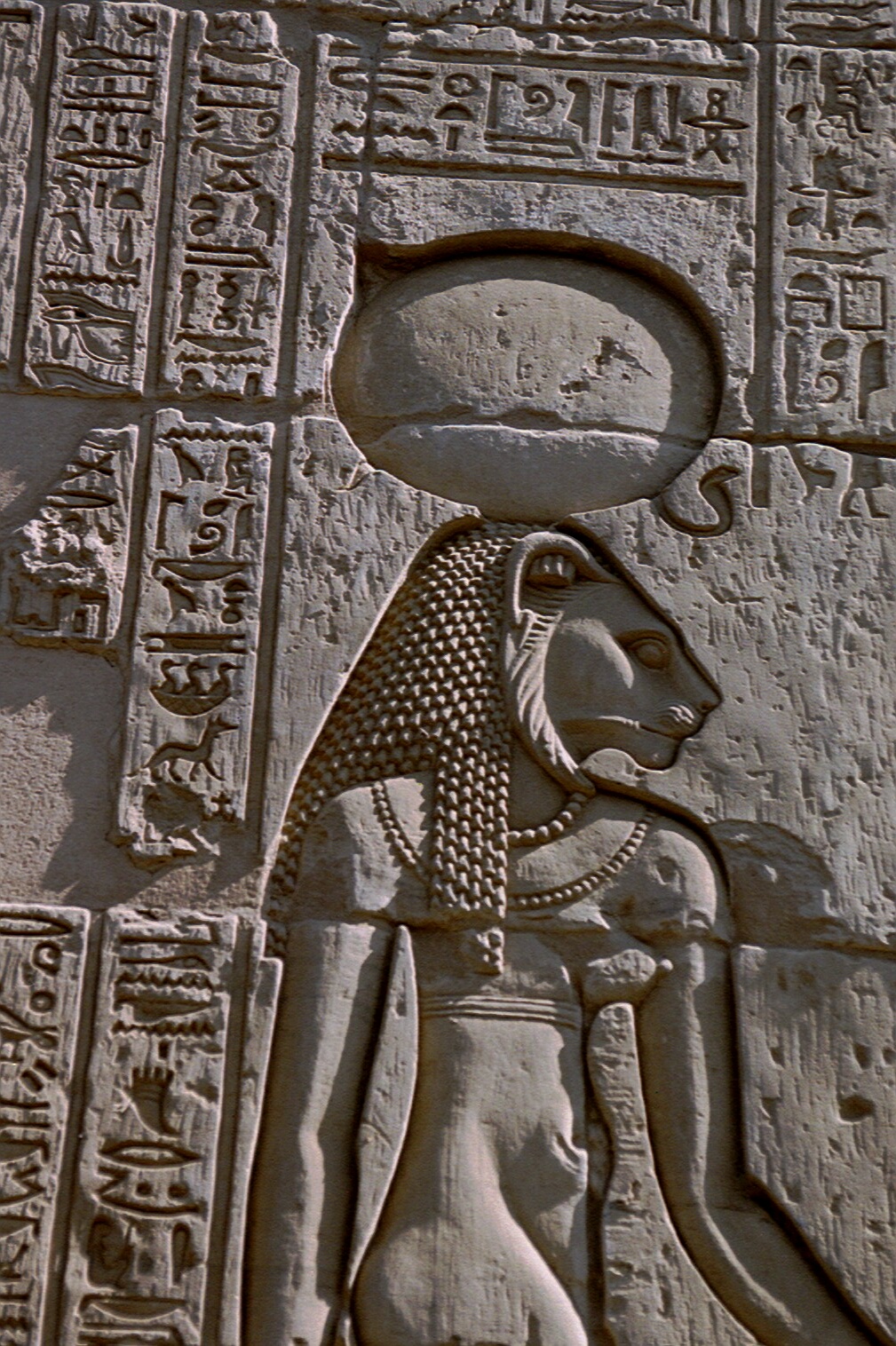 HL: The idea for NuruSekhmet actually came from a dream that I had a long time ago now, shortly after a visit to the Field Museum in Chicago. I was interested in Egypt before that, but I became absolutely fascinated by their Egyptian exhibit which has lots of hands-on type displays. The night after we visited the museum, I dreamed about a woman who was given a portion of Sekhmet’s power and, through that, gained a spiritual connection with the goddess. Through further research, I decided to name her NuruSekhmet (which translates into Sekhmet’s Light) because Sekhmet is strongly associated with the sun and fire.
RC: Bonus points for not only giving us great stories but teaching us a bit in the process. An extra +5 for having this idea come to you in a dream. That's excellent! Now, you're in the middle of writing book 3 right now - how's that going? Any spoilers you want to share?
HL: Work is continuing apace on book 3. I’m at about the halfway point of the first draft. I’m very happy with the way some of the characters are evolving and with some of the turns it’s taken. Although it wasn’t my intention initially, the third book is, in many ways, turning into a little bit of a love letter to the Special Forces community. In book 2, I introduce the readers to Maximus “Church” Churchill who is the leader of one of the Horus temples, and a SEAL.
In book 3, Church and other SpecOps guys get more spotlight which really allows me to highlight the quiet professionalism of these men that many writers don’t seem to understand very well. Although I’d always intended to take Church from tertiary to secondary or primary character, I do think that recent events in the real world have prompted me to focus on that a little more than I’d originally thought I would.
RC: Makes sense - - sounds fantastic, I can't wait to read it! (I may have to send a copy to my brother, who's over in Afghanistan at the moment.) To be honest, my "make or break" element of any book is, above all, the characters themselves - and the Sekhmet's Light trilogy is filled with some pretty diverse and very interesting characters - of them all, who was the most fun to write? Who was the biggest challenge for you?
HL: Oh, wow. Well, here’s the thing… all of them have times when they’re a lot of fun, and sometimes each of them can be just a pill to deal with. The one who’s most consistently easy to write is Aramair. She’s very sweet and nurturing so it’s pretty easy to see what she’s going to do in most situations.
Honestly, the one who’s the hardest is Nicole for the most part. She throws me curveballs on a fairly consistent basis and, especially in book 3, she can be very unpredictable.
The most consistently fun to write have been Bailey and Weber. They have a great chemistry between them and it’s been fun to explore their relationship.
RC: I can imagine! I definitely can appreciate the kind of theatricality you embrace in your books, as well - both in the interpersonal dramas as well as the pacing and action; I could totally see them on the big screen. If your books were already made into movies, what soundtracks would they have?
HL: The first book would definitely be geared more toward traditional-type Egyptian music. It really explores the more traditional aspects of the sects and although it takes place in the modern world, it’s very anachronistic in many ways.
The second book would be more rock based, or maybe a score similar to Steve Jablonsky’s work on the Transformers films (say what you will about the movies themselves, the music is just AMAZING). It really drives home the fact that although the Ancient world intersects with the modern, it’s definitely not the old days and that the sects can’t afford to pretend otherwise any more.
The third book should be similar in tone to book two, but with the ‘epic’ feel cranked up a few notches and with instances of a Latin flair thrown in as well.
RC: You had me at "anachronistic" - hah! So, going forward, now: once you're done with this trilogy, what's next?
HL: I have a tie-in collection of short stories/novellas that I’ll be compiling to fill in some of the back story that is only hinted at in the novels. You’ll get to see the raid that Meshrew and Imanekhet conducted that resulted in the rescue of baby Aramair and her mother, the origins of the very first NuruSekhmet in detail, more about Bailey and Weber’s partnership and more.
From there, I’m planning a couple stand-alones: I was asked to do a pirate story, so I’m pondering that. I also have a story about the lost continent of Atlantis which could turn into another series as well down the road.
RC: Pirates! Yes! I'm already in line for that one. Are you putting in any public appearances we should know about?
HL: My first official public appearance as a writer is going to be at Emerald City ComiCon the last weekend of March 2012. I’m particularly excited about that because ECCC is run by a wonderful bunch of guys and the crowd that attends tends to be incredibly friendly and warm.
RC: So, here's a pretty hot topic I'd like to touch on. I notice that you're self-published - why did you decide to go that route, as opposed to going through a "traditional publisher"?
HL: There were a lot of reasons for the decision, but the primary was that by self-publishing I actually retain control of my creation which is important to me. Also, by going the self-pub route, I’m keeping the lion’s share of the money from each sale for myself instead of it going to the publishing company. The unfortunate truth is that many first-time writers get lost in the shuffle of big publishing. The major pubs don’t want to spend money to promote an author that doesn’t have a track record, so there’s little effort made to bring awareness to those books, generally speaking.
RC: Those are some great points! How do you think being self-published has helped you connect to your audience?
HL: By self-publishing, there’s no expectation that anyone’s going to promote my work but me so I’m walking in with eyes wide open. It means that I have to find a way to get in touch with my audience so I’ve taken it upon myself to join as many social media outlets as possible (Facebook, Twitter, LinkedIn, etc) as well as book-oriented sites like Goodreads so I can make myself accessible to readers who want to know more about my books.
RC: That's definitely refreshing - I'm surprised more authors don't turn to social networking to get to know their readers, but I'm really glad to see that you do! So, changing gears again, let's set the WABAC machine for your childhood - - awwww, you're such a cute kid! So tell us - what is the little you thinking? What does she want to be when she grows up? If a writer is the top of your list now, what's number two?
HL: I was a big animal lover and for a long time growing up, I wanted to be a veterinarian. That lasted until I realized that being a vet would mean seeing animals in pain and having to do things like put them down which was just too much to contemplate. Once Veterinary school was out, I then latched on to paleontology/archeology, but unfortunately, I didn’t have the grades to pursue those avenues. I was one of those kids that drove teachers up the wall because I was obviously smart and knew the material because I always did well in class discussions and on tests, but I despised homework and rarely applied myself in that arena.
RC: On that same note, when did you realize you wanted to be a writer? What was it that really made that decision come alive for you?
HL: I’ve always enjoyed making up stories, but I didn’t really start writing them until I hit college. I needed another elective after reading some of my stories, my mom convinced me to take a creative writing workshop.
Boy, let me tell you that was terrifying. The way the workshop worked was that each week we were required to bring in enough copies of a 1-3 page story which we would then take home and read and critique. We would then come in and read the piece aloud and listen to feedback before collecting the copies of our stories so we’d have the hardcopies to improve our work.
As a kid who was notorious for being painfully shy all my life (I didn’t even speak until I was three, according to family lore), it was nerve wracking, to say the least. However, as that first semester went along, I found myself looking forward to the opportunity to read my piece and hear what everyone thought of it. It helped me overcome my shyness and also showed me that I had genuine talent for writing.
Unfortunately, I didn’t do much with it until after my mother passed away in 2001. She was always my biggest fan and expressed confidence that I could be a writer if I wanted to be. By early 2003, I’d decided that I would try to make something out of that faith and came to Seattle for the first time to attend the Fairwood Writer’s Conference at NorWesCon. I got a universally great reaction to the concept for Sekhmet’s Light from the pros that critiqued it, but I struggled with it for several more years. Once I figured out why it wasn’t working and corrected the issues (turns out I was trying to cram a trilogy into one book, which was the major problem), it worked well.
Once I got the first book done and held the proof in my hands for the first time, I knew I’d love to do this for a living.
RC: Isn't that the best feeling EVER? So what's the best piece of advice you've ever had in regards to being a writer?
HL: I’m not entirely certain who first told me this, but it was something to the effect that “writers write”.
RC: I've heard that before as well. I always liked the directness of it. So, home stretch time: Who was the better archeologist - Allan Quartermain or Indiana Jones?
 HL: Okay, I think this is a great question because both of those guys tend to make actual archeologists cringe. I think in terms of sheer panache, I have to give it to Indy (the fact that he was a massive childhood crush of mine might also come into play).
RC: Good call. We named the DOG Indiana, by the way. True fact!
Okay, let's tell people what they've been dying to know: Where are your books sold? What formats are they available in? If my readers want to know more about you, where can they go?
HL:All the major outlets are carrying my books and they’re available in paperback and the major ereader formats: Amazon’s Kindle, and ebook which is the standard for NOOK, Sony, and others. I’m also more than happy to do direct sales if anyone has problems purchasing from the various outlets which can be coordinated if they contact me via my website.
Akhet for Kindle
Akhet for NOOK
Akhet Paperback
Peret for Kindle
Peret for NOOK
Peret Paperback
Thanks so much to HL Reasby for taking the time to chat with me - - best of fortunes going foward, and do check out her Sekhmet's Light series, at an e-bookstore (or brick and mortar, as well) near you!
Aug 11, 2011
Interview by Daniel L Carter (Aug 2011)
Had a fun weberview with fellow author Daniel L Carter that just got posted up on his site. Fun times!
Here's a bit of it - - go check out his site for the full enchilada!
DLC: I want to thank you Ren for stopping by and doing this interview with me. Before we get into your cool looking series please share a little bit about yourself.
Ren: My name is Ren Cummins, up here in the delightfully and mostly cloudy greenery of the Pacific Northwest. A stone's throw (okay, a very hefty throw, like, with the wind at your back or something) from Seattle; I live up here with my wife and daughter, a pair of cerebrally-interchanged dogs and a cat who is very in touch with his Egyptian mythology. I gave up the rock-and-roll ambitions I'd carried over from my youth once my daughter was born, and fell back in love with telling stories as she started to be interested in hearing them. Been writing professionally now for several years, and am using all the wonders of this interweb contraption (I kid. I'm a kidder) to get my books out on the market.
DLC: I think just about every author is still trying to figure out this interweb thingy. =) So, speaking of books, tell us about your series.
Ren: The series I'm working on right now is a Young Adult Steampunk Fantasy series called the Chronicles of Aesirium. It revolves around a "sort-of-Earth" planet called Aerthos where technology has evolved from a focus on steam-engine-driven tech, but this has been made feasible by the addition of magical skills called simply "Art." By using Science and Art, the civilization - in spite of a few growing pain setbacks - has made great advances, but, as so many societies do, fell into a civil unrest dwelling on the differences between those who prefer science and those who prefer magic. This civil war left them irrevocably divided, with the artists losing and being exiled beyond an enormous wall originally built for the defense of the city. The story begins about 200 years after this exile, with the citizens of the city, Aesirium, becoming more like mythological figures to the people of Oldtown-Against-the-Wall, the descendants of their exiled forefathers.
If generations of exile weren't bad enough, there are monsters in the wild lands to the west; great, corrupted and undead beasts that find their way into the nighttime streets of Oldtown. And this, on top of the bedtime stories of the Reapers, powerful and mysterious beings believed to cart off the rebellious souls of the unsuspecting.
The story itself focuses on a trio of children growing up in this challenging but still fantastical environment, each with a specific role to play in the history and future of Oldtown and Aesirium - a future which will change the greatest city on the face of Aerthos.
Okay, that probably sounds a lot more epic than I intended. But you'll have to read for yourself and see if I'm lying.
DLC: Epic is exactly what I'd call it. Which character would you most identify with?
Ren: Oooh, that's a tough one. There's something of myself in all the characters, of course, but the one I just get the most is Ian, an old wizard with an odd sense of humor and an even more odd sense of fashion. His role isn't large in terms of the story's entire narrative, but he does give the children a sense of direction and focus that they need at crucial times. I most enjoyed writing his odd sense of comic timing, how he'd dance between sober wisdom and quirky silliness.
(continued at site)
Thanks for the interview, Daniel! The rest of you - go check out his blog and his books - - -go! Go now!
Jul 13, 2011
the Right to Write
July already? Crikey.
The past month or so has been both wonderfully and painfully busy - been networking like it was free (it mostly is) and writing/editing as if it generated oxygen. Somewhere in the middle of all of that, I managed to hold down a full time job, help take care of the house, take road trips to Portland and Montana, and, I'm pretty sure I might have slept once or twice. Tired but still creatively motivated.
More and more, the reality of this new adventure is rearing its delicious head up into my horizon - in fact, it feels as if I've already passed into the golden fields, having crossed its border sometime during the dark night now fading behind me. Somehow, I became a writer and didn't even notice.
Seems like every week or so, I get another idea for a story or a book or more, and I'm still less than a book away from finishing the current 6-book series. I'm not complaining, though - clearly, it's better to have more stories than you have time to write than to have no stories and all the time. A lot of them are staying on the back burner for now: the harder science fiction - especially the ones who would do with a fully-developed schedule of tech research, for example - will have to wait until I can dedicate more time to it. On the front burners, there are already plenty of projects I'm pushing through. Still don't understand why I don't feel more stressed out about it. Too busy enjoying doing it, I guess.
One of the parts I'm actually enjoying the most is the mingling with peers. It's so strange to think that as recently as two years ago, all these great people working in publishing - comic books, fiction, sci fi, films, what-have-you - are now people I interact with on an almost daily basis. It's kind of dreamy. I swoon.
Seriously, though, the downside to that is that I still presently have a day job - one that is decidedly NOT being an author. And every day, I'm unfortunately reminded of the distinctions between these two worlds. Some days, it feels like I'm Bruce Willis in Twelve Monkeys, uncertain of which reality is "now". It can be both frustrating and disorienting.
For example, one of the most positive elements in self-publishing is the idea of recognizing the motivations and logic behind every decision I make. Each element of work or marketing or design, each step of the way has a reason behind it, and if I don't like something, well, then I just go ahead and change it. But in the corporate world, I'm comparatively unpowered in such aspects. "Don't ask why, we just ask 'how high?'" It's strangely dehumanizing. And the strangest bit of all is how I managed to not notice that sooner. Sure, I knew I didn't like it, but I didn't exactly realize why.
And speaking of the big Y, I've been reading a lot of wonderful blog posts recently by other authors that talk about why they write, or why they self-publish, or why they write and self-publish, etc. It has been really satisfying to see so many who've come into this process for so many of the same reasons I have. It's a wonderful community of writers, and thank god for the internet to bring all our tiny islands together.
One other update - I attended my daughter's school last month at the invitation of her teacher, to sit and talk to the class about being an author, writing, and all of that. It was one of those pivotal and mind-altering moments, to be perfectly honest. The children really got excited about the idea that all these movies and video games and comic books; these myths, even the history we learn about - all of these things come from the craft of storytelling. It's all just one person telling a story to someone else, or writing it down so that it may be later read and shared. The kids were really engaged, and I hope I helped them get a little more enthused about reading. The teacher was very happy with it; and on a side note, I still have trouble calling my daughter's teachers by their first names, even when they're younger than I am. That's just weird.
Well, speaking as I was in regards to the day job - and the writing, for that matter - I have more things to do today than spend my time blogging. Thanks for reading along today, it was nice having you here.
And, as always, if you enjoyed this, feel free to jump over to amazon and check my books out. I remain a pretty big fan of the stories there, and I hope you will, too. Sorry for sounding like I'm pimping myself out, but I am grateful for every single one of you that picked or will pick up one of my books and enjoy the stories written therein. If you do, I'd love to hear what you think of them.
Until then, be well, my friends. Enjoy the day.
Jun 9, 2011
Setting the WABAC Machine
Been enjoying a spirited conversation regarding the past, present and future of publishing over on Twitter today. It reminded me of the line from "Ferris Bueller's Day Off" - life moves pretty fast; if you don't stop and look around, you could miss it. Because, seriously, the publishing world IS moving pretty quickly. Or is it?
I frequently examine the world of literary publishing and perform a compare/contrast to the world of music publishing - it seems like the rush and crush of the music industry's marketing blitz has driven the industry and technology a bit faster than book publishing, game publishing and the film industry (in no particular order). Or perhaps it's just that we've noticed them in a particular order and the technology just took a while longer for various industries to become readily apparent.
Back in the 90s, yes - I was focused primarily on the music industry, myself. Recording, live shows, publishing, etc. The digital age at that time was battling between DAT and CD, and the internet was a pale fetus of what it has developed into now. The only way to really get your music out and about was by doing shows or getting on the radio. And the latter was so much more of a challenge. AOR format kept most unpublished artists off the air - if you knew a DJ or were fortunate enough to live in a city that had any sort of "Local's Only" show, then you had the chance to get your song played at, like 11:35pm on a Thursday night or whatever. I was fortunate enough to know Nyk Fry when I was working on my album, who at the time was working at one of my local radio stations. He and I had worked together on a couple other things, and he had a free slot open on his show and invited me to come on and pimp my CD. It was a pretty great opportunity; I don't know how much of a dick I might have been on air, but to this day I remain very grateful for the chance.
Also, at the time, I was working days managing a downtown hotel - we hosted a lot of the bands who came through to play the Zephyr club or the Dead Goat Saloon, such as The Church, Big Head Todd and the Monsters, and even Dee Snider. Christopher Titus stayed with us for a week, and a chunk of the crew working on the filming of The Stand even hung out with us while filming in Utah. It's so odd now to consider how much around the periphery I was to all these media outlets, and yet never really figured out a way to convert that into a more professionally creative endeavor. Different times, a different brain in my skull.
It's been over ten years, and though I no longer pursue the music as a professional path, the entire time period of "back then" taught me a great deal about how those things work.
And that makes it doubly strange in that a lot of the people running those organizations and corporations involved in music, books, film and video games seem to be struggling with how to adapt to these new technologies.
For example, look at music.
For the past few years, the RIAA has been complaining that their poor starving artists have been victimized by the horrors and atrocities of the heartless digital pirates, who have been stealing away millions of potential profits from the musicians they represent. They point to line and bar charts as evidence of their financial ruin, and draw a direct correlation to the increasing use of the internet. Oh, yes, obviously there is a connection there.
However, companies who have embraced the digital age have thrived and prospered. iTunes, Amazon MP3, Rhapsody, etc - - they're doing pretty well, in spite of the apocalypse that the RIAA has described. But the truth is that these other companies have done well because they have evolved into the new business model as defined by the good ol dollar bill. The people have voted with their wallets and chosen the format they're most interested in. And people have frequently turned to the availability of music on the internet to sample and validate music to see if they want to actually purchase it. I have a friend (who wishes to remain anonymous) who says he frequently downloads music to see if he likes it. And if he does, he deletes it and buys it through one of the online stores. And if not, he just deletes it. Sounds perfectly reasonable to me, but, then, I'm not a highly-paid RIAA lawyer.
Neil Gaiman did a test with his release of "American Gods", where he allowed a free copy of the book to be downloaded for, like, a month. And he noticed that sales actually spiked upwards as a direct result. That seems to go completely against the expectations we are led to believe from conventional wisdom. Some people point to his results as an anomaly, but either way, it's an interesting experiment.
But that's just one aspect of this topic. Book publishing is becoming an increasingly facilitated process: POD (Print on Demand), Vanity Press and e-publishing sites are making it easier and easier to snap the final pieces into place when publishing a book. For example, I can upload my book to CreateSpace and Kindle, and within two or three days (usually much less), I've got books for sale. It's actually Very Simple.
Now, no, I don't get the amazing distribution channels that the Big Publishers get. I can't manipulate the shelf real estate of a book store like they can; I'm just one author out in a sea of other authors. And in that way, "traditional publishers" still retain a perceived lion's share of the business. I'm not bitter or anything, I accept that this is how things go. They have the bigger quantities of authors to look out for, so clearly they're going to wrestle things in accordance with their best interests. And though I'm outside of their monkeysphere, I don't take it personally. We're both doing somewhat nicely in sharing our ecosystem.
But I keep hearing these strange rumblings coming out of them which sound disconcertingly similar to the panicked cries of music publisher stockholders from 5 or 6 years ago. I see strange declaratives being made about "book piracy" and "basement press market pollution" that seem to emanate from that same place of fear and confusion. Old School publishers are indicating that they're not making their same money, and, in their blind and unweildy fear, they're striking out at the people they have decided are responsible: self-publishers.
I can't help but worry that it's not just a coincidence that I've noticed so many one star reviews on Amazon which seem to attack specifically Self Published novels on the merits of...well, sometimes for no merit at all other than being self published. Terms of "Vanity Press" and "Self Published" get used as insults, as if those terms alone were valid arguments against them. I've read enough "Traditionally Published" books that contain typographical errors and poor narrative, 2-dimensional characters and flimsy story arcs to warrant the regret of 20 dollars poorly spent. But at the same time, I have a different view on purchasing music, books, films, and so forth. I'm not just supporting the label or the publisher or, sometimes, even, the artist. I support the industry itself. If I see something of quality, I'm as likely to buy it to help the industry itself take a small step forward. I also confess lately to be adjusting this, however. There are just so many new independent authors out there, whose books are every bit as good (or better) than the books I've read in the past from the Big Publishers. Did you really believe that a book is only good if it came from a company that's already published 10,000 books? Size really isn't everything, after all. Ask Goliath.
But here's where the title of today's blog comes in. Go back about a hundred or more years - go on, Mr Peabody, set the WABAC machine and let's go! And let's see how publishing worked - back before the day of the Conglomerate. Publishers were just a guy with a printing press and binder. You'd pay them to set it up and print it and bind it, and there you were, proud owner of a stack of books. Sounds awfully similar to vanity presses, come to think of it.
And now I read someone arguing on behalf of the publishing houses, claiming that they're not so much in this for the money as much as they're here for the readers. That's right, they're here on behalf of the readers, saving them from losing their money on rubbish. They're doing this for you, people. They're the watchers at the gate, keeping out the millions of craptastic novels written by people you really don't want to waste your hard earned dollars on. Very altruistic, huh? Okay, okay, I don't want to pick on them too much. I know it's been hard for them lately, and I don't mean to kick them when they're down. Besides, one day, they might throw a bucket of money at me, and then won't I feel like a sham?
Seriously, though, my concern for them is really only that they - like so many other similar industries - have forgotten one of the primary concepts of success: Innovate or Die. Keep up, or fall behind. Evolve or become extinct.
It doesn't need to be a scary world. The asteroid hasn't hit the planet - well, okay, maybe it has - but they don't need to stumble around with their silly T-Rex arms. The publishing worlds are changing, and if only they were willing to evolve with it instead of trying to stop it, they'd probably be in much better shape.
Jun 2, 2011
Q and A day
Geez, I talk a lot. Well, in the interest of fostering a bit more of the good ol' Give and Take-iness of the internet, I'd like to just open up the floor a bit.
Any questions? About Steampunk, the Chronicles of Aesirium? Other projects? Music? Movies? Video Games? Philosophy? Comic books? Math?
Ask away, I'll answer.
Any questions? About Steampunk, the Chronicles of Aesirium? Other projects? Music? Movies? Video Games? Philosophy? Comic books? Math?
Ask away, I'll answer.
The Tragic Downside of Writing What You Know
It's been a difficult couple of months lately for anyone who watches the news and is empathetic to the struggles that befall our earthly cohabitators. Japan's continuing difficulties were still powerfully fresh in my mind when one of the most powerful tornados on record carved a path through Joplin, Missouri. My day job required me to be involved in that one from a professional standpoint, as my company has employees there, and without going too deeply into it, I will just say that it remains a powerful event, even many days later.
I've been on a variety of conference calls for the past two weeks now, working with directly and indirectly impacted people, and observed as my emotional state careened dramatically between despair and horror and the occasional moments of elation. There were moments of optimism, truly. But these seemed - to my mind - to be the infrequencies rather than the norm.
I even took a full day off last week from work just to untether my mind from the reality of that devastation. "Untether"? Unhitch? Unhinge? *shrug* I don't know that any of those words works better than the others. To be frank, I just needed to disconnect from it.
So I spent a day as something else - not a crisis manager, but as an author. Went with a good friend to a coffee bar (frequented by - gasp - other authors!) and enjoyed a good cup of mocha, a tasty raspberry doughnut and a fantastic conversation. From there, went to a local comic book shop and hung with three other good friends of mine, and, following a brief nap (please keep all your "Old Man" jokes to yourselves, I've heard them all, thanks) went to a meeting with a few other authors to discuss ongoing and future projects.
Sadly, I didn't actually get any writing done, but I did the next best thing in that I gave all the cacophony a moment to settle.
Later in the week I was able to sit back down with my next novel and eke out a few trembling paragraphs, which is better than I'd been able to do all week - so I took it as an achievement. But through all the craziness of the past few weeks, a conversation with another author jumped out at me, regarding some of the challenges at writing fiction versus non - namely, the concept of writing what you know.
It's a common enough statement, uttered as the Primal Commandment of Literature for all struggling authors, to keep your emotional associations and personal experiences as grist for the mill, as the base matter for your Eternal Writing Engine. That idea used to make me smile - my first books have been about sci fi and fantasy, all tales strewn from a world wholly unlike my own life-experiences, with concepts such as dimensional travel, death and the soul, magic and that sort of nonsense. Heh. Nonsense. Oh, sure I can talk casual, but I do love the material. And I make no excuses for it - - - fiction though it may be, I know exactly where every twisted non-reality comes from in my own life.
Just like any author will draw some corrolary item out of the congealed memories or experiences of their past or present, a writhing, living creature from the subconscious colonies of their own spirit, I just paste together a mosaic of this or that when building out the worlds, the characters, the elements that combine to form the narrative. How much of it is conscious or not... well, I suppose that's a question only my therapist would be equipped to answer. (Or, well, they would if I had one. For now, a blog is cheaper. *snrk*)
So, back to Japan and Joplin.
I'm on chapter 3 of the conclusion to my 6-book Chronicles of Aesirium series. It's all been quickly rising in intensity the past few books, as all the opposing forces are arrayed across the fictional chessboard. And this is the big one, the throwdown between good and evil. I won't lie - and I'm not spoiling, I hope - but it's not gonna be a clean war, here. There will be casualities. There will be destruction. Book five was emotionally intense enough for me to write, but book 6.... yikes.
I've sat on the threshold of this story for a few months, now, ever since book 5 wrapped back in the first part of 2011. It's not just that it's a big epic confrontation, filled to the brim with infinite moving parts - well, okay, it kind of is, but that's not the reason I've been pausing.
And I don't think I even fully appreciated why I was hesitant to start until Japan started to really affect me. With the added impact of my co-workers in Missouri, the point was truly driven home. Basically, I'm not just writing a story of a teenager who becomes an angel of death, or the story of her friends - the streetwise prophet or the budding mad scientist. It's a story about history - about how we allow ourselves to be misled when we don't understand the very world we've been born into, and about how the future is driven by the comprehension of that past. But it's also about how we communicate NOW, and how we as a large community experience the present. And that realization is when the light went on.
Why were Japan and Joplin so potent in my emotional core? Because I need to write them into this. Their story is noteworthy - their experience is not just applicable, but it's something that is potent. It resonates - not just with me, either, obviously. I'm just some guy writing books. But hopefully I can manage to shape this tale as a way to expand the resonance of these real-world events, even if it's just in my own small way.
I recall hearing a story about Anne Rice's initial inspiration to write the "Interview with the Vampire" book - about how it came from a question of how to deal with the loss of her daughter - - "can a child live forever?" Certainly, such a powerful experience can lead an author in powerful directions. Additionally, I see the stamp of Hiroshima in many of the anime shows I've watched - Robotech, Akira, Grave of the Fireflies, for just some of the more blatant examples. They deal with the wound to their culture through...well, their culture. And so the cycle continues, I suppose.
It's a literary catharsis, in a manner of speaking. And it's not simply relegated to writing - musicians, painters, sculptors, actors, whatever - - we create from our own experiences and observations, from our own emotional response to the world we live in. So what if the price is a little bit of heightened emotion? So what if we're, as a simple result, just a little more emotional about things? Is the price worth it?
Actually, that's kind of a silly question, isn't it? If I didn't think it was worth it, why would I still be doing it?
Some days, I don't really expect tremendous and earth-shattering nuggets of wisdom here - - sometimes, it's just nice to check in and remind myself why I do this. And with that, back to work.
May 18, 2011
The Age of Man
When do you know when you're halfway there? This odd rhetorical-esque question popped into my head on the way to my day job this morning, and embedded itself like a splinter.
Do you ever know? Because, technically, you really wouldn't. Think about driving somewhere. Oh, you might be able to guess that you're about halfway to your destination, based on time or mileage, but you can't KNOW you're in the exact middle of something until you've gotten to the end, and, even then you're no longer in the middle. Right? It feels oddly existentialist, but that could just the lack of coffee in my bloodstream.
I remember hearing the stories about Cristobal Colon (Christopher Columbus in the anglicized format) being nearly at the point of a mutiny (nearly at the sword point, not to put too fine a point on it - - okay, I'll stop that now) because the crew simply didn't think they were past that point of no return and would rather risk a long trip home than continue on towards the unknown or the likely expectation of a trip over the edge of the world. And the historically accepted facts indicate that Chris - once they did actually arrive at land - didn't even realize the truth of what he'd accomplished, that he'd "discovered the americas."
Although, actual history reveals that he didn't actually discover it. And not just because people were already living there (an old Lakota Sioux friend of mine used to joke about wanting to celebrate Columbus day by discovering someone else's home and claiming it for his own), but because Vikings had been here - apparently several centuries earlier than the Nina, the Pinta and the Santa Maria. But I guess it's really okay, since Chris didn't realize he had found the new continent anyway. Plus, there's that whole thing about how Amerigo Vespucci did the cartography and got to name the place, so that's an entirely other complication. But I digress. The point I was going for is that all too often we really don't know exactly where we are. Not while we're on the journey and, many times, even after we've arrived.
There have been a lot of significant moments that we can look back on as world-changing events. some of them leave monuments, like the Pyramids; others have monuments erected in their honor. Some are chronicled in stories, songs, paintings or statues - and some simply have the memories of their enduring impact, engraved into our hearts. July 4th, 1776. May 10th, 1869. December 7th, 1941. November 22nd, 1963. July 21st, 1969.
I started thinking about all those historical moments - the good and the bad - and realized that many of those big events don't necessarily have a date stamped on them. And while many of them do, some of those dates aren't even entirely accurate - like in the case of July 4th not being the actual date on which the Declaration of Independence was signed. But we like to commemorate dates. Most Christians celebrate December 24th as the birthday of Jesus, even though it is widely understood that this date was simply chosen as a means to absorb Christians into the Roman practice of Saturnalia.
Additionally, fundamentally global-altering discoveries don't generally have that sort of a birthday, either. The telephone, the computer, the television, the internet. When did any of those begin? Can anyone pinpoint the moment at which they emerged, blinking, into the light? You might as well attempt to get people to agree on the moment life begins, or when the first man (or woman) walked on the earth. Perhaps it's more like an accomplishment than an invention that gets our attention? For example, the concept of flight has been around for centuries, but it was the Wright Brothers who achieved it in 1903. And although trains had been around for years, it was a spike being driven into the ground at Promontory Summit in 1869 that made history.
Computers seem to be the big event of this generation - the internet has brought the world together in new and amazing (read: sometimes frightening) ways. Processing speed is unbelievably fast - and transmission rates are already into the realm of well beyond the fantastic. You don't think we've come a long ways? Go back and watch "WarGames" or the original "Tron". You'll cry.
There's that whole "Technological Singularity" that seems to be causing a bit of concern - simply because things are rapidly moving along so exponentially fast that people can't even imagine what's going to happen after a certain point of development; that things will occur so quickly that the human capacity for thought will get left behind in the virtual snap of fingers. That transitional apex of understanding and development is assumed to be so evolutionary that it looks like a pinhole in comprehension, one that no one seems to be capable of peering through. Others seem to view this as the concept of approximating zero or approaching infinity. From any point approaching the horizon, it looks like a line across your vision, but isn't it just another perpetually migrating destination?
Kind of makes me feel like my own life. Have I already passed the halfway point? Am I already more than halfway between birth and death? Did I already miss my chance to have a midlife crisis? I never really wanted a toupee or a really fancy car, so maybe I'm just not wired that way. Or would I even know?
Feeling awfully rhetorical today. I don't have the answers, here. I'm in the same boat with all of you, looking out over the water and hoping for land. Although, to be perfectly honest, I'm happy enough with the sound of waves and the feel of the wind against my skin that I don't mind the open horizon. Are we there yet? Eh. We'll get there when we get there.
May 12, 2011
You Must Unlearn What You Have Learned
Was challenged - in a kind and encouraging way - to open up a thought on the topic of "diversity". The original blog was delivered from a perspective that comes to us straight from across the pond, and, as this topic never fails to do, it got me wondering about my own sense of bias, my feelings on differences between people and the stereotypes which often ensue.
This is a challenging topic to address, one might say, because I fit into the traditional model of "what the $%&@!! do you know about diversity?" - I'm a straight white male in my middle age, so that kind of makes me more in line with "the man" than "the oppressed", right?
Well, I guess I'd have to say to that, yeah. Not that it would be something I'm proud of, because I honestly didn't do anything to be white, straight, or male, and the fact that I'm still alive in my early 40s has more to do with dumb luck than any particular methodology of heath care upon which I've set myself. Do I get any kind of benefits - real or implied - by being thus? Or, at the very least, do I avoid many of the pitfalls and challenges that face other people who are otherwise? People who are different - whether by the color of their skin, their sexual orientation or gender - or different in any of the readily obvious manners that some people use to instantly categorize or assume prejudice against? I guess I'd have to say yes, since that's just an issue of public record: people in this world commit - still today - all manner of atrocities against others simply because of whatever excuse they may find. Merely, as it inevitably becomes apparent, due to some sort of differentiation that the aggressor finds intolerable.
Now, on the one hand, I do understand the notion of categorization. It's a natural tendency of people to expect a pattern in the world around them. People will generally buy the albums from an artist or genre they love, simply because of past experiences - or watch movies with a particular expectation simply because of the actors or writers or directors. Or, consider your favorite flavor of ice cream - and then ask yourself if the company who makes that flavor really matters, or are you predisposed to like that flavor, generally regardless of who manufactures it? What's your favorite color, and when choosing a new shirt are you more likely to pick that color of shirt over another color you don't like?
Let me be clear, here: I am not in any way attempting to justify prejudice. I think the automatic fear or hatred of a person simply because they possess a specific characteristic is horrific and profane. What I'm saying here is that prejudice does partially result from what is an automatic human characteristic. We tend to gather similar experiences and build a common expectation from them. You burn your hand on the stove, you become nervous around stoves. But you also shouldn't go around destroying stoves because you burned your hand that one time.
Prejudice is a learned response - and this means it can be UN-learned. In fact, it may be one of the lessons most worth un-learning of all the possible things we can deliberately evolve during the course of our lives. See, the fact is, everyone's different. And though certain life experiences may sometimes establish some commonalities, it's not just unfair to the person who's being generalized, it's also unfair (albeit to a lesser degree) to the person doing the generalization. I'll explain.
A guy's driving home, late one night. The highway he's on has some construction up ahead, so he hops off the freeway before he gets stuck in a nasty traffic jam, but ends up in a part of town he's not used to. He can't find the onramp back to the freeway, and after several minutes of panicked wrong turns, he finds himself in "the bad part of town" and promptly gets a flat tire. It's late, he's lost, and his cell phone can't get a proper signal, so he decides to get out and walk to find a 7-11 or a pay phone. After a block, a couple kids who live in the neighborhood - approach. They've both got dark colored skin.
"Hey man," they say.
He turns and runs, fearful that they mean to do him harm or rob him.
They look at each other, shrug, and keep walking along their way. Unbeknownst to the man, both kids have cell phones (their parents wouldn't imagine letting them out at night without a way to call home), and one of their parents is a mechanic, to boot. The other kid's dad is a police officer.
Now, considering that story, who was most hurt by prejudice? Clearly, the two kids didn't need a reminder that some people are afraid of other people (note, I didn't mention the man's skin color, did I?), and could very easily have grounds to be offended by the man's behavior. But in this case, his stupidity really harmed himself - his fear kept him from learning that the two kids might have helped him.
On a less extreme level, as a writer I have to embrace the fact that every person has a story. Every single person. And though the stories may in some case be similar, it's usually only superficially so. Being prejudiced isn't just a horrible character flaw; for me, it would also be crippling from a spiritual and creative perspective. I love that people have uniqueness, that, really, if you put four people on the tv screen and sang "one of these is not like the others", I'd like to think you could pick any one of the four as the odd man out. I know I'm not the same as all other straight white males. I don't think there's a single characteristic you could pick out about me that's the same as any other person, actually. And I prefer it that way - just like I expect most people to be.
If every characteristic were an ingredient you might find in your kitchen, imagine combining twenty of those ingredients in any manner you wished; order of mixing, arrangement, cooking time, etc. Now, adjust the process, order, temperature, preparation techniques and so forth, even in the slightest way - and you're liable to get something totally different. I found this out when I was a child, making chocolate chip cookies for the first time. I thought that the important thing was just to put all the ingredients into the bowl at once and then mix. Turns out that you won't make cookies that way. Well, okay, you CAN, but they'll taste like crap.
And people are made up of millions of ingredients - each moment is a new experience, each person a different procedural step, and even beyond all of that, there's a certain element of personality and soul which comes from somewhere altogether ELSEways.
The fact is, assuming two people are the same because they kind of look the same is like saying Vanilla ice cream and lard are the same, because they're both kind of white.
So really all I'm saying here is that you can KIND of reach some generalities, but that everyone's different in at least some ways, and that everyone sort of makes assumptions about other people as a general rule of thumb. But that doing so is lazy, ignorant and should be avoided whenever possible. Like, if the dude you see coming towards you is wearing a hockey mask and holding a bloody machete in one hand and someone's head in the other, maybe it's not a good time to ask them about their philosophical uniqueness. Just saying. That's a rare example, though, obviously.
Oh, and sharks. I still don't like sharks, and if I see one of them walking towards me, I don't care if they have a cell phone in their pocket, I'm going to be running the other direction. And you should, too. You don't believe me? Ask Roy Scheider about that - or, I suppose you could, but you can't, and I'm pretty sure sharks had something to do with that, too. But I don't HATE sharks. I'm just terrified of them. Completely. Absolutely. And I don't consider that a phobia, because a phobia is an unreasonable fear, and I think a fear of sharks is completely reasonable.
But that's a totally different thing than being afraid of people or hating them because of the color of their skin, their gender, nationality, religion, sexual orientation or any of a thousand characteristics you decide to be so horrifying. Except, perhaps, characteristics of bigotry or misogyny or homophobia, those kinds of things.
Fear and hatred stemming from prejudice; we should probably agree for that to be intolerable. Just a little confused why we can't seem to do that.
May 10, 2011
Gravity and Grass Stains
I remember this one hill near my home when I was a kid; it was near the high school and we'd often ride our bikes out and play around the grass and playground equipment. Tag and kites, whatever the day required, that field had it. It's almost difficult now to remember being so easily entertained by...well, a park. But, anyway, in the middle of it all was a really big hill that bottomed out into an inverted dome of grass - and one of the things we did was roll the hill. You know that one, right? Just lay down, cross your arms and let gravity spin you into a near-vomitous pillar of laughter. And eventually, one of us would get the idea of taking the hill at a run. Just nose towards the base and run run run. It was great until about half way down, when you just couldn't keep your feet under you any longer, and BAM. Wipeout.
Sometimes I really don't know how any of us survived childhood.
At any rate, that adrenaline was just awesome. It was a drug, honestly, wasn't it? You just don't see people laughing like that when chemicals aren't involved.
But all that aside, the sense of being almost ready to wipe out, where you're churning your legs as little flesh-and-blood pistons of fury, recognizing that, at any moment, you're about this far from face planting. It's pretty exhilarating. Very exciting, and yet empowering. It's also a very close approximation to the sense of omnipotence that is generally only experienced when we're too young to know better. Joy versus risk. When do we discard one for the other? At what point do we allow the possibility of failure to unseat our celebration of life?
Or are the two mutually exclusive? I'm leaning towards not. I think it's the possibility of risk which makes the celebration more satisfying, to be honest. Running down the hill for the first time and laughing right up to the moment where you wipe out is fun, yes. Crazy mad insane fun. But picking yourself up, going back to the top and doing it again? Oh, that's just super-crazy. And even more fun.
Granted, "all things in moderation" (including moderation?), meaning that, yes, we can't hope to live in that realm wherein all the world's cares go screaming past, too blurred to distinguish or bother; but we certainly can opt to visit there from time to time. I think I took a while off from that place, but yet.... starting to feel that again. Only, without so tremendous a risk of grass stains.
Getting ready to launch three more books - book 5, "Into the Blink", as well as two of my autobiographical journals, "The Middle Age (1 and 2): A Geek's Journey from Boy to Man (and back again)". That'll bring my library to a not-so-whopping-and-yet-still-nothing-to-shake-a-stick-at total of Seven. And this will be an even crazier year than last. In addition to working on "The Crook and the Blade" (book 6) - with a target launch date of mid-September 2011, I'm also developing a few more ebook anthologies, as well as some other projects that are still kind of hush-hush (for now).
Me and my daughter are working on some short stories for a children's anthology, which I would like to have completed by this fall, too. I would love to find a good artist to work with for some interior art, but have been toying with the idea of just doing the sketches myself, in a kind of A. A. Milne sort of reductive style. It'd be fun to break out the pencils and pens and see what I could do after so long. I should think my old college art professors might be a little relieved that I haven't just completely thrown away their lessons.
Working with some other fantastic authors now, too - Jen Ashton, HL and Garth Reasby, just to name drop a few - and the projects I already have lining up for 2012 are just so exciting that it's all I can do not to throw everything else aside and work on them right now.
So here I am, laughing, arms flailing, feet going just as fast as they can, wind rushing past my face and the ever-present threat of a park full of rich sod stretching out its innumerable tendrils to cushion my fall. And yet, I've stopped worrying about the possibility of falling; today, I'm more enchanted by the possibility of flying.
It feels like a good day to enjoy words.
What's your hill? What's that one place for you that gives you that "I AM SPARTACUS" moment?
Subscribe to:
Posts (Atom)